中文
中文Challenge Coin Collection
A challenge coin collection can preserve personal experiences, organizational history, and memorable events. Its meaning comes from more than the number of coins you own: the sources, stories, and details you record help explain why each piece belongs.
Start with a theme that interests you, document each acquisition, and choose storage and display methods that fit the actual coins. This guide walks through those decisions and explains how a custom commemorative coin can become a meaningful addition.
How to Start a Challenge Coin Collection in Five Steps
You do not need a large budget or military background to begin. Choose a clear direction, learn about the coins that interest you, and keep accurate records as your collection grows.
1. Choose a Collecting Theme
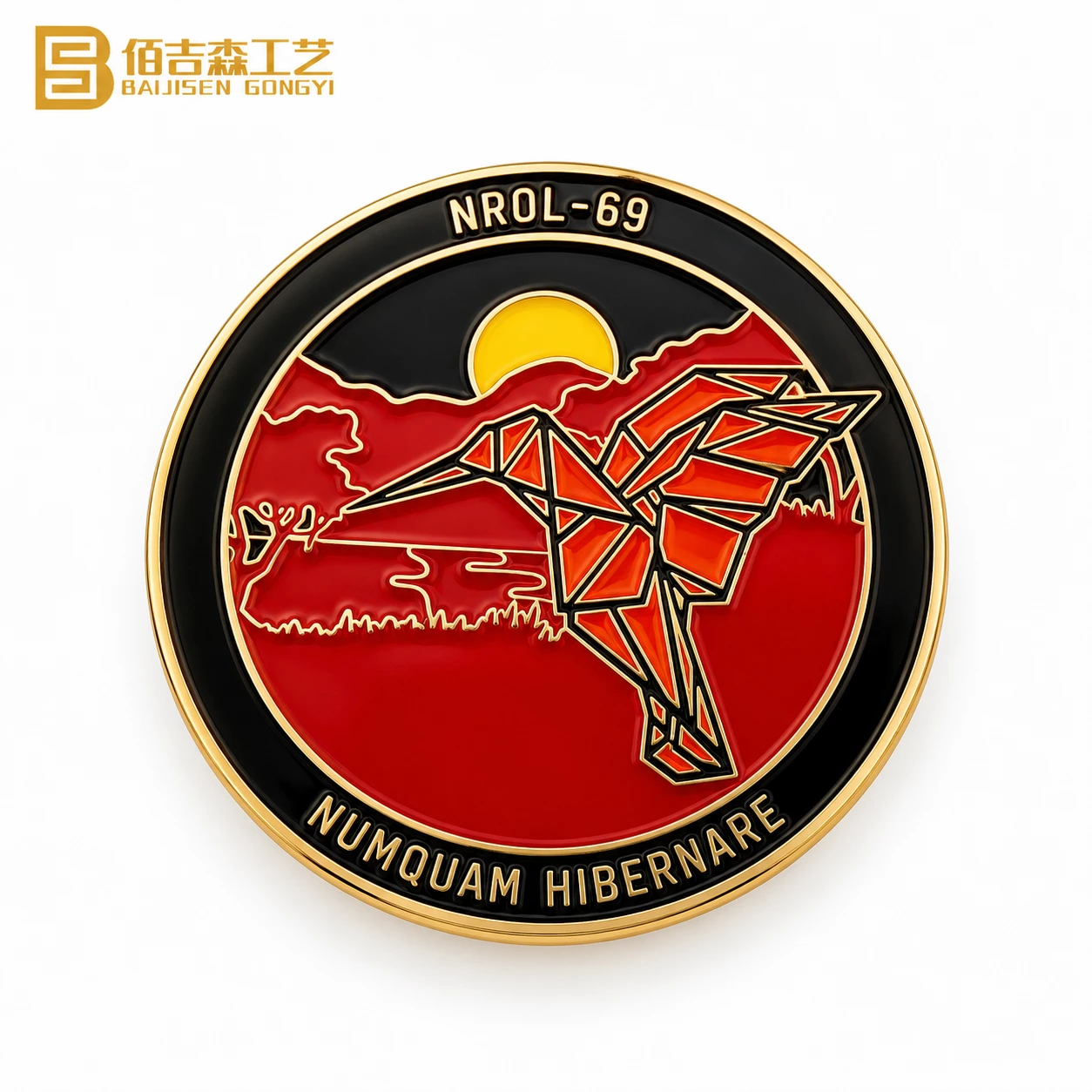
A theme helps you decide what to acquire and how to organize it. You might focus on military units, police and fire services, companies, associations, places, events, or personal experiences. Another approach is to collect designs with distinctive relief, color, edge details, or shapes.
Start with a manageable focus. Your interests can develop as you learn; there is no requirement to collect every category.
2. Review Coins You Already Own
Begin with coins received as gifts or acquired through work, travel, or events. Photograph both sides and record when, where, and how you obtained them. Preserve accompanying cards or packaging when they contain useful background.
3. Set a Practical Budget
Include shipping, holders, and display equipment as well as purchase prices. Before buying a coin, ask whether it fits your theme, whether its background is sufficiently clear, and whether you have an appropriate place to keep it.
4. Document Every Addition
Record information while it is fresh. Mark uncertain details as unknown or unverified instead of filling gaps with assumptions.
5. Learn and Expand Gradually
Compare examples, read relevant organizational information, and discuss your interests with other collectors. A small, well-documented collection can be more satisfying than a large group of unrelated purchases.
What Makes a Challenge Coin Collection Meaningful?
Challenge coins commonly feature an organization, event, message, or commemorative design. They may be presented as recognition, exchanged, gifted, or purchased. Their collecting interest often lies in those connections rather than in a currency denomination.
Keep personal meaning separate from market price. A coin connected to an important experience can matter greatly to its owner without commanding a high resale price. Elaborate craftsmanship also does not guarantee future appreciation.
| Theme | Possible focus | Information worth preserving |
|---|---|---|
| Military | Branches, units, or commemorative events | Verified unit information and acquisition background |
| Police and fire services | Agencies, teams, or recognition events | Organization and source details |
| Companies and associations | Anniversaries, membership, and team milestones | Purpose, date, and relevant project information |
| Places and travel | Cities, landmarks, and regional designs | Location and purchase source |
| Personal experiences | Gifts, partnerships, and important occasions | The giver, date, and associated story |
Where Can You Find Challenge Coins?
Gifts and Organizational Events
A coin received directly may come with useful context. Record the person who presented it and the occasion. Receiving a coin from someone does not independently establish who originally issued it, so distinguish those details in your notes.
Retailers and Dealers
Look for clear photographs, dimensions, condition descriptions, and background information. Confirm whether the images show the actual item or a representative example. Ask what supports claims such as “official,” “rare,” or “limited edition.”
Collector Trades
Trading can introduce you to new themes and knowledgeable collectors. Agree on the exact items, disclosed condition, included packaging, and delivery arrangements. Check the reverse and edge as well as the front.
Shows and Online Marketplaces
In-person viewing lets you inspect proportions and surface details. Online purchases require sufficiently clear images and descriptions. In either case, retain the transaction record and mark any unconfirmed background accordingly.
Custom Commemorative Projects
A newly designed coin can mark a team anniversary, event, or personal milestone. Record it as a custom commemorative piece rather than implying an unverified official issue.
Learning Through Collector Communities
Communities can help you locate reference material and compare versions. Treat opinions as leads to investigate, especially when a statement concerns authenticity, rarity, or value. Seek corroborating records where available.
What to Check Before Adding a Coin to Your Collection
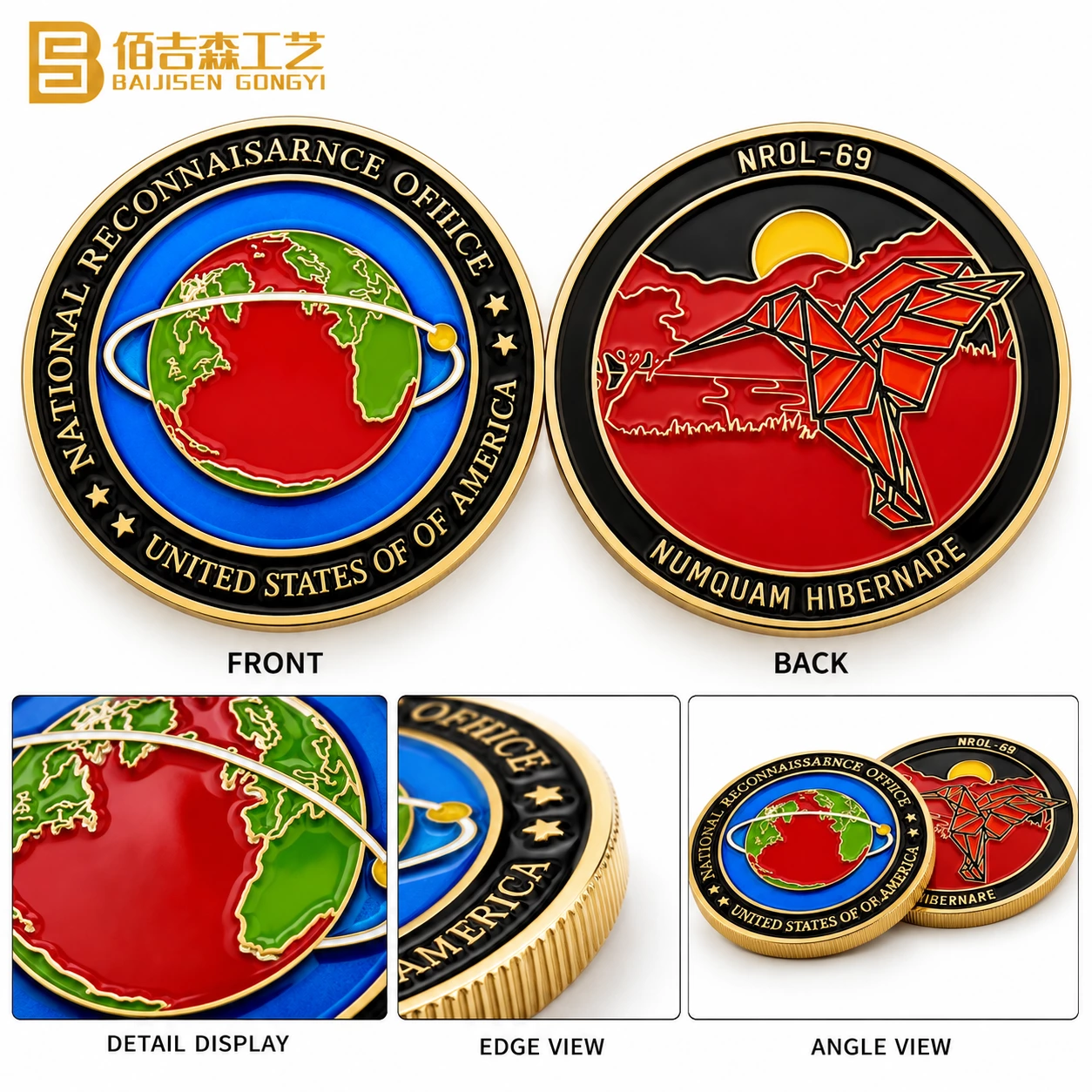
Inspect the item and its background together. Manufacturing quality, weight, or appearance alone cannot establish who issued a coin.
| Check | What to examine |
|---|---|
| Source | Who supplied it and which background details can be verified |
| Version | Whether it is an original issue, reproduction, or later commemorative design |
| Images | The actual front, reverse, and relevant edge details |
| Dimensions | Diameter or maximum width and height, plus thickness |
| Condition | Scratches, wear, discoloration, deformation, or missing decoration |
| Edition claims | Evidence supporting stated production quantities or rarity |
| Transaction terms | Delivery, returns, and included materials |
Distinguish Similar Designs
Coins with similar emblems may have different dimensions, reverses, edges, colors, or origins. If the version remains uncertain, record observable features without assigning an unsupported identity.
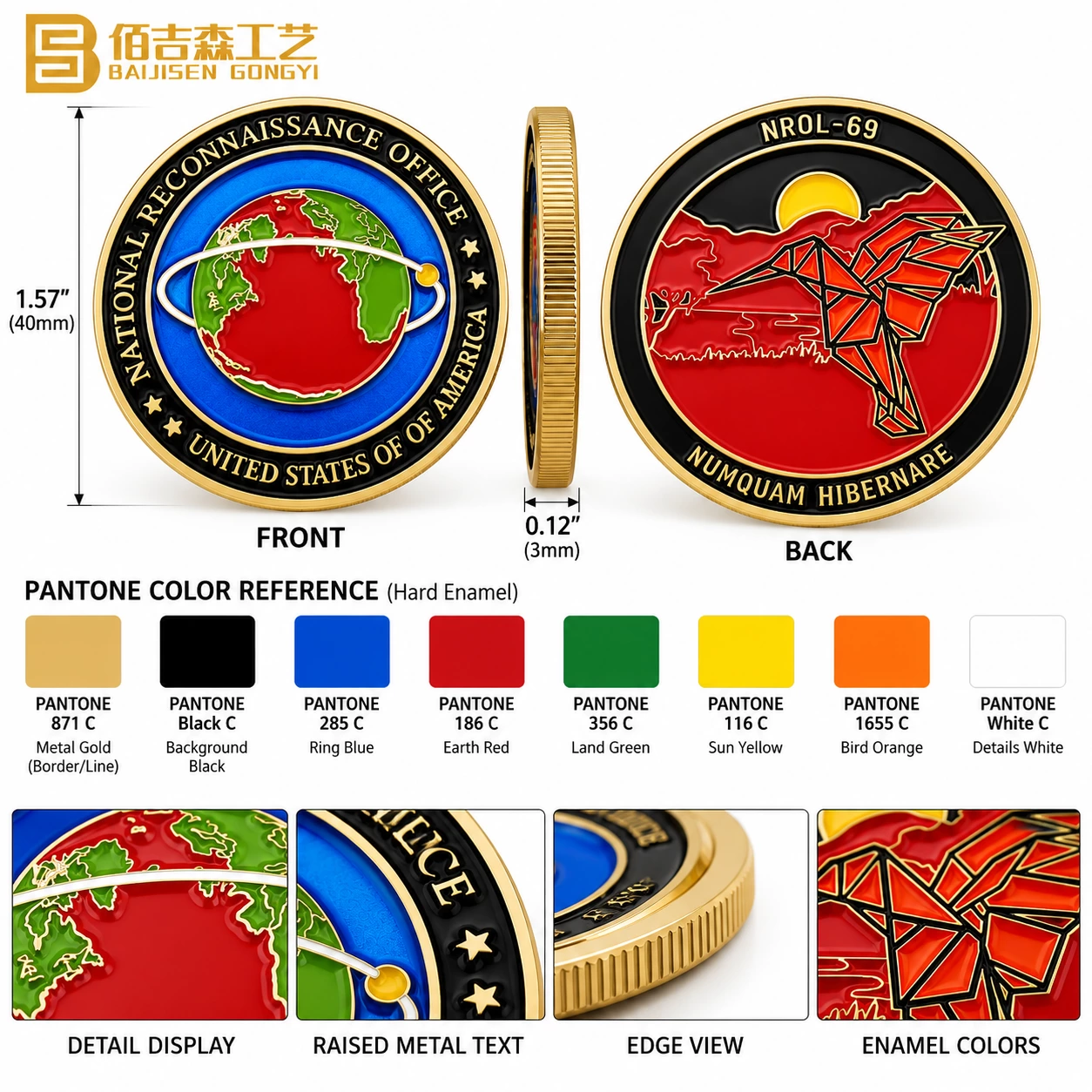
Describe Condition Specifically
A note such as “visible scratch near the reverse lettering” is more informative than “excellent condition.” Photograph relevant details so you can recognize changes later.
Do Not Treat Numbering as Proof of Rarity
A number may identify an individual piece, but it does not independently prove the total edition size or market demand. Verify the stated production quantity if it matters to your purchase.
How to Document Your Challenge Coin Collection
A spreadsheet or notebook is enough to begin. Assign each coin a unique inventory number and use it consistently in image filenames and storage records.
| Field | What to record |
|---|---|
| Inventory number | Your own unique reference |
| Name or theme | Wording and relevant organization |
| Acquisition | Date, source, and method of acquisition |
| Background | Confirmed history and personal connection |
| Dimensions | Measured size and thickness with units |
| Material and finish | Confirmed specifications; identify unknown details |
| Condition | Observable wear and changes |
| Photographs | Front, reverse, edge, and important details |
| Location | Box, tray, drawer, or display position |
| Supporting records | Receipts, cards, packaging, and source documents |
Example Inventory Entry
The following is a fictional record showing the format, not a historical coin or completed customer project.
| Inventory number | CC-001 |
|---|---|
| Theme | Community anniversary commemorative coin |
| Source | Purchased from the event organizer |
| Dimensions | To be measured and entered |
| Material | Not independently confirmed |
| Condition | Record visible features after inspection |
| Supporting records | Receipt and event information card |
| Storage location | Box A, compartment 1 |
Keep seller descriptions separate from independently verified facts. Update the storage location whenever you move a coin, and preserve original source information rather than replacing it with an uncertain recollection.
How to Display a Challenge Coin Collection
Choose a display according to the actual size, thickness, shape, and weight of your coins. Check stability and contact points before arranging valuable or personally important pieces.
| Option | Useful for | What to check |
|---|---|---|
| Desktop rack | A small group viewed frequently | Slot width, support angle, and stability |
| Wall frame | A themed arrangement | Mounting, internal dimensions, and secure support |
| Display case | Viewing several coins together | Separation, lining material, and movement inside the case |
| Individual stand | Highlighting one piece | Balance and fit, especially for irregular shapes |
| Rotating selection | A larger collection with limited display space | Safe storage and updated location records |
Make Both Sides Accessible
If a display shows only the front, rotate the coin periodically or include a photograph of the reverse. Use brief labels to explain the coin’s theme or personal significance without overcrowding the display.
Leave Room for Growth
Consider whether new pieces can be added without moving the entire collection. A modular arrangement or rotating display can be easier to manage than filling every available position immediately.
How to Store and Handle Challenge Coins
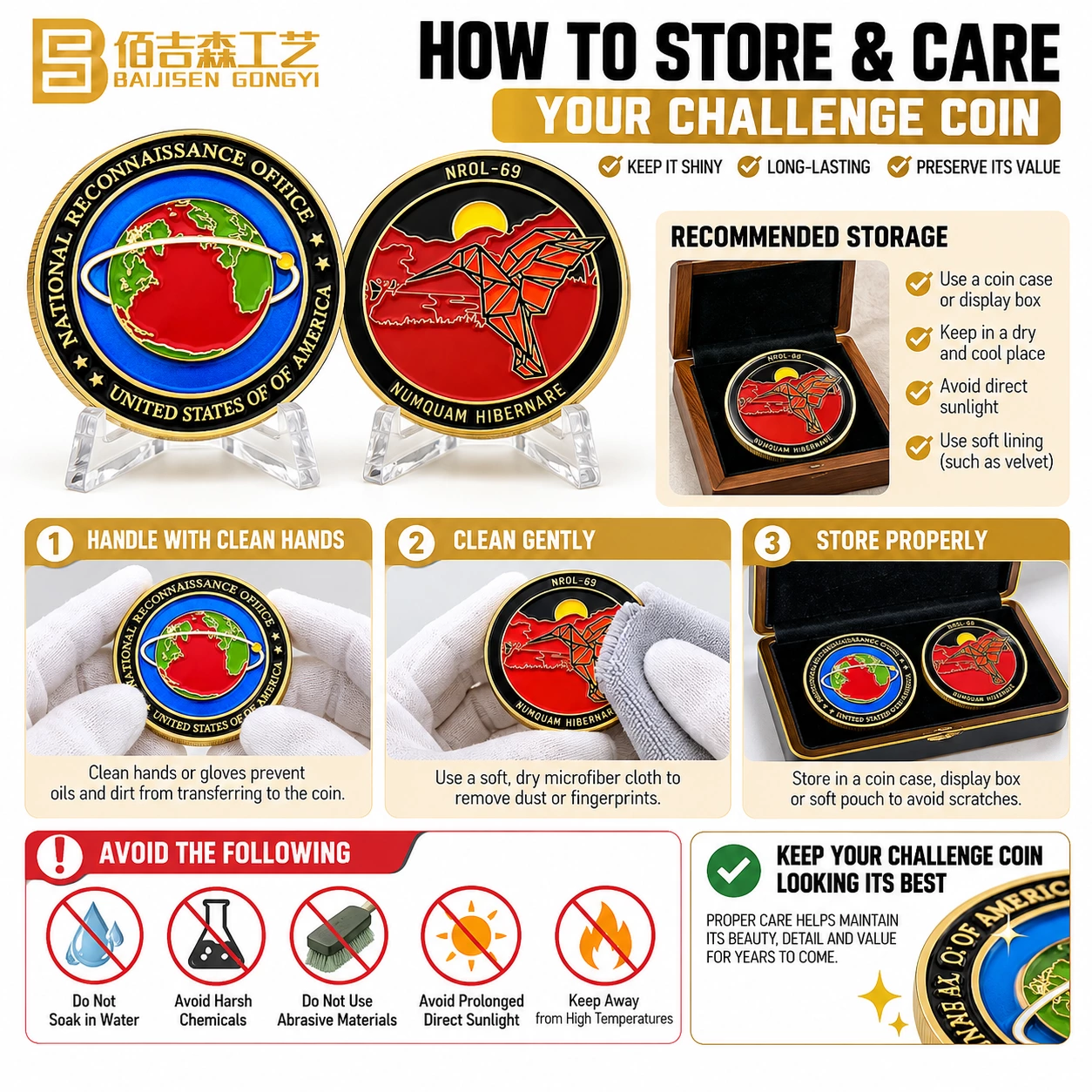
Storage should reduce unnecessary handling, movement, and contact with unsuitable materials. Modern challenge coins may combine metal, plating, enamel, printing, or other finishes, so their requirements can differ.
Measure Before Selecting Holders
Measure diameter or maximum width and height, thickness, and any projecting details. A holder should not squeeze decoration or allow excessive movement. Avoid assuming that a product labeled “challenge coin holder” fits every design.
Review Storage Materials
The Canadian Conservation Institute’s guidance for coins, medals, and medallic art discusses suitable storage materials, including certain inert plastics, and cautions against materials that can harm metal objects. Use that guidance as a reference while checking compatibility with the specific finishes on your coins.
See: Basic Care of Coins, Medals and Medallic Art .
Attractive packaging does not by itself establish suitability for long-term storage. Ask for material specifications when prolonged contact is expected.
Reduce Friction and Unnecessary Touching
Handle coins with clean, dry hands and avoid unnecessary contact with decorated faces. Keep pieces separated so they do not rub together during movement or shipping. Avoid obviously damp locations and inspect stored items periodically.
Do Not Clean Every Coin the Same Way
Before treatment, examine the surface and identify the materials and coatings as far as possible. Polishing, abrasive rubbing, acidic products, or soaking may alter finishes. Cleaning should not be an automatic step before storage.
For historically significant, delicate, or uncertain pieces, consult a qualified conservator before attempting treatment. General advice for metal objects does not establish a safe cleaning method for every enamel or printed surface.
What Affects Collecting Interest and Market Price?
Verified background, condition, design, and collector demand can influence interest. Market prices also depend on the particular transaction and timing.
When researching prices, compare the same version in similar condition and distinguish asking prices from completed sales. Documented provenance can clarify a coin’s identity, but no single feature guarantees a particular value.
Collect for the meaning, design, and enjoyment that matter to you. Future appreciation should not be assumed.
Common Challenge Coin Collecting Mistakes
- Buying without a focus: Decide how a new coin fits your collection.
- Forgetting acquisition details: Record sources promptly.
- Inspecting only the front: Check the reverse, edge, dimensions, and condition.
- Accepting unsupported rarity claims: Mark unverified statements clearly.
- Allowing coins to rub together: Use suitable separation and support.
- Cleaning without identifying the surface: Consider the possible effects before treatment.
Create a Custom Commemorative Coin for Your Collection
A custom coin can mark an anniversary, team achievement, partnership, or personal milestone. Its significance comes from a clear purpose and a design that communicates it.
Plan the Artwork Around One Main Idea
Choose the essential image, date, and message. Use the reverse for supporting information instead of crowding one face with small text. Review the proof at the intended finished size.
Choose Specifications for the Intended Use
If the coin must fit an existing display, measure the available space first. Discuss dimensions, thickness, surface appearance, and packaging together. Gift presentation and long-term storage are separate requirements that should be confirmed individually.
Record Its Identity Clearly
Keep the design purpose, production date, and approved specifications with your collection records. Confirm permission for organizational emblems and third-party artwork. Identify newly made coins accurately rather than implying an unverified official issue.
Discuss Your Custom Challenge Coin with Baijisen

Kunshan Baijisen Craft Gift Co., Ltd. provides custom challenge coin and metal gift manufacturing. Submit your original artwork, logo, sketch, or written idea so the design and production requirements can be reviewed.
For a useful quotation, include:
- The theme and intended use;
- Front and reverse artwork or wording;
- Preferred dimensions and estimated quantity;
- Desired finish and packaging;
- Shipping destination and required arrival date.

Available production options, sample arrangements, pricing, and delivery timing should be confirmed for the specific project.
Send Your Coin Idea for a Quote
Explore our challenge coin products or read our custom challenge coin manufacturing guide.
Frequently Asked Questions
Can anyone collect challenge coins?
Yes. Choose themes that interest you and describe their backgrounds accurately. Distinguish purchased items from coins personally presented or awarded to you.
What is a good first challenge coin?
Choose one connected to your interests or experiences, with sufficiently clear source and transaction information. Price and decorative complexity need not be the deciding factors.
How can I check a coin’s background?
Compare its wording and imagery with source information and relevant organizational records. Keep confirmed facts separate from unverified claims.
Does a numbered coin always have more value?
No. A number alone does not establish edition size, rarity, or demand.
What is a practical way to organize a large collection?
Assign inventory numbers, photograph both sides, and record storage locations. Group coins by a consistent theme and update records whenever items move.
Should I clean coins before storing them?
Not automatically. Examine their materials and surfaces first. Avoid treatment when its effects are uncertain.
Can a custom coin be part of my collection?
Yes. Record its purpose, production date, and specifications, and identify it clearly as a custom commemorative piece.