中文
中文Custom Police Badges
A custom police badge must communicate the right information and suit its intended use. Shape, agency wording, center emblem, finish, numbering and back attachment all affect the finished product. Specifications for an authorized uniform badge may differ from those for a retirement keepsake or a commemorative badge pin.
This guide helps authorized purchasers prepare a clear badge project: identify the product they need, organize artwork, review production options and submit the information required for a useful quotation.
Ready to discuss a design? Send your authorized artwork and project requirements to Baijisen.
Which Type of Custom Police Badge Do You Need?
“Police badge” can refer to products with different purposes. Identifying the intended use at the beginning makes it easier to choose appropriate specifications and describe the project accurately.
| Intended use | What matters most | What to provide |
|---|---|---|
| Authorized uniform wear | Approved appearance, identification details and attachment requirements | Agency-approved artwork or specifications and purchasing authorization |
| Retirement or recognition | Commemorative wording, presentation and clear distinction from an official credential | Event details, authorized artwork and packaging requirements |
| Badge-shaped pins or gifts | Legibility at a smaller size and convenient wear or distribution | Artwork, target size, quantity and intended audience |
Badges for authorized uniform wear
Begin with the purchasing agency's approved design, physical sample or written specification. Confirm exact wording, dimensions, rank fields, numbering rules and back attachment. If the project must match an existing badge, supply front, side and back photographs together with measurements. A front photograph alone cannot establish thickness or attachment construction.
Commemorative and presentation badges
Retirement, anniversary and recognition projects may include service years, an event name or a presentation message. Decide which details must appear on the badge and which belong on a backing card or inside a presentation box. This helps keep the agency name and central emblem readable.
Badge-shaped pins
A small pin has less space for text and intricate artwork. Simplifying fine details can produce a clearer result at actual size. Describe these items according to their commemorative or decorative use; do not present them as official credentials.
What Can Be Customized on a Police Badge?
The answer depends on the approved design and the manufacturing method selected for the project. Discuss the following elements before finalizing a quotation.
Shape and layout
The badge outline should provide enough room for the emblem and required wording. When reproducing an existing design, follow the approved outline. For a new commemorative project, review the shape together with the amount of text and the intended display or wearing position.
Agency wording and center emblem
Check spelling and the order of all names, titles and location details. If a center seal contains small buildings, lettering or several adjoining shapes, identify which features must remain visible. A design may look clear when enlarged on screen but require adjustment at its finished size.
Rank, name and individual number
If badges share one main design but have different ranks, names or numbers, create a single approved master list. Include the quantity for each variation. Review the longest rank or name in the layout before approving the entire order.
Presentation and packaging
Tell the manufacturer whether badges will be worn, displayed, awarded individually or distributed at an event. Packaging can be planned around that purpose instead of being treated as a final detail.
What Artwork and Information Should You Send?
A useful inquiry gives the manufacturer enough information to assess the design, identify questions and prepare a project-specific quotation. Send the following where available:
- Intended use: authorized uniform wear, recognition, retirement, event gift or another defined purpose.
- Artwork: approved design files or clear, authorized reference images.
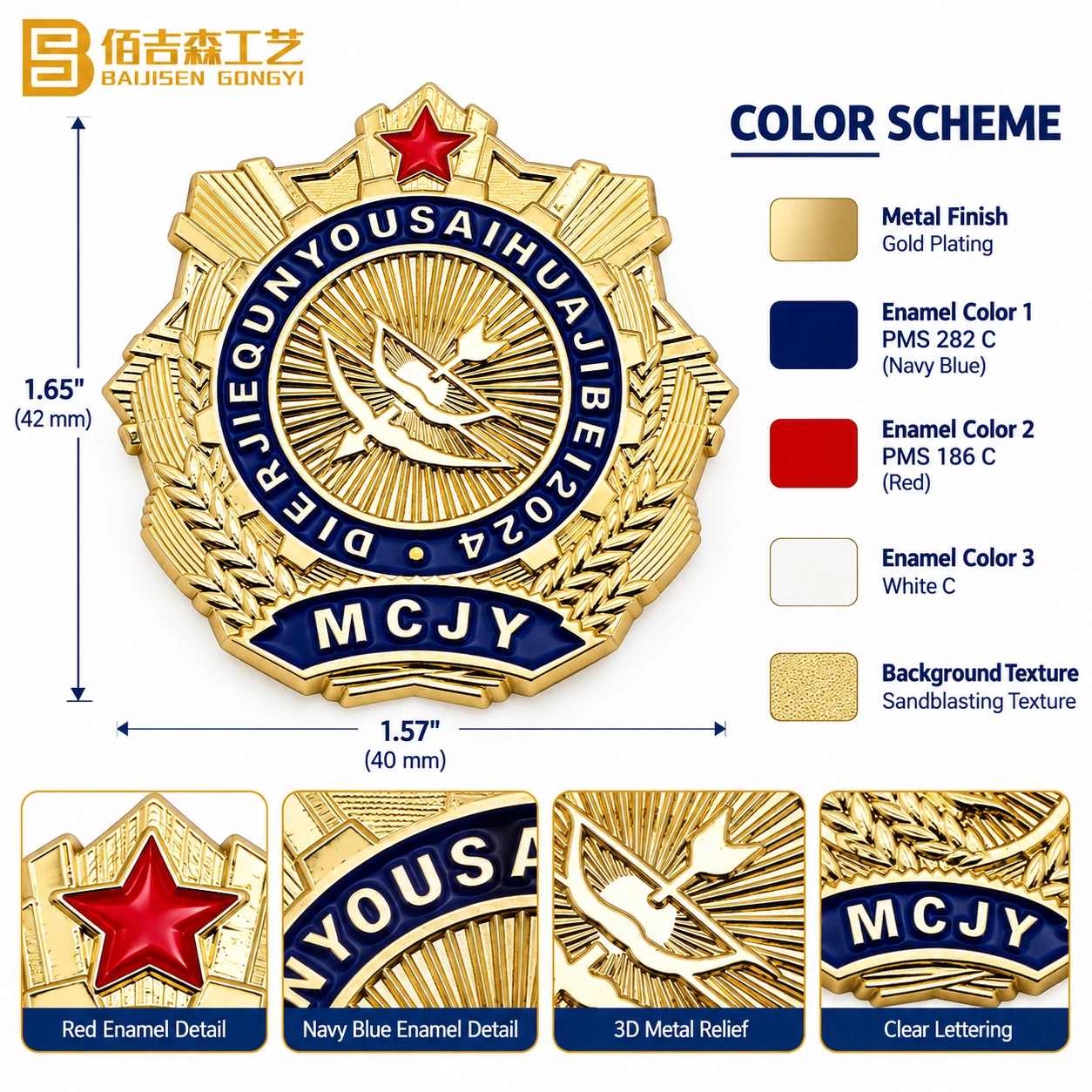
- Target dimensions: required width and height, plus measurements of an existing sample if applicable.
- Quantities: the total order and the quantity for each design or rank.
- Variable information: an approved list of names, ranks or individual numbers.
- Appearance: important colors, metal appearance and details that must remain unchanged.
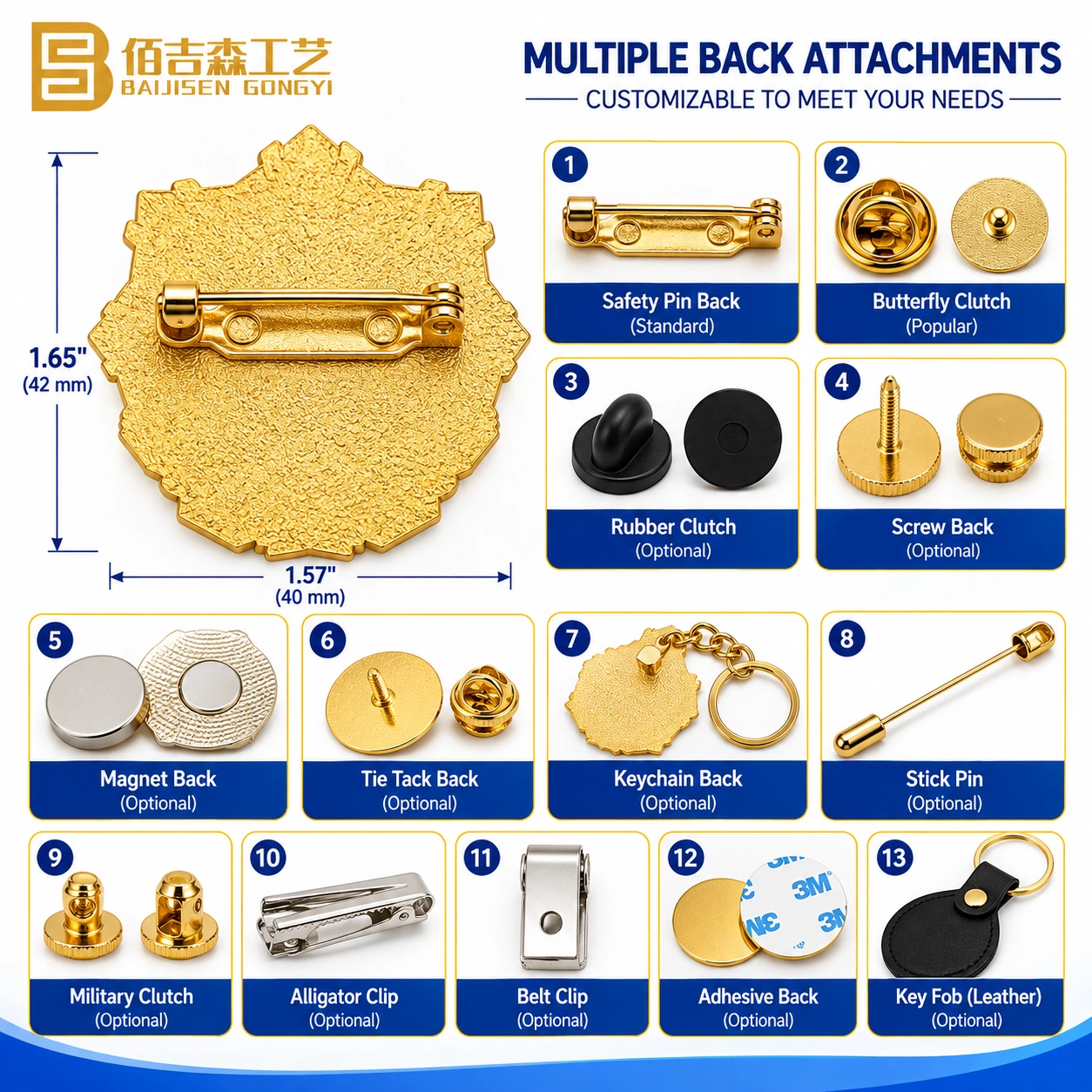
- Back attachment: wearing or display requirements, with reference photographs where needed.
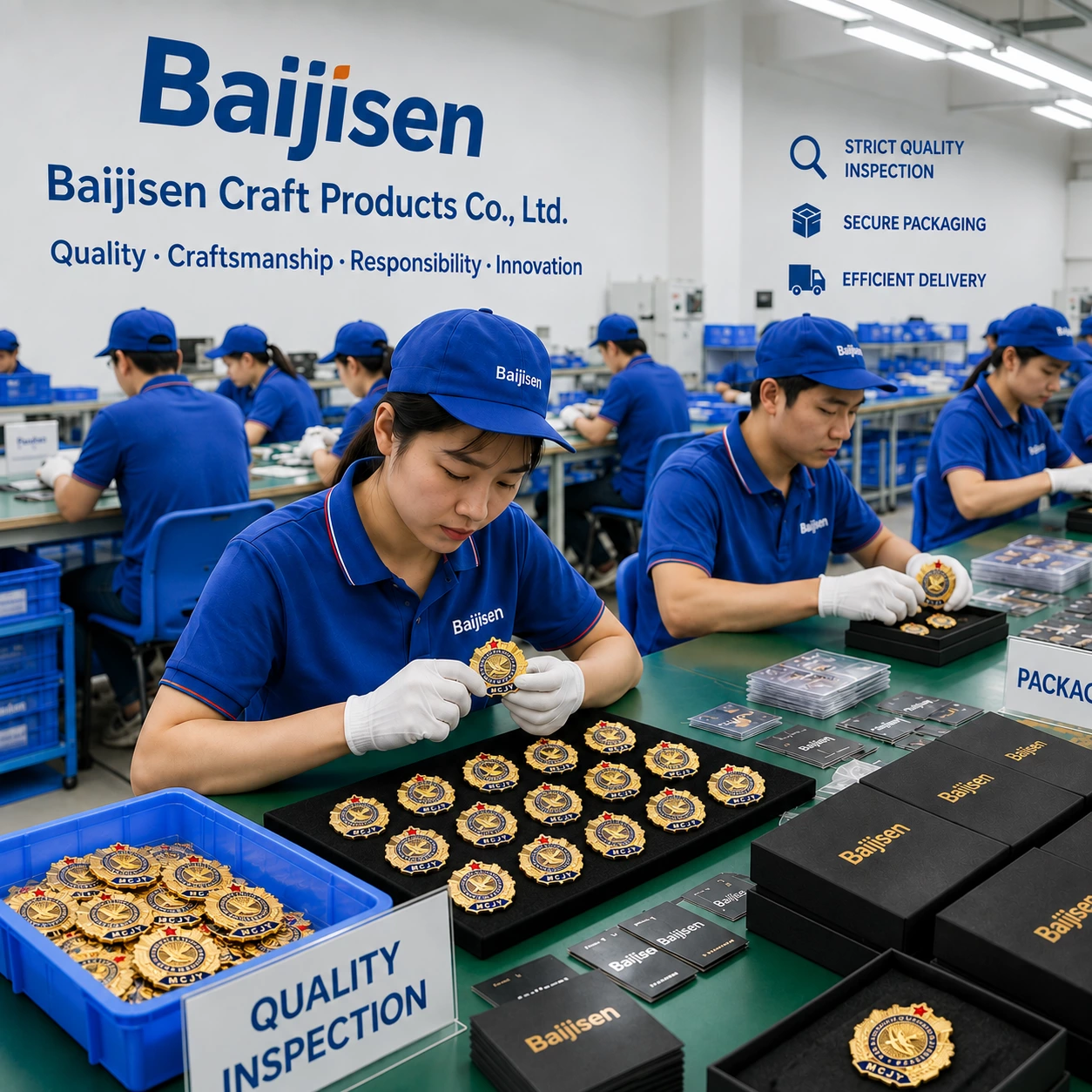
- Packaging: individual packing, sorting, presentation boxes or cards.
- Delivery: destination and requested delivery date.

- Authorization: confirmation that the purchaser may use the agency name, seal and artwork.
If you have only a photograph, label it as a reference rather than a final production file. Add measurements and explain which details may be adjusted. All wording, numbers and permissions should be confirmed before production approval.
How Should You Compare Materials and Manufacturing Methods?
The suitable manufacturing approach depends on the approved artwork, required relief, color areas, dimensions and intended use. A badge with raised metal lettering presents different design questions from one with many small enamel-filled details.
Rather than choosing a material from a photograph alone, ask for an assessment of your actual design:
- Will the smallest lettering remain legible at the required size?
- Which emblem details can be retained, and which may need simplification?
- How will the proposed construction affect thickness and weight?
- Which areas can receive color, and where should metal remain visible?
- What should be checked in a sample before bulk production?
Available materials and processes should be confirmed for the specific project. For an authorized uniform badge, the agency's approved technical requirements take priority over a general product recommendation.
How Do Plating, Enamel and Surface Finishes Affect the Design?
Metal appearance and enamel color change how a badge's features are seen. Bright finishes can emphasize raised outlines. Other available effects may give the relief a softer appearance. Enamel can separate areas of a seal or highlight selected details.
Evaluate finish choices at the badge's actual size:
- Text contrast: Can the agency name, rank and number be read clearly?
- Emblem detail: Are neighboring shapes distinguishable?
- Design consistency: Does the result follow the approved agency artwork?
- Order consistency: Is there an agreed sample or documented appearance reference for inspection?
Screen images may not show metal color and surface texture accurately. For projects with strict appearance requirements, provide an approved color reference and discuss whether an actual sample should be reviewed.
Why Are Size, Thickness and Back Attachments Important?
The front design is only part of the specification. Dimensions, weight and backing determine whether the badge suits its intended position. A badge intended for clothing has different practical requirements from one intended for a display case.
State width and height numerically. If a badge must fit an existing holder, uniform position or presentation insert, provide photographs and measurements of that item. For a replacement project, show both the front and back of the current badge and identify any construction details that must be matched.
How Should the Design and Sample Be Approved?
1. Review the complete specification
The approval document should identify the intended use, dimensions, artwork version, wording, finish, color areas, backing and packaging. If there are several ranks or numbered badges, attach the final variation list.
2. Check appearance and information separately
First review the badge's overall visual design. Then make a separate pass through every name, rank, date and number. This helps prevent a visually attractive proof from being approved with incorrect information.
3. Review a sample when the project requires one
A physical sample can help verify size, lettering, emblem detail, finish and backing. If sampling is required, state that requirement when requesting a quote. Sample availability, charges and timing need to be confirmed for the project.
4. Record the approved version
Keep one approved design and one approved list of variable information. When a change is made, identify the new version clearly so an earlier file is not used for production or inspection.
What Should Be Checked Before Delivery?
A practical inspection list makes the agreed specifications easier to verify:
| Inspection item | Question to check |
|---|---|
| Shape and size | Do they match the approved drawing or sample? |
| Lettering | Are all names, ranks and dates correct and legible? |
| Center emblem | Are the required details present and recognizable? |
| Individual numbers | Does each number match the approved master list? |
| Finish and color | Does the appearance meet the agreed reference? |
| Back attachment | Is the specified attachment present and correctly positioned? |
| Quantity and packing | Are all variations counted, sorted and packed as agreed? |
Orders with individual numbering need particular attention: visual inspection of a few badges cannot establish that every number is correct. Use the final approved list when checking the completed order.
What Affects the Price of Custom Police Badges?
A custom badge quotation depends on the specifications of the project. Size, design complexity, finish, color areas, backing, quantity, individual numbering, packaging and delivery requirements may all affect the proposed price.
When comparing quotations, confirm that each supplier has priced the same design and requirements. Check what is included, whether a sample is required and how variations are handled. A price from a different badge project may not apply to yours.
Request a Custom Badge Quote from Baijisen
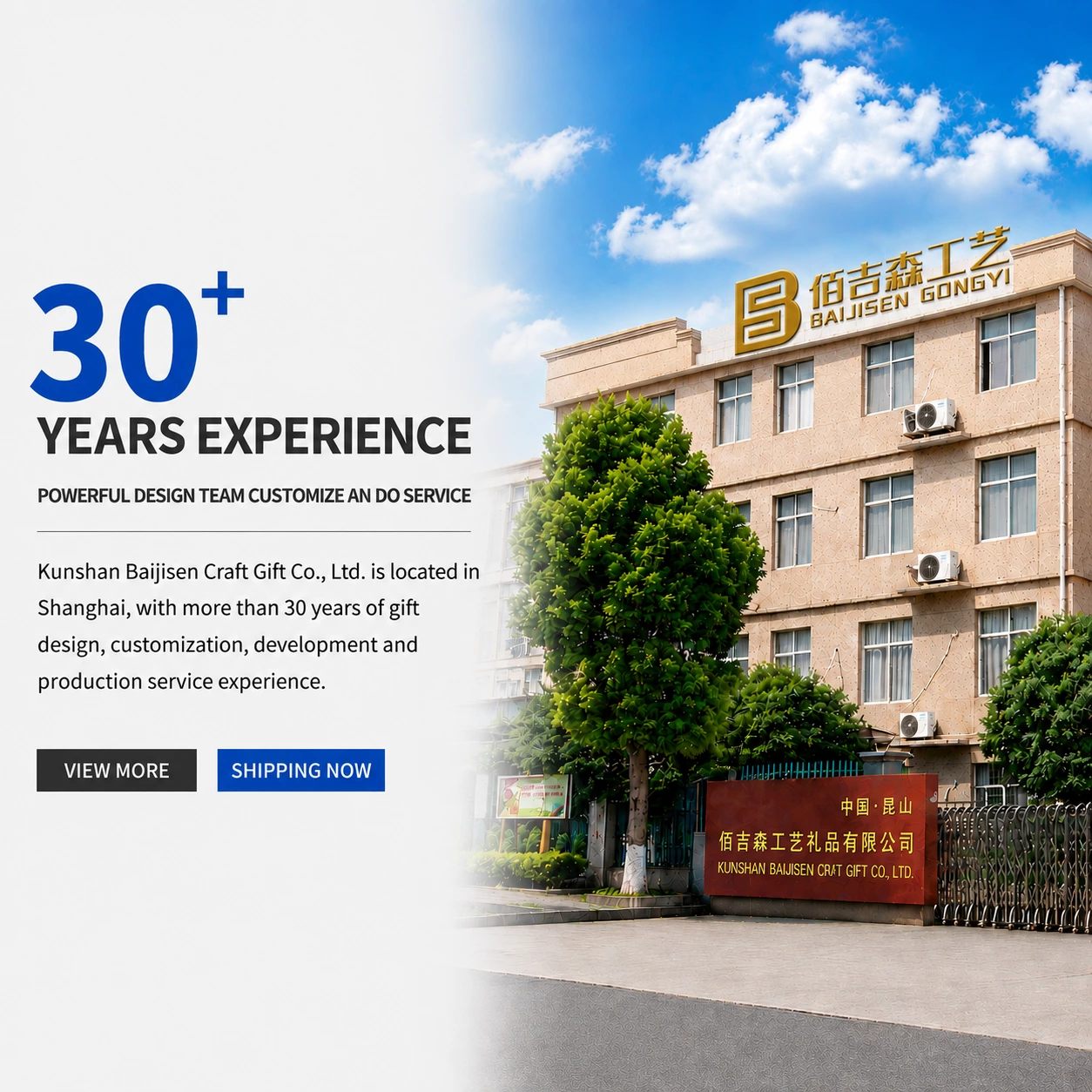
Kunshan Baijisen Craft Gift Co., Ltd. presents custom metal badges and related metal craft products on its website. If you are planning an authorized badge project or a commemorative badge-themed product, share the details so the design and available production options can be reviewed.
For the most useful first response, send your artwork or reference images together with the intended use, dimensions, quantity, variation list, preferred appearance, backing, packaging and delivery destination. Clearly identify any requirements established by the purchasing agency.
Contact Baijisen About Your Custom Badge Project
Frequently Asked Questions
Can you use a photograph of an existing badge?
A photograph is a useful starting reference, but it may not show accurate dimensions, thickness, finish or backing. Provide front, side and back images, measurements and authorized design information whenever possible. The project must be assessed before production details can be confirmed.
Can badges include different ranks or individual numbers?
These requirements should be discussed with the design and manufacturing details. Send a complete variation list, including the quantity for each rank and the exact numbering sequence. Confirm the placement and format before production.
Can I approve a sample before bulk production?
If sample approval is required, mention it in your initial inquiry. Whether a sample can be provided, along with its cost and timing, depends on the specific project.
What is the minimum order quantity?
Minimum order quantity 30 PCS. The quantity can be customized according to the customer's requirements.
How long does production take?
Timing depends on artwork approval, production requirements, quantity and whether a sample is needed. Provide your requested delivery date when asking for a quote so feasibility can be assessed.
Can a commemorative badge use a real agency name or seal?
The purchaser should have permission to use the name, seal and artwork. Explain the intended purpose and supply authorization information required for review.