中文
中文Metal pins
Custom metal pins turn logos, artwork, characters, and brand ideas into durable metal products for corporate branding, events, employee recognition, clubs, merchandise, collectibles, and promotional campaigns.
At Kunshan Baijisen Craft Gift Co., Ltd., custom metal pins can be tailored around your artwork and project requirements, including pin style, shape, size, enamel colors, plating, backing, and packaging.
Whether you are sourcing custom metal pins with a logo, enamel lapel pins, die-struck pins, printed pins, or 3D metal pins, choosing the right manufacturing process is essential to achieving the appearance, durability, and budget your project requires.
This guide explains the main metal pin types, materials, finishes, manufacturing processes, quality considerations, cost factors, and sourcing decisions you should understand before placing a custom order.
Have a design ready? Send us your artwork and request a custom quote.
Which Type of Custom Metal Pin Should You Choose?
The best metal pin process depends on your artwork, desired surface appearance, level of detail, color requirements, intended use, and budget.
| Pin Type | Surface | Color | Detail | Best For |
|---|---|---|---|---|
| Soft Enamel | Textured | Multiple colors | High | Promotions, merchandise, events |
| Hard Enamel | Smooth | Multiple colors | High | Premium branding, corporate pins |
| Die Struck | Raised/recessed metal | Metal-focused | Medium–High | Awards, recognition, commemorative pins |
| Die Cast | 2D/3D | Optional | Very High | Complex shapes and dimensional designs |
| Printed | Smooth | Full color | Very High | Gradients and detailed graphics |
| 3D Metal | Dimensional | Optional | High | Characters, sculptures and detailed logos |
If you are unsure which process fits your artwork, do not choose based only on appearance or price. The actual design, finished size, order quantity, and intended use should be evaluated together.
What Are Metal Pins?
Metal pins are customized products made from materials such as iron, zinc alloy, brass, or stainless steel. Depending on the required appearance, they can be manufactured using processes such as die striking, die casting, enameling, printing, polishing, and plating.
A typical custom metal pin may include:
- A metal base
- Custom logo or artwork
- Enamel or printed colors
- Metal plating
- Pin post
- Clutch or backing
- Custom packaging
Metal pins can be manufactured in standard geometric shapes or custom die-cut shapes based on company logos, characters, products, symbols, and original artwork.
Metal Pins vs. Enamel Pins
Metal pins are a broad product category, while enamel pins are one type of metal pin. Enamel pins use colored enamel within areas defined by the metal design.
The two common options are soft enamel pins and hard enamel pins. If a design does not require color, a die-struck metal pin with polished, matte, or antique finishing may be more appropriate.
Metal Pins vs. Lapel Pins
“Metal pin” generally describes the material and construction of a product, while “lapel pin” often describes how or where the pin is worn.
A single product can therefore be a metal pin, an enamel pin, and a lapel pin at the same time. For example, a hard enamel company logo pin worn on a suit lapel could accurately be described as a custom metal enamel lapel pin.
Types of Custom Metal Pins
Choosing the manufacturing process is one of the most important decisions in a custom pin project. Different processes create different textures, levels of detail, color effects, and visual styles.
Soft Enamel Metal Pins
Soft enamel pins are recognizable by their textured surface. Enamel colors are filled into recessed areas surrounded by raised metal lines. Because the enamel remains below the metal borders, the finished pin has noticeable depth and texture.
Key characteristics:
- Raised metal outlines
- Recessed enamel areas
- Strong visual depth
- Multiple color options
- Wide range of plating finishes
- Suitable for many custom shapes
Soft enamel is commonly used for promotional pins, company logos, events, clubs, character merchandise, and collectible designs.
Best choice when: you want vibrant colors combined with visible metal lines and a textured surface.
Hard Enamel Metal Pins
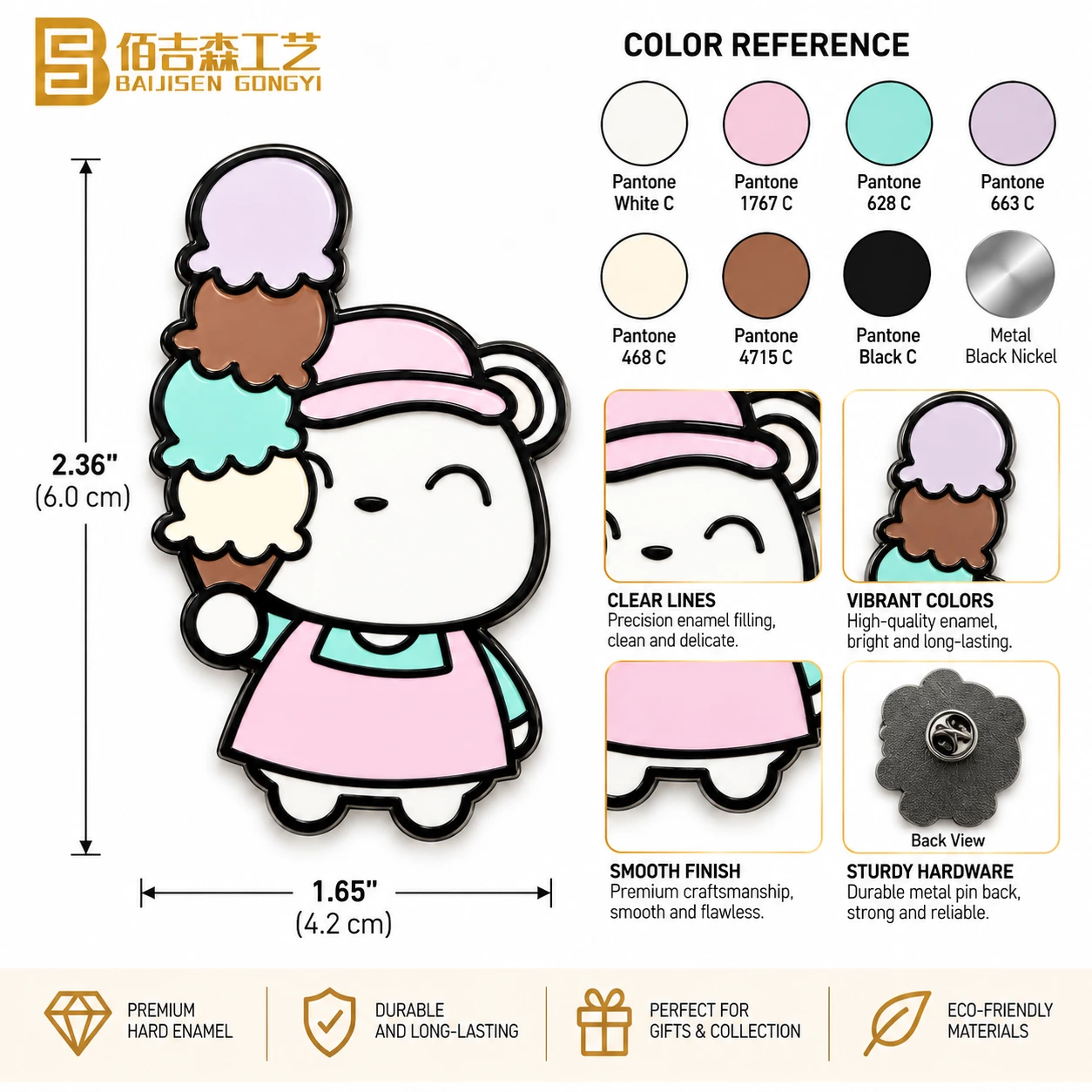
Hard enamel pins have a smooth, polished surface. The colored areas are processed and polished so the enamel and surrounding metal lines create a flatter finished surface.
Key characteristics:
- Smooth surface
- Polished appearance
- Clear color separation
- Refined feel
- Suitable for premium branding
Hard enamel is frequently considered for corporate logos, branded merchandise, recognition pins, and projects where a smooth finish is preferred.
Best choice when: you want a clean, smooth, polished pin with a premium appearance.
Die-Struck Metal Pins
Die-struck pins use raised and recessed metal areas to reproduce artwork without relying on enamel colors. Polished and textured areas can create contrast, while different plating finishes can significantly change the appearance.
Common applications include:
- Corporate recognition
- Employee service awards
- Membership pins
- Anniversary pins
- Commemorative designs
- Military-themed pins
Best choice when: the design should rely primarily on the appearance and contrast of the metal itself.
Die-Cast Metal Pins
Die casting provides greater flexibility for complex shapes, deep relief, cutouts, and dimensional designs. Zinc alloy is commonly considered for projects requiring complex structures or stronger 2D and 3D effects.
Best choice when: your artwork contains complicated contours, dimensional features, deep relief, or shapes that are difficult to reproduce with conventional die striking.
Printed Metal Pins
Not every design should be converted into enamel. Artwork containing gradients, photographs, very small text, or highly detailed graphics may be better suited to a printing process.
Printed pins can reproduce visual details that would otherwise require excessive metal separation lines.
Best choice when: accurate reproduction of complex graphics is more important than traditional enamel texture.
3D Metal Pins
3D metal pins use different heights, curves, and sculpted surfaces to create dimensional artwork.
They can work particularly well for:
- Characters
- Faces
- Animals
- Buildings
- Sculptural logos
- Commemorative designs
3D designs require careful consideration of depth, dimensions, and manufacturing limitations during the artwork stage.
Soft Enamel vs. Hard Enamel vs. Die-Struck Pins
One of the most common sourcing mistakes is selecting a manufacturing process before considering the artwork.
Choose soft enamel when you want color plus noticeable metal texture.
Choose hard enamel when you want color plus a smooth, polished surface.
Choose die struck when you want the design to rely primarily on the beauty and contrast of metal.
Choose die cast or 3D when the design requires greater depth or complex dimensional shapes.
Choose printing when the artwork contains gradients, photographs, tiny details, or graphics that cannot be reproduced effectively with metal separation lines.
The best process is not necessarily the most expensive one. It is the process that reproduces your design effectively at its actual finished size.
What Materials Are Used for Metal Pins?
Material selection can affect weight, structure, manufacturing method, appearance, and cost. Common options include zinc alloy, iron, brass, and stainless steel.
Zinc Alloy
Zinc alloy offers strong forming flexibility and is particularly useful for complex shapes, cutouts, thicker products, and dimensional die-cast designs.
It is often worth considering when artwork requires greater structural freedom.
Iron
Iron can be used for many traditional metal badges and enamel pins. For relatively straightforward designs and selected volume-production requirements, iron may provide a practical manufacturing option.
Brass
Brass can provide a distinctive metal appearance and is suitable for selected corporate, commemorative, and die-struck designs.
Stainless Steel
Stainless steel has different material properties and can be considered for selected metal pin and badge applications.
Which Metal Is Best for Custom Pins?
There is no single best metal for every custom pin. The appropriate material depends on the artwork, manufacturing process, size, structure, quantity, appearance, and budget.
A reliable metal pin manufacturer should evaluate these factors before recommending a material rather than applying the same solution to every project.
Metal Pin Plating Options
Plating plays a major role in the final appearance of custom metal pins.
Depending on the product requirements, visual options can include:
- Shiny Gold
- Shiny Silver
- Black Nickel
- Rose Gold
- Antique Gold
- Antique Silver
- Antique Copper
- Matte or Satin Finishes
How Do You Choose the Right Plating?
Consider plating together with your logo colors, brand identity, enamel colors, intended use, and packaging.
The same artwork can look dramatically different in shiny gold, silver, black nickel, or an antique finish, so plating should not be treated as an isolated decision.
Custom Metal Pin Color Options
Color is especially important for company logos and branded merchandise.
Depending on the selected process, custom pins can incorporate options such as:
- Enamel colors
- Pantone color matching
- Transparent enamel
- Glitter
- Glow-in-the-dark effects
- Pearlescent effects
If your company has established brand colors, provide the relevant color references with your artwork so they can be reviewed during the proofing and production process.
For designs requiring gradients, photographs, or complex color transitions, printing may be more appropriate than traditional enamel.
Metal Pin Sizes and Custom Shapes
Common custom pin sizes may include approximately 0.75", 1", 1.25", 1.5", 2" and larger sizes. These are reference sizes rather than fixed rules.
What Is the Best Size for a Metal Pin?
The best size depends primarily on the amount of detail in the artwork and how the pin will be used.
A simple logo can often remain recognizable at a relatively small size. Artwork containing multiple lines of text, detailed characters, numerous color areas, or intricate shapes generally requires more space.
Before approving production, ask:
Will the important details still be clearly visible at the actual finished size?
A design that looks excellent on a large computer monitor may not work equally well when reduced to a 1-inch pin.
Can Metal Pins Be Made in Custom Shapes?
Yes. Custom pins can follow the outline of a:
- Company logo
- Character
- Animal
- Letter
- Product
- Shield
- Symbol
- Custom illustration
Using the natural outline of the artwork can often produce a more distinctive result than placing every design inside a standard circle or rectangle.
Metal Pin Backings and Attachments
The front of a pin receives most of the attention, but the backing directly affects how the product performs when worn.
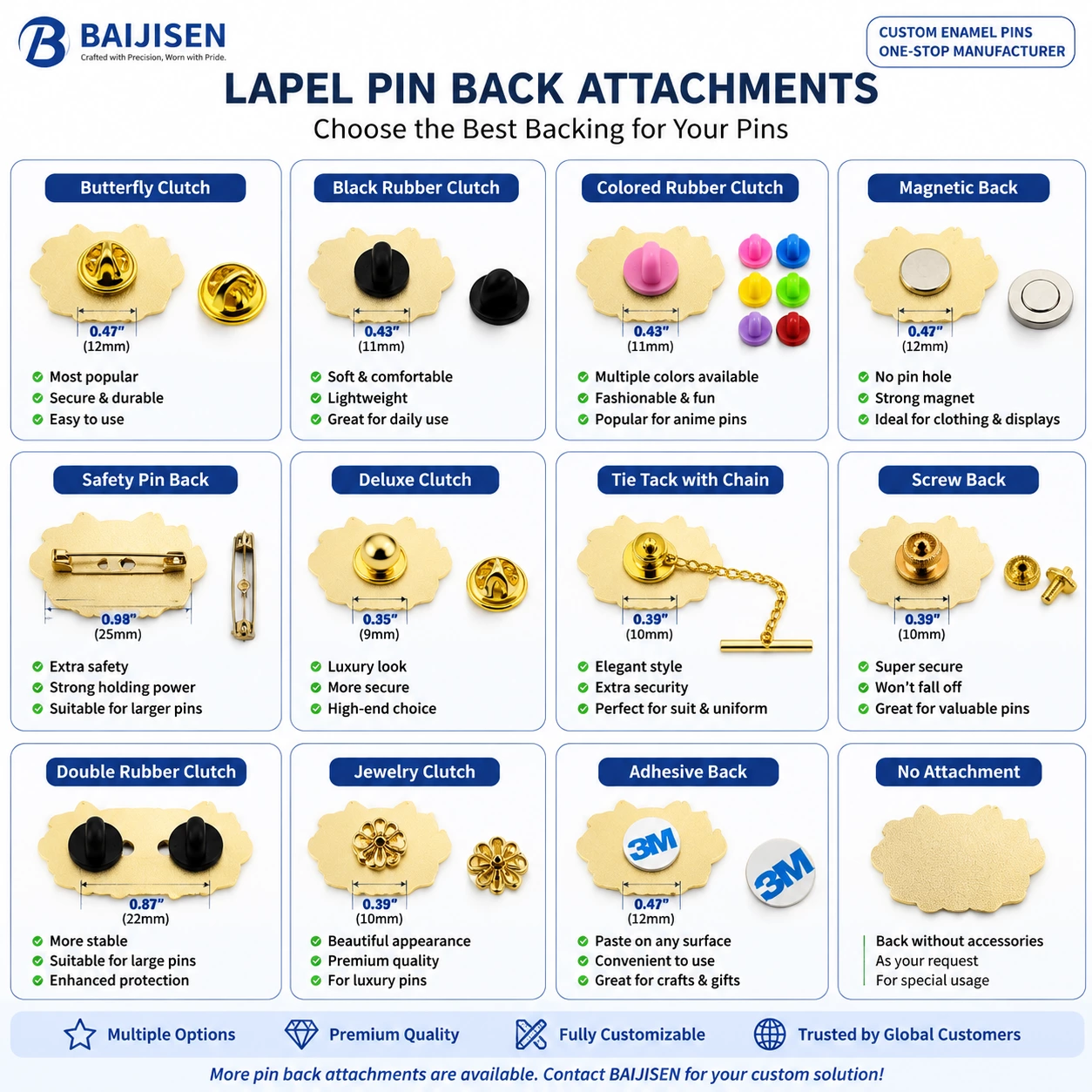
Butterfly Clutch
A traditional metal clutch suitable for many standard lapel pin applications.
Rubber Clutch
A softer backing option suitable for many everyday pin applications.
Locking Clutch
Useful when stronger retention is a priority.
Magnetic Backing
Can be considered when avoiding a pin hole in certain garments is important.
Safety Pin or Brooch Pin
Often used for brooches and larger products.
Double Post
Two posts can help stabilize larger or irregularly shaped pins and reduce unwanted rotation.
Which Pin Backing Should You Choose?
Consider the pin size, weight, center of gravity, garment, and wearing frequency.
For example, a large asymmetric pin may benefit from two posts because a single post can allow the product to rotate when worn.
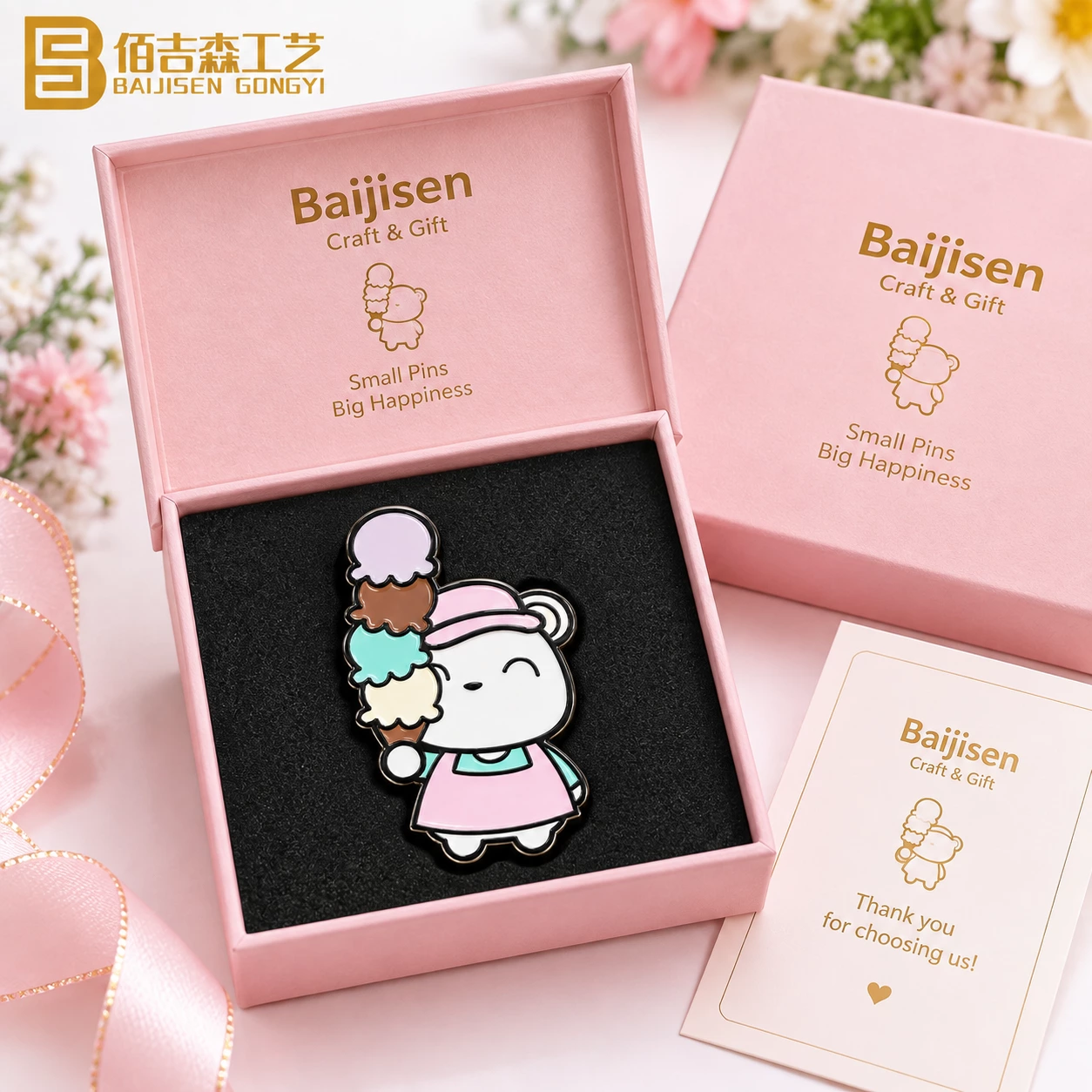
Custom Metal Pin Packaging Options
Packaging can serve three important purposes: protection, presentation, and branding.
Options can include:
- Individual poly bags
- PVC bags
- Backing cards
- Velvet pouches
- Velvet boxes
- Gift boxes
- Custom retail packaging
A simple individual bag may be appropriate for a large promotional campaign, while a corporate anniversary pin may benefit from a presentation box.
For retail merchandise, a custom backing card can also become part of the overall brand experience.
What Are Custom Metal Pins Used For?
Corporate Logo Pins
For employee uniforms, meetings, company events, corporate identity, and business gifts.
Promotional Pins
For marketing campaigns, product launches, giveaways, and brand activation.
Event and Trade Show Pins
For exhibitions, conferences, sports events, and promotional activities.
Employee Recognition Pins
For service anniversaries, achievements, awards, and internal recognition programs.
Club and Organization Pins
For membership, identity, commemorative events, and community programs.
School Pins
For student organizations, graduation, awards, and school events.
Military and Commemorative Pins
For recognition, remembrance, collecting, and ceremonial applications.
Anime and Character Pins
For artists, entertainment brands, games, fan merchandise, and collectible products.
Retail Merchandise
Custom-designed metal pins can become standalone products for online stores, physical retail, events, and branded merchandise collections.
How Are Custom Metal Pins Made?
Understanding the manufacturing process helps buyers evaluate whether a supplier has the technical capability to manage a project from artwork to finished product.
The exact process varies according to design, material, and pin type, but a typical workflow may include the following.
Step 1: Artwork Review
The artwork is evaluated for dimensions, text size, line detail, color areas, and compatibility with the selected manufacturing process.

Step 2: Production Artwork
The original design is prepared for manufacturing, with key specifications such as size, plating, colors, and backing confirmed.
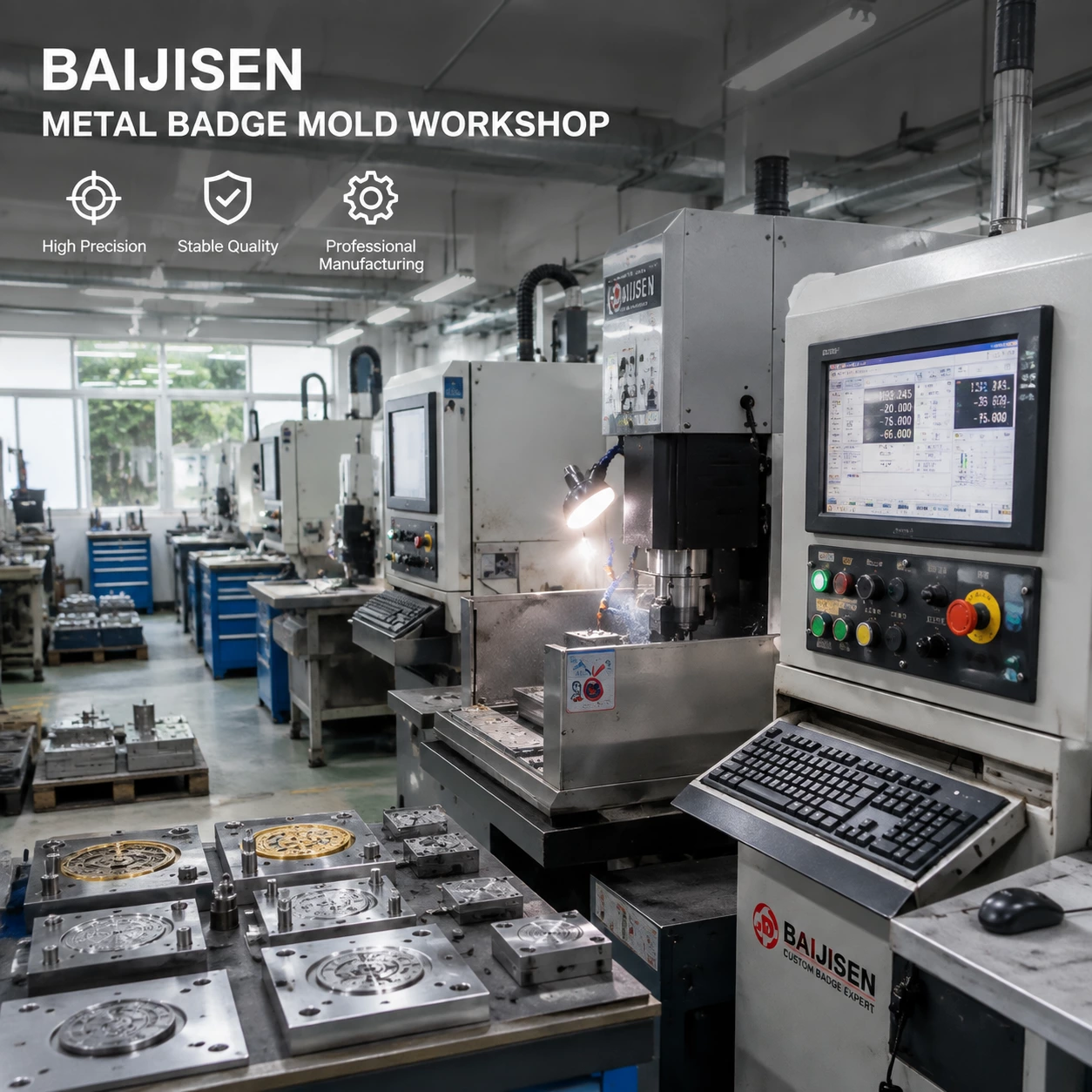
Step 3: Mold or Tooling Preparation
Tooling is prepared according to the approved production artwork when required by the selected process.
Step 4: Die Striking or Die Casting
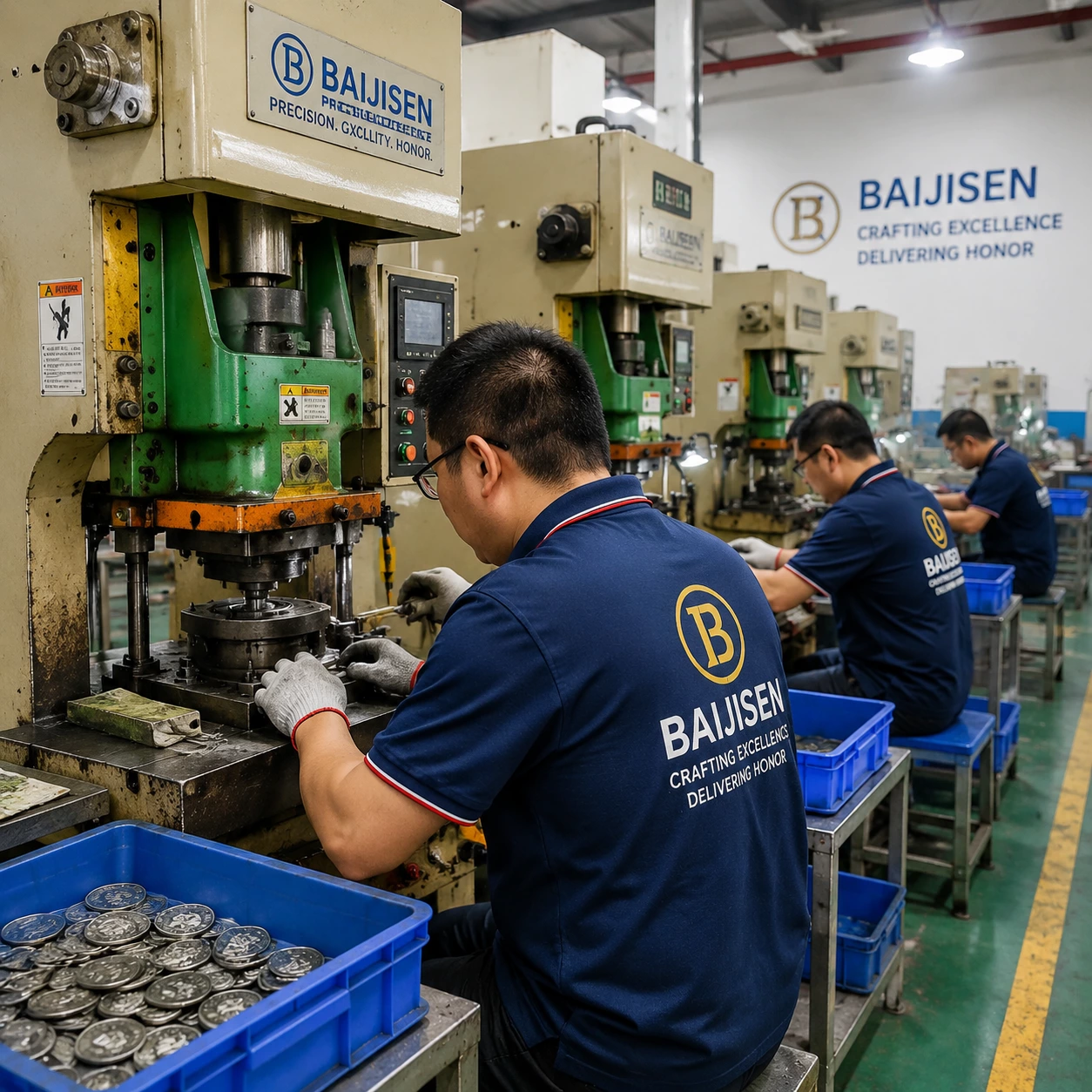
The metal body is formed using the manufacturing method appropriate for the design.
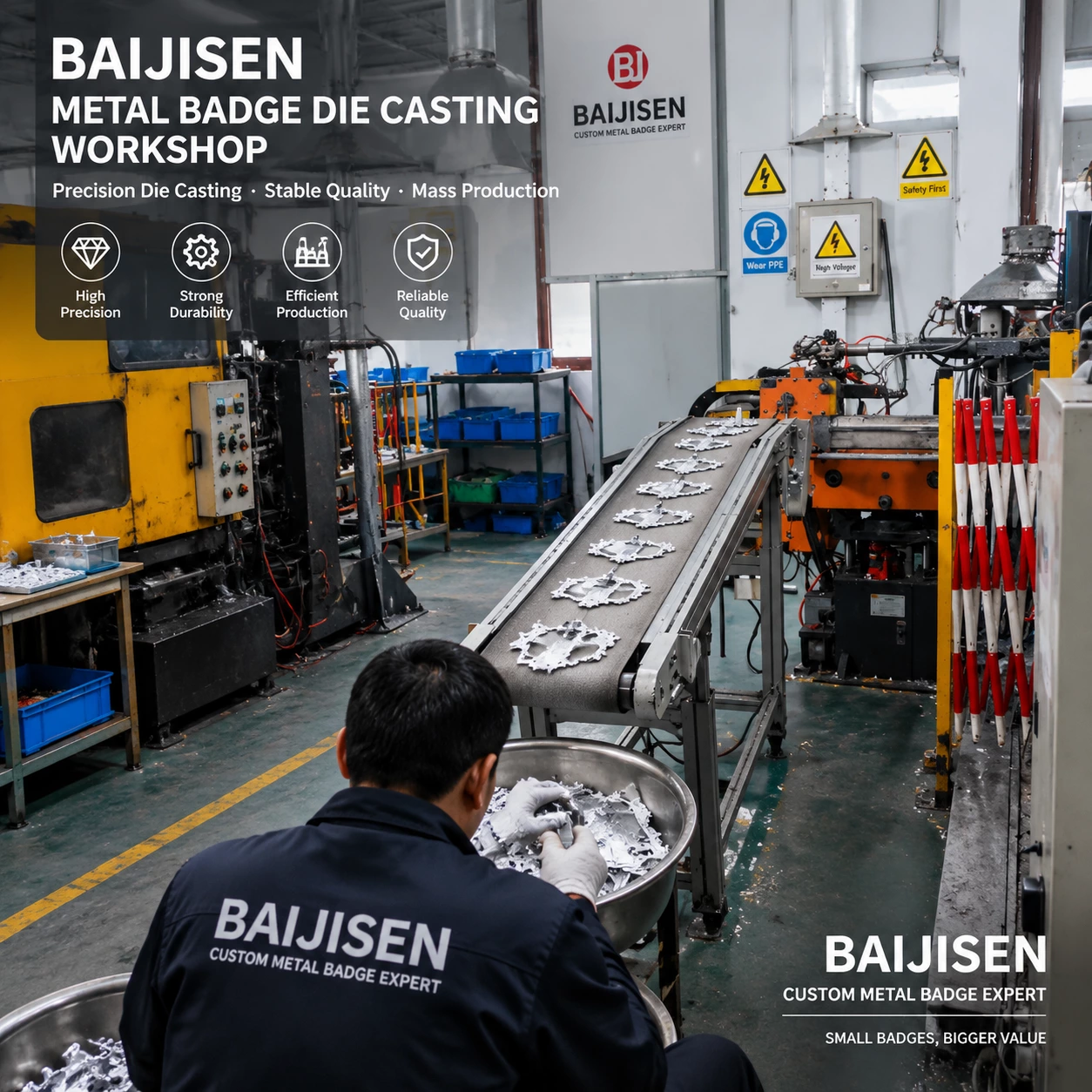
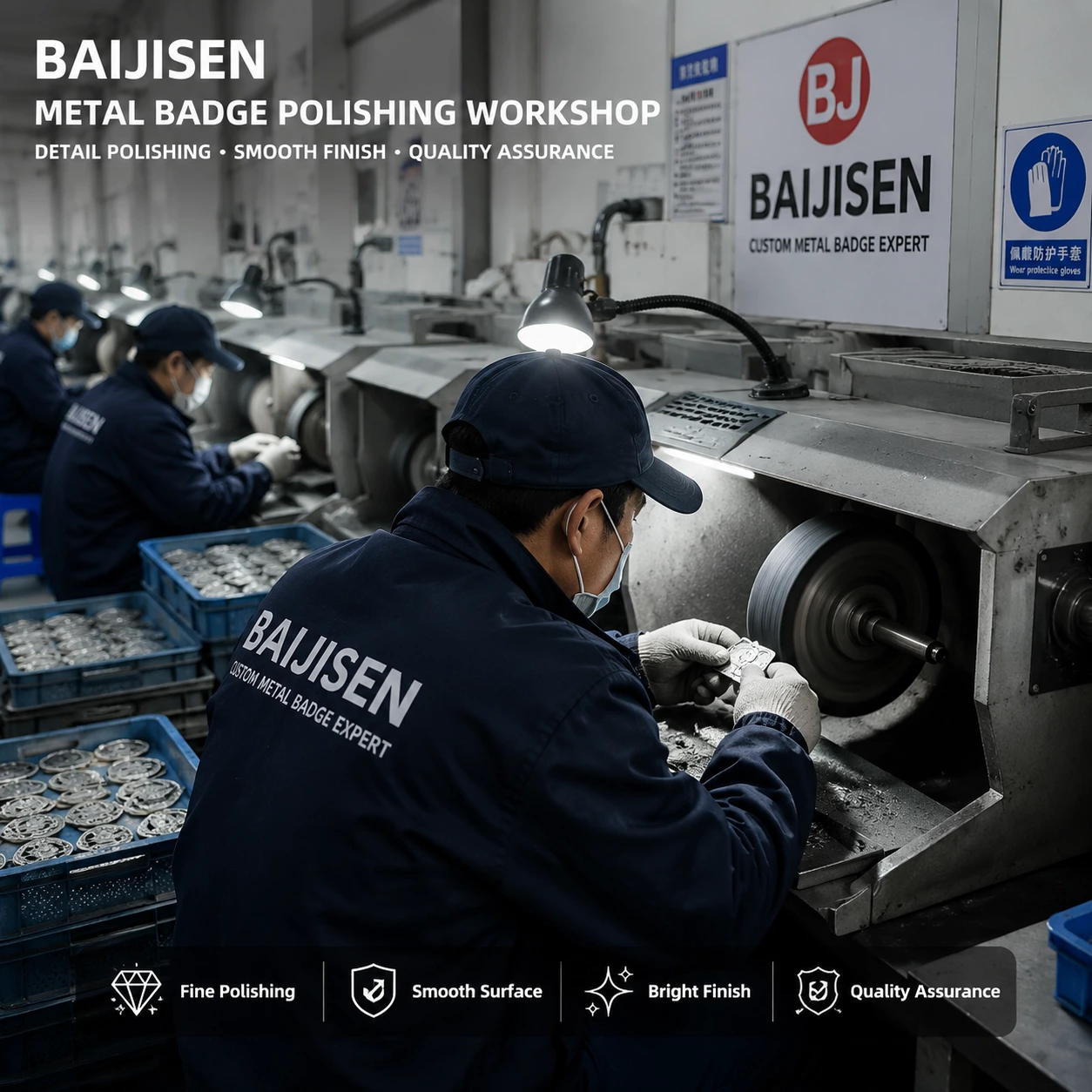
Step 5: Trimming and Polishing
Edges and metal surfaces are prepared for subsequent finishing.
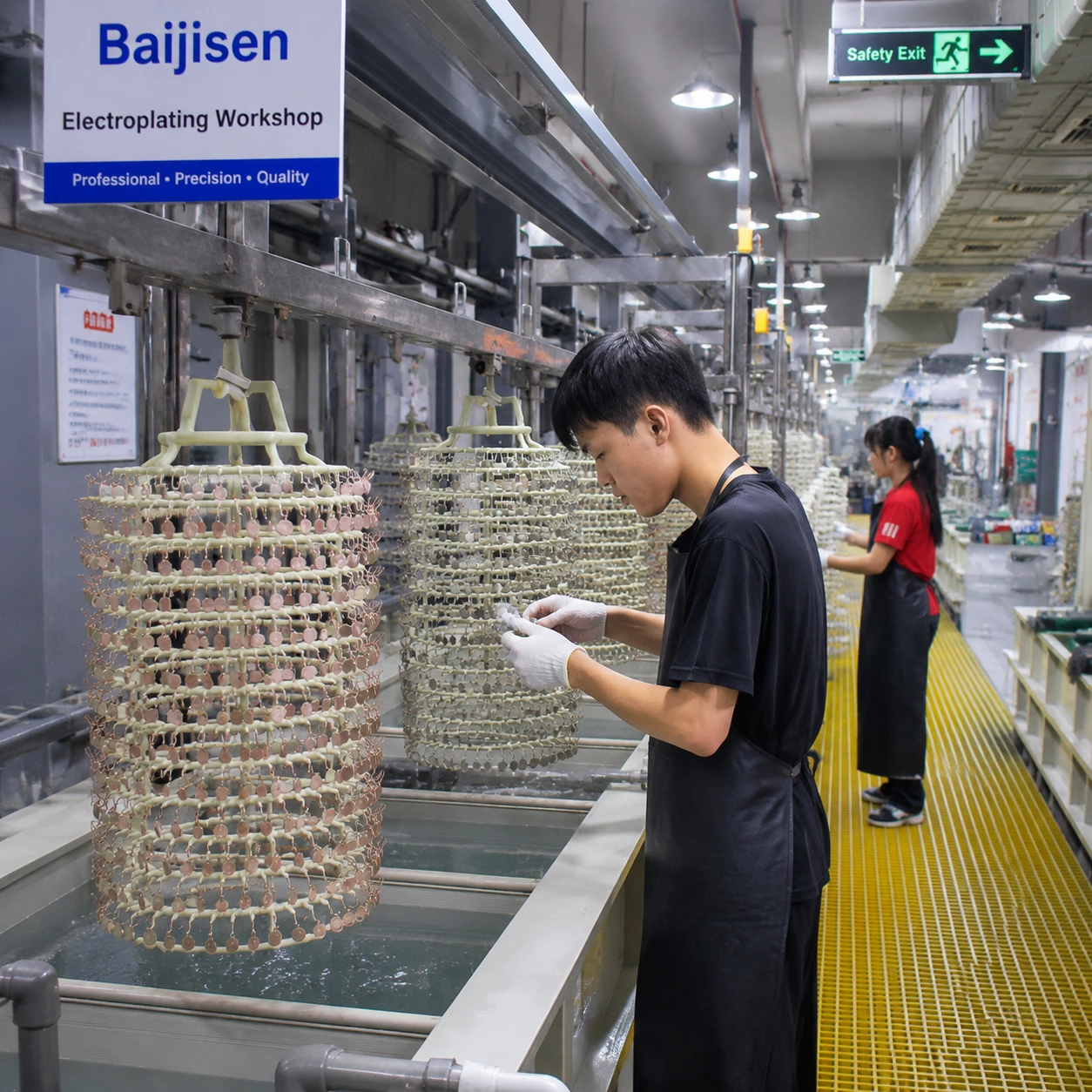
Step 6: Plating
The selected metal finish is applied according to the approved specification.
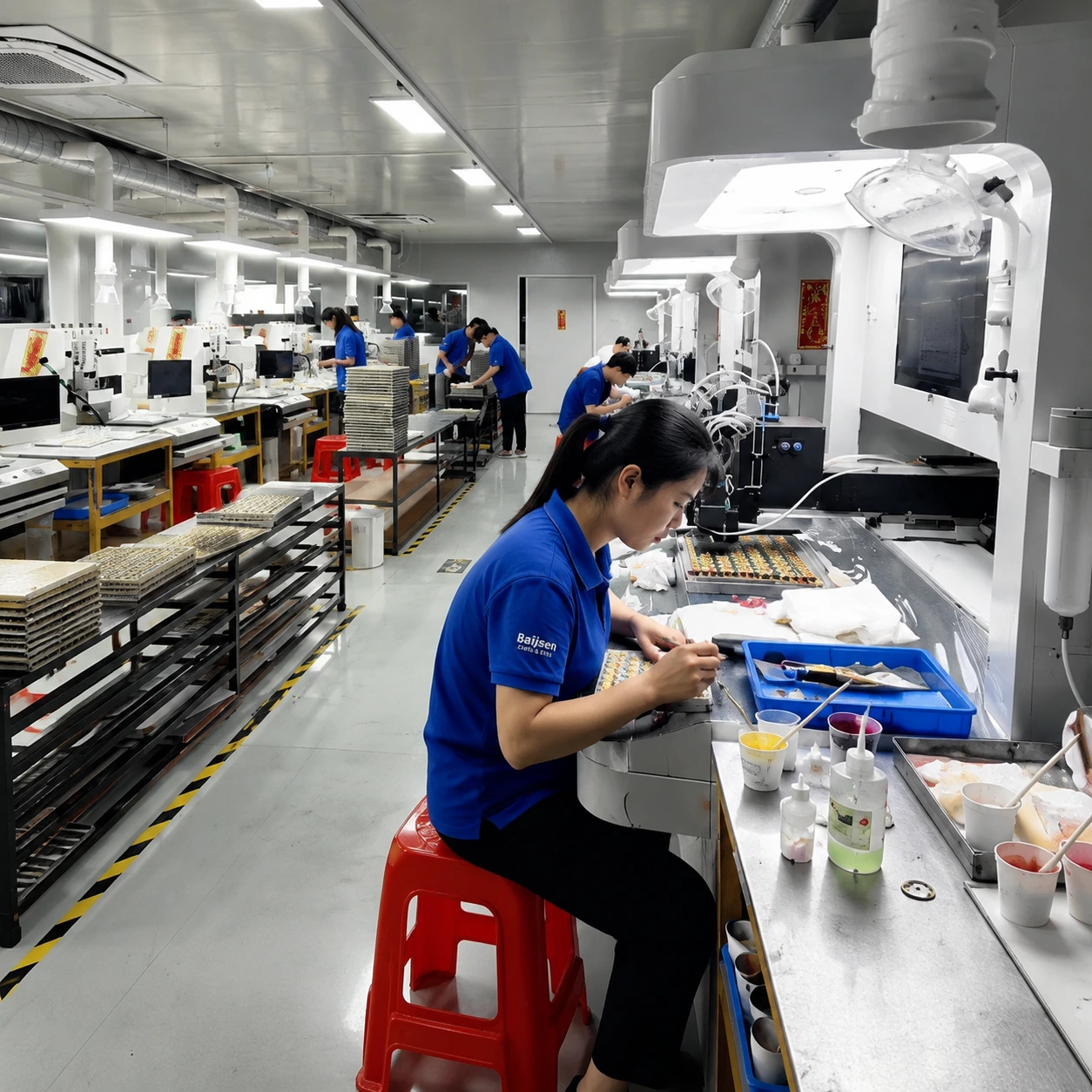
Step 7: Coloring
For enamel products, colors are applied to the required areas according to the approved design.
Step 8: Finishing
Additional finishing processes are completed according to the product specification.
Step 9: Backing Installation
Pin posts and selected attachments are installed.
Step 10: Quality Inspection
Finished products are checked against the approved requirements.
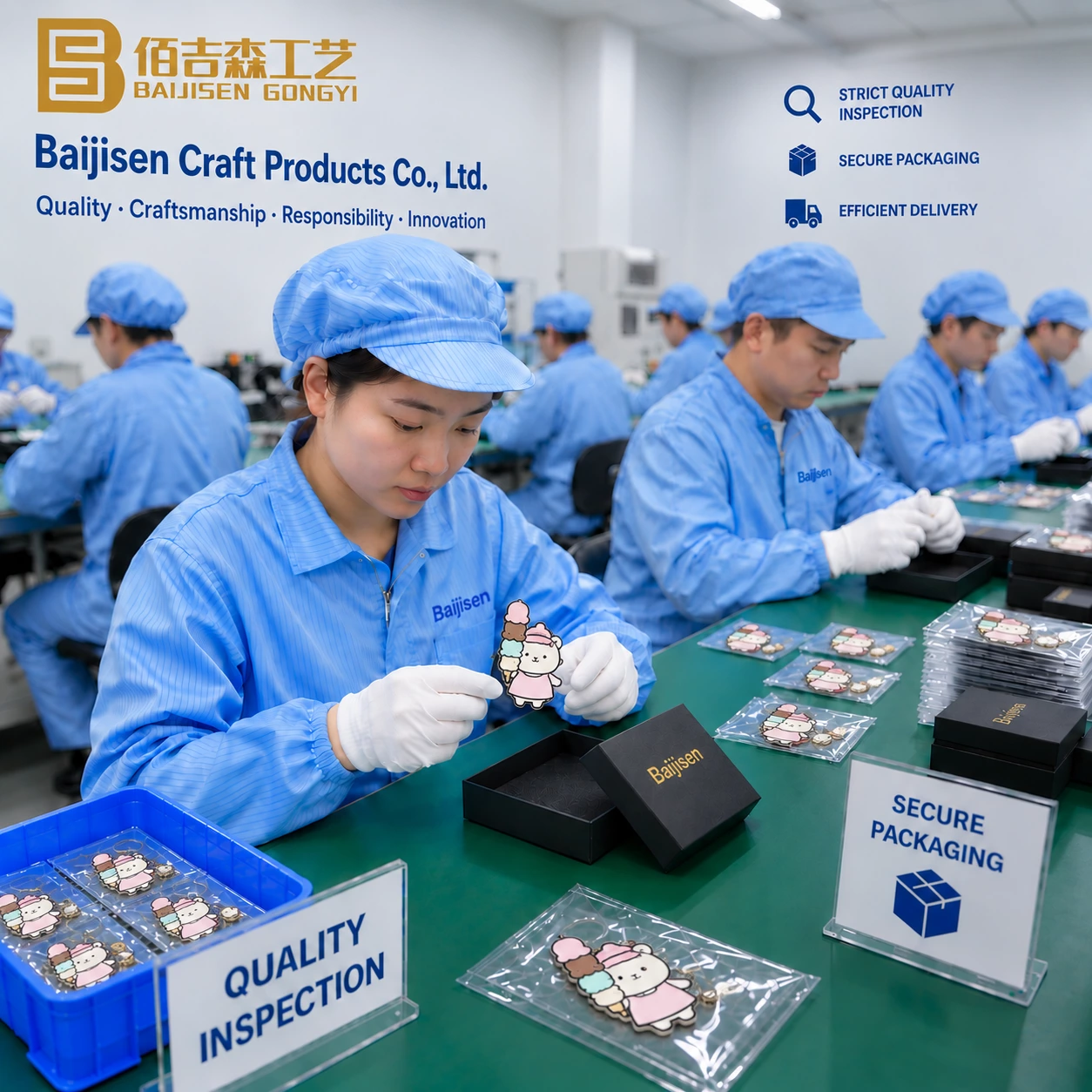
Step 11: Packaging
Pins are packed according to the order specification.
Step 12: Shipping
After final order checks, finished products are prepared for shipment.

Quality Control for Custom Metal Pins
Quality control should not begin only after bulk production is finished. Important checks can occur throughout the manufacturing process.
Artwork Inspection
Check whether fine lines, text, color areas, and structural details can be manufactured effectively.
Mold and Forming Inspection
Verify that important design features are reproduced correctly.
Plating Inspection
Check the metal surface and overall plating appearance against the approved requirements.
Enamel and Color Inspection
Review color placement, fill areas, boundaries, and overall appearance.
Surface Inspection
Inspect the finished surface for visible defects that could affect product quality.
Attachment Inspection
Check pin posts, clutches, and other attachments.
Final Inspection
Review completed pins before packaging.
Packaging Inspection
Confirm the packaging configuration and order requirements before shipment.
For B2B buyers, reliable manufacturing is not simply about producing a metal object. It is about controlling the process from artwork approval through manufacturing, inspection, packaging, and delivery preparation.
How Much Do Custom Metal Pins Cost?
There is no universal fixed price for custom metal pins because every project can have different specifications.
The main cost factors typically include:
- Order quantity
- Pin dimensions
- Thickness
- Metal material
- Manufacturing process
- Artwork complexity
- Number of enamel colors
- Plating
- Backing
- Packaging
- Special effects
- Shipping requirements
This is why comparing two quotations only by unit price can be misleading if the specifications are not identical.
For a more accurate quote, provide:
Artwork + Size + Quantity + Pin Style + Plating + Backing + Packaging Requirements
If you do not know which process to choose, start with your artwork. The design can be evaluated before final manufacturing specifications are selected.
How to Reduce Custom Metal Pin Costs Without Sacrificing the Design
Reducing cost does not always mean choosing the cheapest material or process. A better approach is to simplify specifications that add cost without adding meaningful value to the finished product.
- Choose a size appropriate for the artwork instead of making the pin unnecessarily large.
- Simplify details that will not remain visible at the actual finished size.
- Select the manufacturing process according to the artwork instead of automatically choosing a premium option.
- Avoid special finishes that do not contribute meaningfully to the design.
- Select packaging appropriate for the intended use.
- Consolidate quantities when practical.
The objective should be to remove unnecessary cost while preserving the visual elements that matter to the project.
7 Common Mistakes When Ordering Custom Metal Pins
1. Choosing the Size Before Evaluating the Artwork
A complicated design may lose important details when reduced too far. Evaluate artwork and finished dimensions together.
2. Using Text That Is Too Small
Text that looks readable on a screen may become difficult to reproduce or read on a small physical pin. Review important details at actual size.
3. Choosing Hard Enamel Just Because It Sounds More Premium
Hard enamel and soft enamel create different visual and tactile effects. The right choice depends on the design and desired surface appearance.
4. Ignoring Pin Weight and Balance
Large or irregular pins may rotate when worn if the backing arrangement does not properly support the product.
5. Failing to Confirm Brand Colors
If color consistency matters, provide clear color references during artwork approval.
6. Approving Artwork Without Viewing It at Actual Size
Always evaluate critical text and design details at approximately the intended finished dimensions.
7. Comparing Suppliers Only by Unit Price
Two quotations may represent different materials, thicknesses, plating, backing, packaging, quality requirements, or services. Compare specifications before comparing prices.
How to Prepare Artwork for Custom Metal Pins
Good production starts with suitable artwork. Vector artwork is generally helpful because lines, shapes, and colors can be reviewed and adjusted without losing image quality.
Useful file formats may include AI, EPS, PDF, SVG, or other clear artwork suitable for production evaluation.
If vector artwork is unavailable, provide the clearest version of your logo or design available.
When submitting artwork, also provide:
- Desired finished size
- Estimated quantity
- Preferred pin type
- Plating preference
- Color requirements
- Backing requirements
- Packaging requirements
If you do not know all of these specifications, start with the design and intended use so appropriate manufacturing options can be evaluated.
How to Order Custom Metal Pins
1. Send Your Logo or Artwork
Provide the design you want to turn into a metal pin.
2. Confirm Size and Quantity
Specify your expected dimensions and order volume.
3. Select the Pin Style
Choose soft enamel, hard enamel, die struck, die cast, printed, 3D, or another suitable process.
4. Review Artwork and Quotation
Confirm the design specifications, colors, plating, backing, packaging, and quotation.
5. Approve the Sample or Production Requirements
Where applicable, review the required sample or final production specifications.
6. Bulk Production
Manufacturing begins according to the approved requirements.
7. Quality Inspection
Finished products are inspected according to the order specifications.
8. Packaging and Shipping
Products are packed and prepared for shipment.
A clear approval process reduces the risk of misunderstandings involving size, colors, plating, backing, or packaging.
How to Choose a Reliable Metal Pin Manufacturer
Price matters, but it should not be the only criterion when evaluating a custom metal pin manufacturer.
Manufacturing Knowledge
Can the supplier clearly explain the differences between enamel, die striking, die casting, printing, and 3D manufacturing processes?
Artwork Support
Can the manufacturer identify design elements that may create production problems before tooling begins?
Material Selection
Can different materials be recommended according to the actual design rather than applying one solution to every project?
Color Management
Can brand color requirements be clearly reviewed during the artwork approval process?
Quality Control
Are products inspected during relevant stages of manufacturing rather than relying only on a final visual check?
Sample and Approval Process
Are important specifications clearly confirmed before bulk production?
Communication
Can artwork, colors, packaging, quantities, and other requirements be communicated accurately?
Packaging Capability
Can the supplier support packaging for promotional, corporate gift, or retail applications?
International Order Experience
For overseas sourcing, manufacturing is only part of the project. Packaging, shipping coordination, documentation, and communication can also affect the buying experience.
The goal is not simply to find the lowest-priced supplier. The goal is to find a manufacturing partner capable of balancing design, manufacturability, quality, cost, and delivery requirements.
Why Choose Baijisen for Custom Metal Pins?
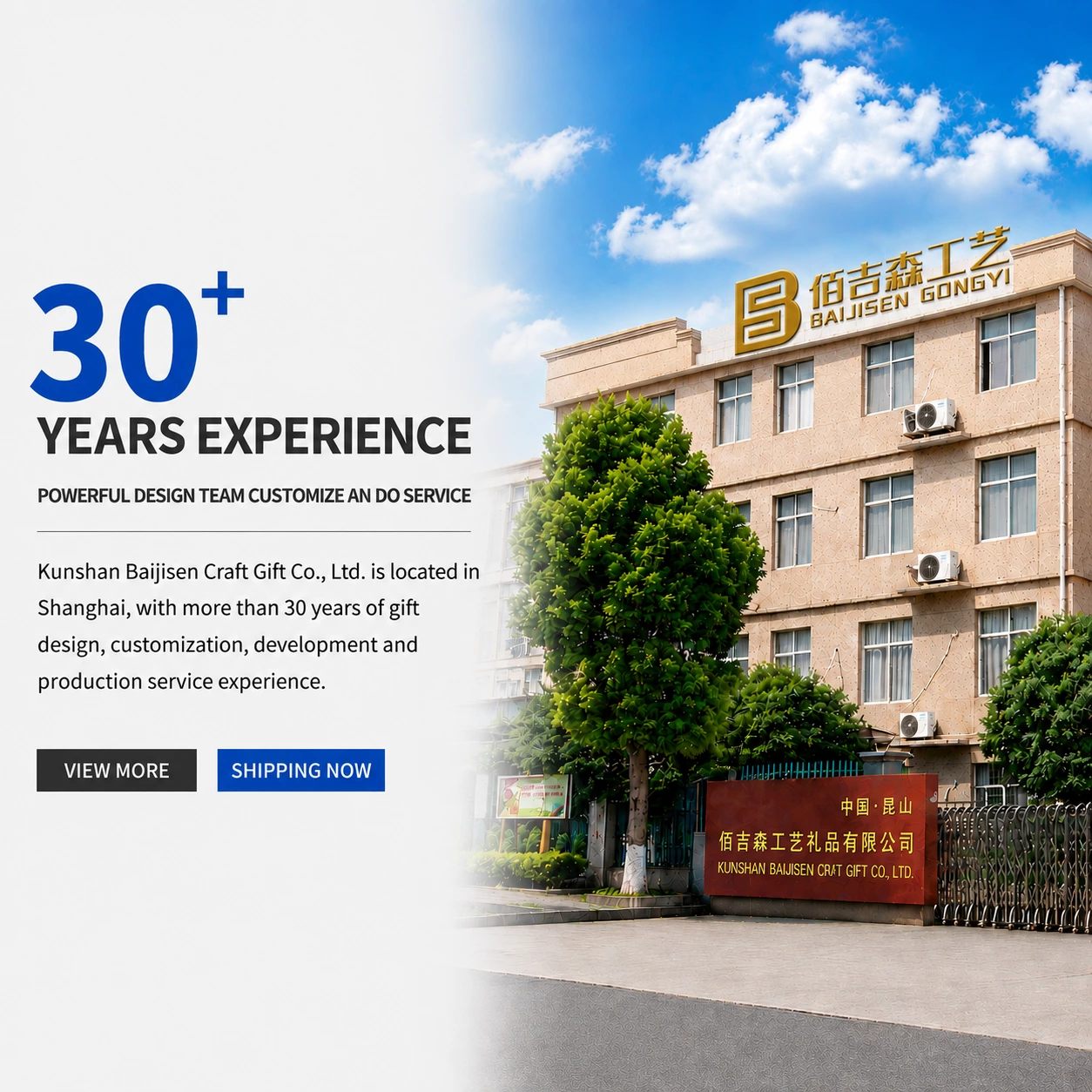
Kunshan Baijisen Craft Gift Co., Ltd. provides custom metal craft solutions based on customer artwork and project requirements.
Rather than treating every design the same way, an effective manufacturing approach begins with the artwork.
Before production, important questions include:
- Can the design be manufactured clearly at the requested size?
- Which process best reproduces the artwork?
- Which material is appropriate for the design structure?
- Which plating complements the colors and brand identity?
- Which backing provides appropriate support when the pin is worn?
- Which packaging fits the intended use?
This artwork-first approach helps transform a visual concept into specifications that can be manufactured more effectively.
For companies, promotional product distributors, brands, organizations, event planners, merchandise businesses, and other B2B buyers, Baijisen can evaluate your artwork and project requirements to help determine an appropriate custom metal pin solution.
Custom Metal Pins FAQ
What are metal pins made of?
Custom metal pins can be made from materials such as iron, zinc alloy, brass, and stainless steel. The appropriate material depends on the artwork, manufacturing process, size, structure, quantity, and project requirements.
Are metal pins the same as enamel pins?
No. Metal pins are a broader category. Enamel pins are metal pins that incorporate colored enamel as part of the design.
What is the difference between hard enamel and soft enamel pins?
Soft enamel typically has recessed colored areas with raised metal borders, creating a textured surface. Hard enamel is processed to create a smoother and flatter finished surface.
What is the best metal for custom pins?
There is no single best material for every project. Zinc alloy can be useful for complex and dimensional designs, while iron, brass, and stainless steel can be considered for different manufacturing processes and design requirements.
What size should a custom metal pin be?
The ideal size depends on artwork complexity and intended use. Simple logos can often work at smaller sizes, while detailed artwork usually requires more space to remain clear.
Can you make metal pins with a company logo?
Yes. Company logos are one of the most common applications for custom metal pins. The artwork can be evaluated to determine an appropriate shape, size, manufacturing process, color treatment, and plating.
Can metal pins be made in custom shapes?
Yes. Depending on the design and manufacturing process, pins can follow custom logo, character, symbol, letter, animal, product, and other artwork outlines.
What plating options are available for metal pins?
Depending on the product specifications, options can include finishes such as gold, silver, black nickel, rose gold, antique gold, antique silver, and antique copper.
Can custom pins match Pantone colors?
Where color matching is required, relevant color references can be provided during artwork and production approval. Available options depend on the selected manufacturing process.
Which backing should I choose for my pins?
The appropriate backing depends on pin size, weight, shape, garment, and intended use. Larger or irregular designs may benefit from two posts for improved stability.
How much do custom metal pins cost?
Pricing depends on quantity, size, material, manufacturing process, artwork complexity, colors, plating, backing, packaging, special effects, and shipping requirements.
What is the minimum order quantity for custom metal pins?
Minimum order quantity 30 PCS.
How long does it take to manufacture custom metal pins?
Production time varies according to process, quantity, artwork complexity, approval requirements, and the current production schedule. Confirm the timeline for your specific project before ordering.
Can I get a sample before bulk production?
Sample requirements can be discussed according to the project, product specifications, and order requirements.
What artwork files are needed for custom metal pins?
Vector formats such as AI, EPS, PDF, and SVG are generally useful for production evaluation. If vector artwork is unavailable, send the clearest version of your design for review.
Start Your Custom Metal Pin Project
A successful custom metal pin depends on more than an attractive design. The right combination of manufacturing process, material, size, plating, color, backing, packaging, and quality control determines how effectively the original artwork becomes a finished product.
Baijisen supports custom metal pin projects for applications such as:
- Corporate branding
- Promotional campaigns
- Trade shows and events
- Employee recognition
- Clubs and organizations
- Schools
- Anime and character merchandise
- Retail products
- Commemorative projects
To receive a more accurate project evaluation, prepare:
- Your logo or artwork
- Required size
- Estimated quantity
- Preferred pin style
- Plating and color requirements
- Backing requirements
- Packaging requirements
Not sure which specifications to choose? Start with your artwork.
Kunshan Baijisen Craft Gift Co., Ltd. can review your design and help determine an appropriate manufacturing approach for your custom metal pin project.