中文
中文Personalized Metal Keychains Guide
Learn how to choose the right material, customization method, finish, attachment and packaging—and turn your logo or idea into a manufacturable metal keychain.
Personalized metal keychains can be practical everyday items, branded promotional products, retail merchandise or meaningful keepsakes. A successful project requires more than placing a logo on metal: the artwork, material, forming method, finish, attachment and packaging must work together at the finished size.
What Are Personalized Metal Keychains?
A personalized metal keychain is a metal key holder customized with a logo, name, message, date, color, shape, image or identifying number. The term can describe both a standard keychain that receives individual engraving and a fully custom product developed around original artwork.
| Product approach | What changes | Typical use |
|---|---|---|
| Personalized standard item | Name, initials, date or short message | Recognition and individual gifts |
| Custom logo keychain | Company or organization mark, colors and message | Promotions and corporate gifts |
| Fully custom metal keychain | Shape, dimensions, relief, finish, attachment and packaging | Retail, licensed merchandise and souvenirs |
| Serialized keychain | Individual number, name or edition mark | Membership, awards and limited editions |
Clarifying this distinction matters when requesting a quotation. Adding text to an existing item and creating new tooling for a custom-shaped keychain involve different artwork, setup and production requirements.
Why Brands and Organizations Choose Metal Keychains
Metal provides weight, texture and finishing options that can give a small promotional item a more substantial feel. A well-designed keychain can present a brand repeatedly during everyday use while still serving a practical purpose.
Corporate gifts and promotions
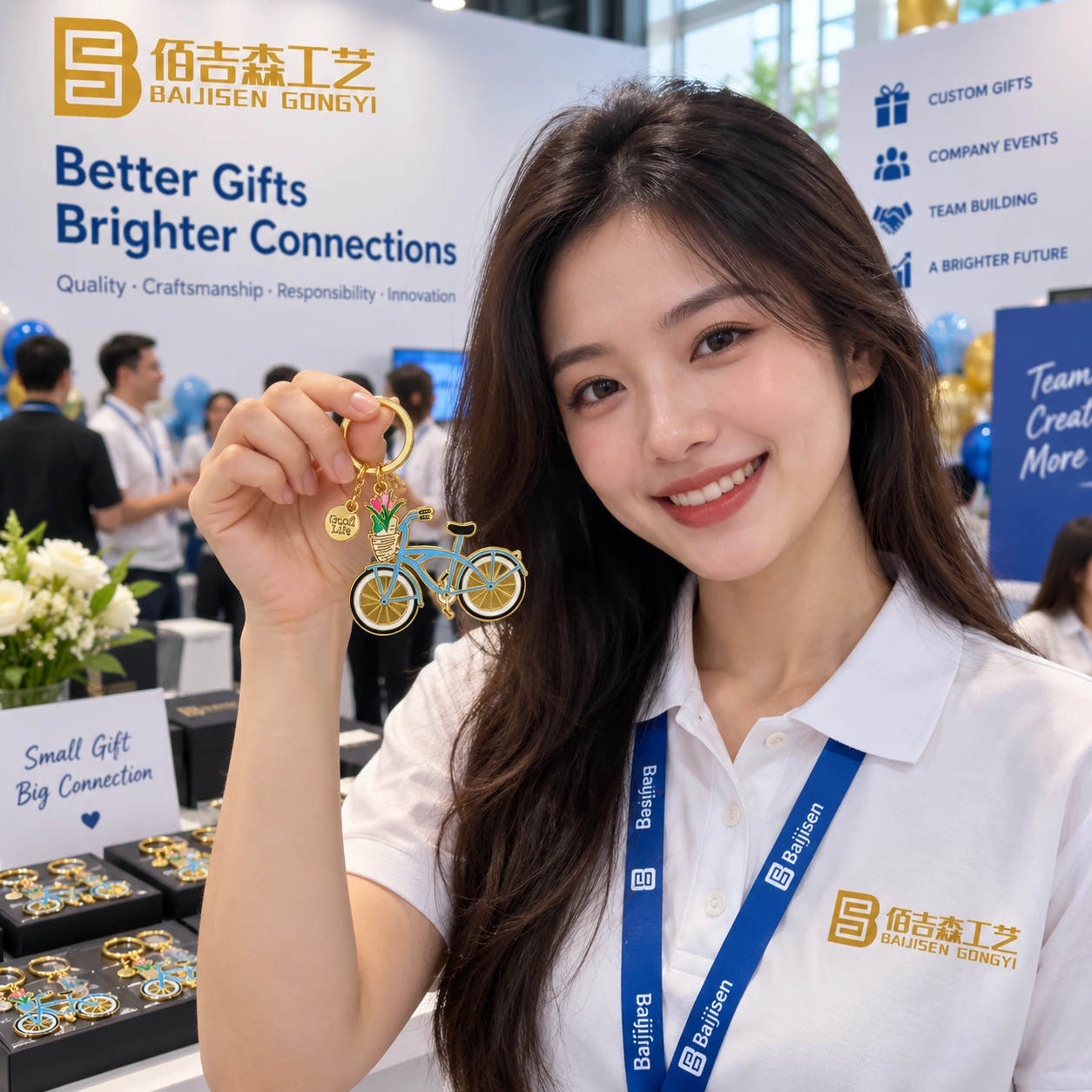
Companies use logo keychains for trade shows, product launches, anniversaries, dealer programs, employee gifts and customer campaigns. Simple marks may suit engraving or die striking; colorful logos may be better expressed with enamel or printing.
Tourism, museums and retail
Landmarks, city names, maps, cultural symbols and local wildlife can become souvenir products. Three-dimensional relief and antique finishes can emphasize architecture, while enamel or printing can support vivid destination artwork. Retail projects should coordinate product design with a backing card, barcode and display method.
Artists, character brands and licensed merchandise
Character silhouettes, expressions and brand colors require careful artwork preparation. Soft enamel, hard enamel and printing produce different surfaces and levels of detail. The buyer must hold permission to reproduce protected characters, logos, photographs and artwork.
Schools, clubs and associations

School emblems, member years, event names and individual numbering can support alumni programs, membership gifts and fundraising merchandise.
Choose the Right Personalization Method
| If your design needs... | Consider... | Important limitation |
|---|---|---|
| Names, dates, short messages or serial numbers | Laser engraving | Contrast and legibility depend on material, finish and available space |
| Defined color blocks with tactile metal lines | Soft enamel | Colors normally require metal separation |
| A smoother, refined color surface | Hard enamel or an appropriate smooth-enamel process | Very small cells and fine details may need adjustment |
| Classic raised and recessed metal artwork | Die striking | Best suited to artwork designed for clear metal levels |
| Complex outlines, objects or sculpted relief | Die casting and 3D relief | Weight, edge profile and attachment position require review |
| Gradients, photographs or extremely fine color detail | Printing | Artwork resolution, print area and surface protection must be specified |
Engraved metal keychains
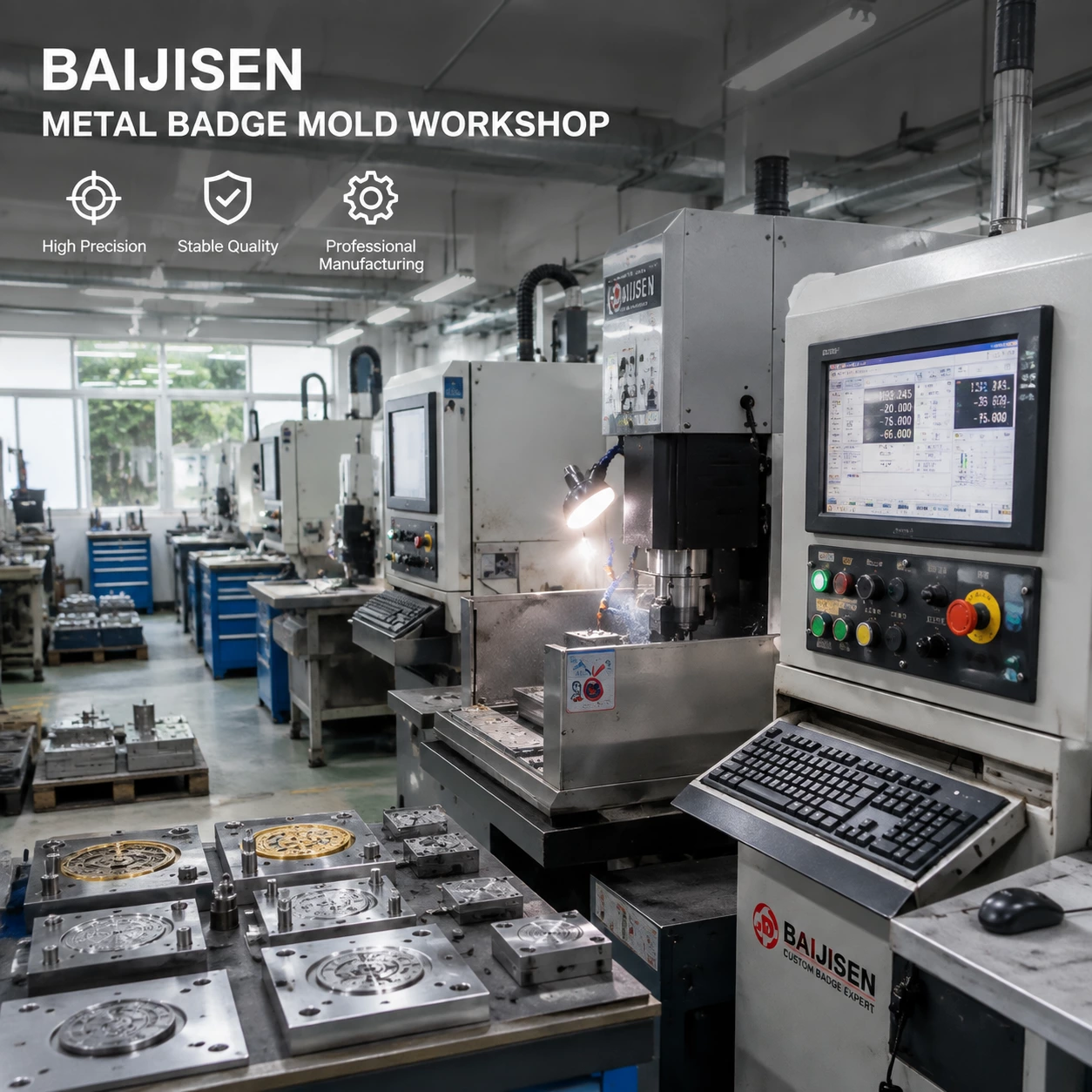
Engraving is a practical option for individual names, dates, identification numbers and short messages. It can also reproduce simple line-based logos. A production proof should show the exact engraving area, font, capitalization and data format.
Soft and hard enamel keychains
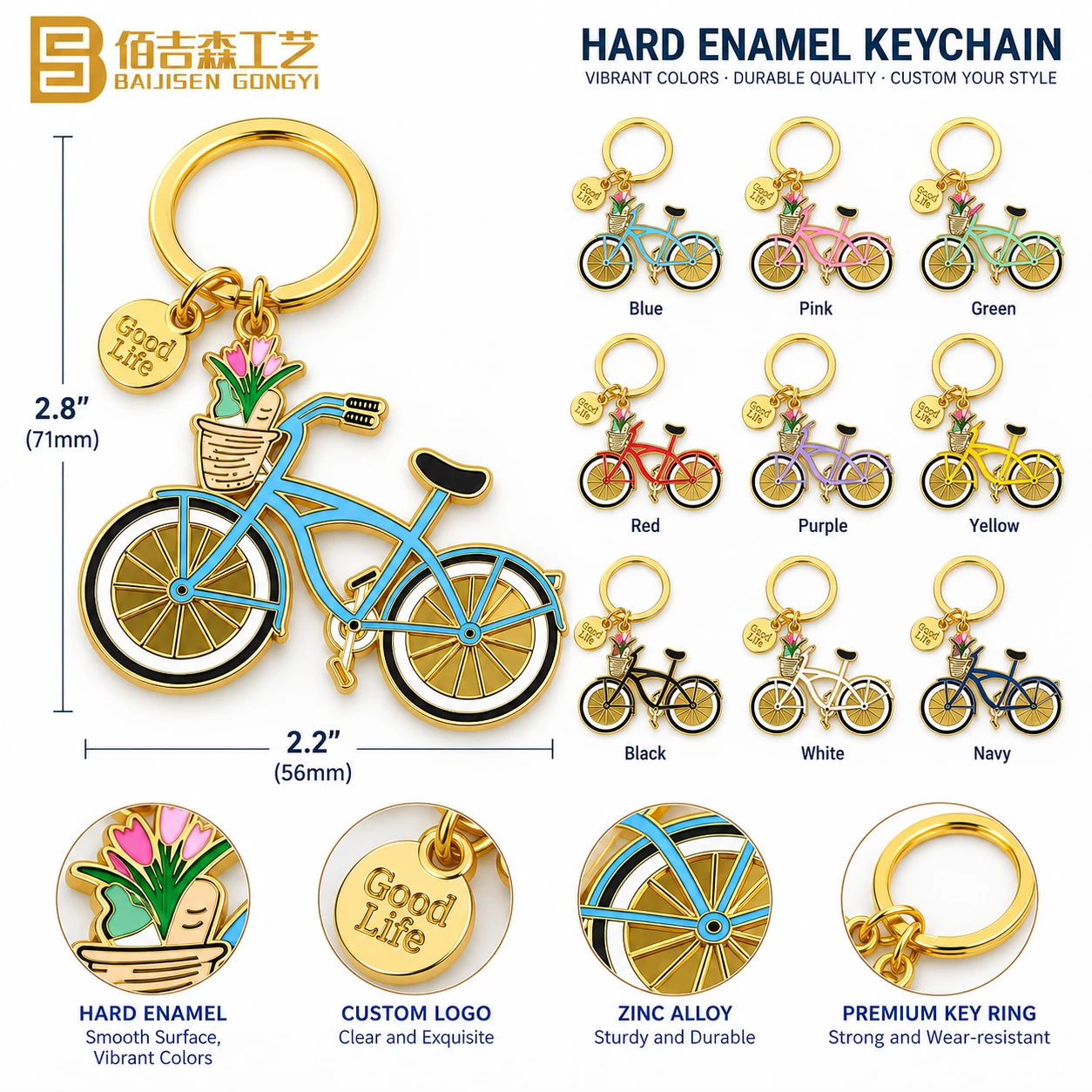
Soft enamel typically leaves the colored areas below the surrounding metal lines, creating a tactile surface. Hard enamel or similar polished enamel methods create a smoother face. Neither is universally better: the choice depends on the artwork, desired feel, intended market and budget.
Die-struck, die-cast and 3D keychains
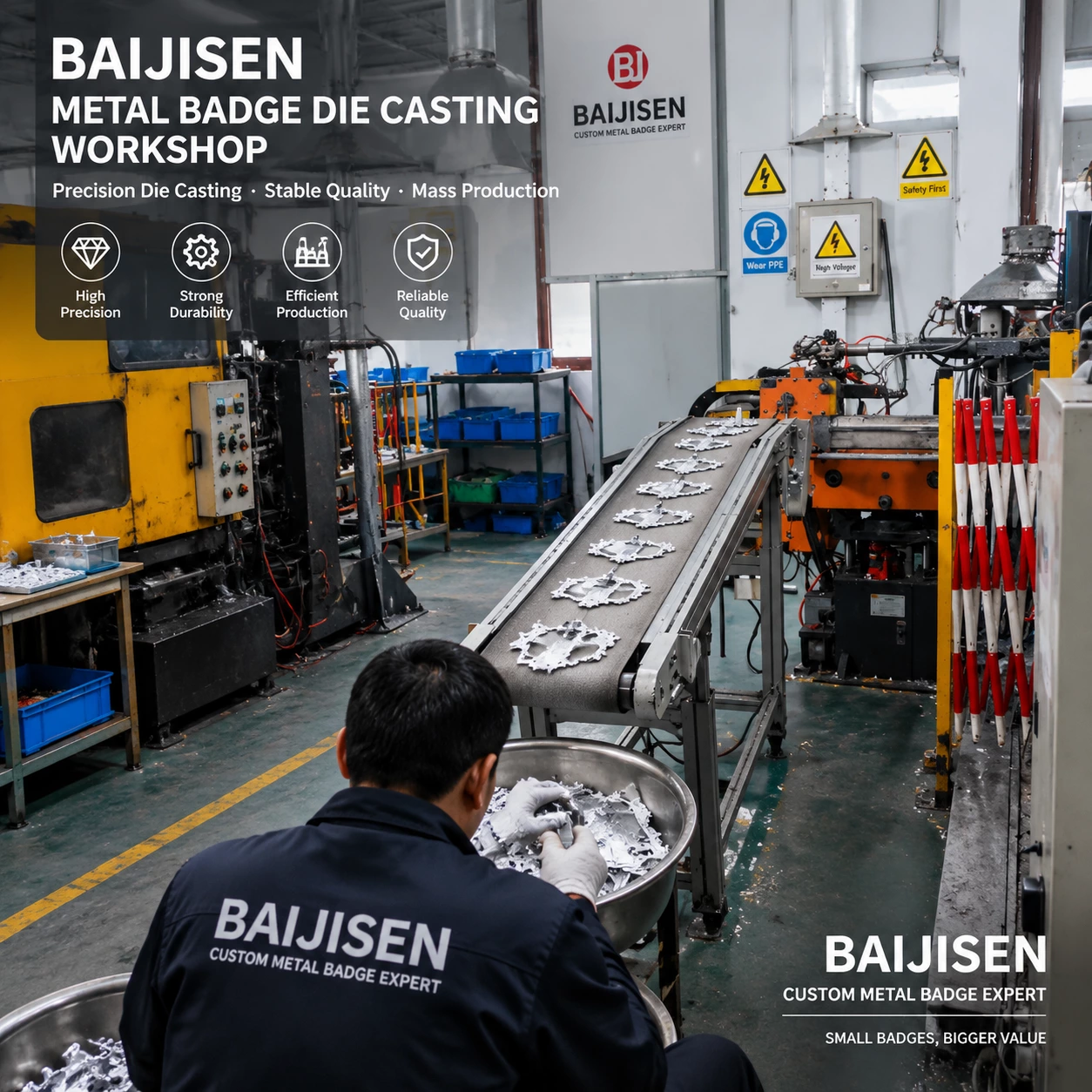
Die-struck designs emphasize controlled raised and recessed areas. Die casting offers greater freedom for unusual outlines and sculpted forms such as buildings, vehicles, animals and product miniatures. Complex 3D surfaces need adequate size and should not be crowded with tiny lettering.
Printed metal keychains
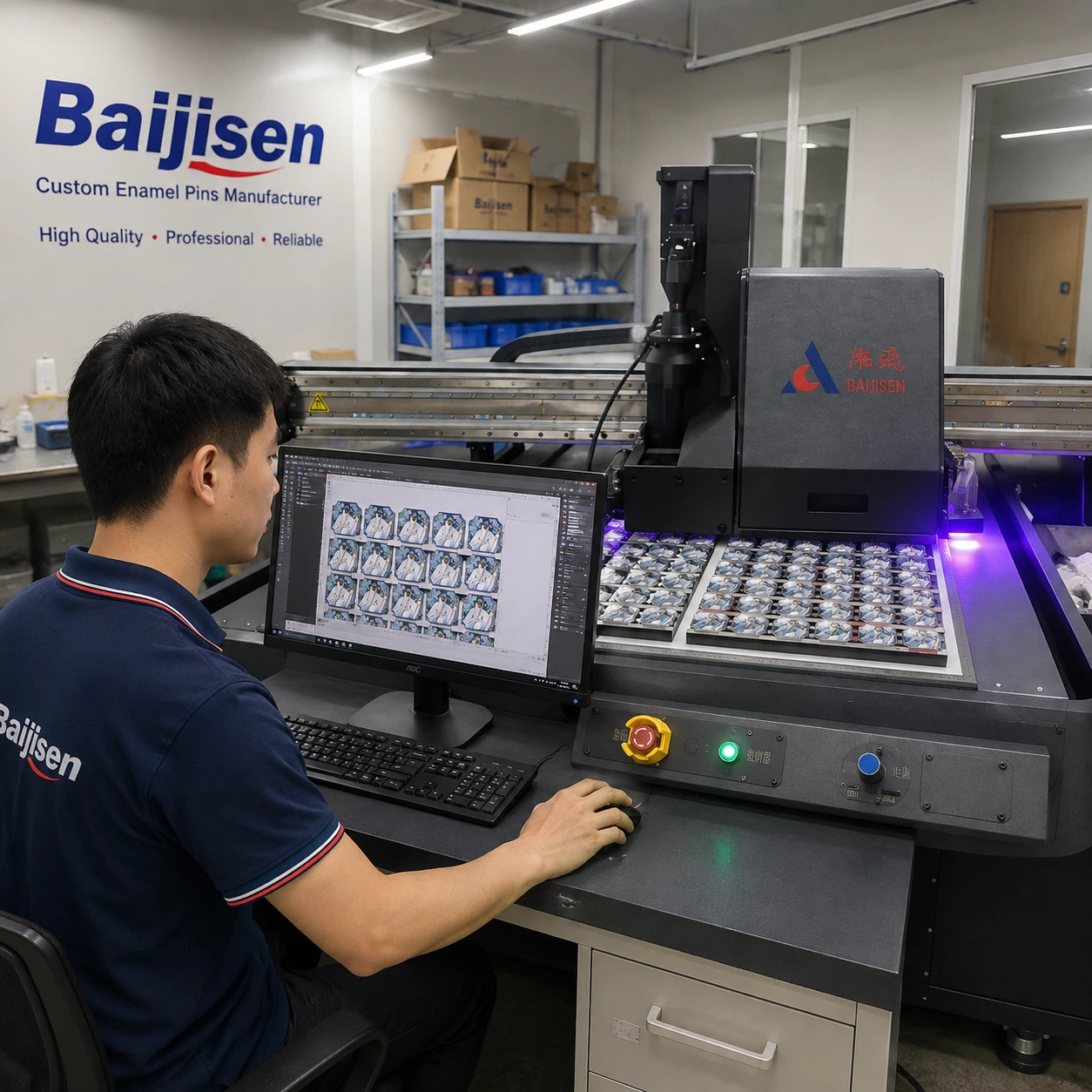
Printing can be useful when metal separators cannot reproduce gradients, photographs or very fine illustration. The printing method should be selected according to the artwork, surface, quantity and intended handling.
How to Choose a Metal Material
Material affects the keychain's shape, weight, finish, manufacturing method and cost. There is no single best metal for every project.
| Material | Useful characteristics | Common design direction |
|---|---|---|
| Zinc alloy | Flexible for complex shapes and sculpted relief | Characters, buildings, vehicles and custom outlines |
| Iron | Suitable for selected stamped and flat designs | Simple logos and promotional programs |
| Brass | Distinct metal character and compatibility with traditional styling | Premium gifts, emblems and vintage-inspired pieces |
| Stainless steel | Strong, clean and modern appearance | Engraved text, flat profiles and functional designs |
Instead of selecting material from appearance alone, provide the artwork, dimensions, quantity, intended use and desired finish. A manufacturer can then assess whether the material and process suit the design.
Turn a Logo into Manufacturable Keychain Artwork
Start with the clearest available file
AI, EPS, SVG and editable PDF files are generally preferred because lines, shapes and colors can be adjusted accurately. A high-resolution PNG or JPG, a photograph or even a sketch may be used as a starting reference, but it still needs to be translated into production artwork.
Simplify details for the finished size
Artwork viewed on a monitor is much larger than the physical keychain. Very fine strokes, long wording, small counters inside letters, subtle shadows and tiny color cells may disappear in production. Preserve the essential brand symbol and remove details that do not remain meaningful at actual size.
Plan both sides and the attachment point
The front may carry a logo while the reverse holds a date, website, message or serial number. The connecting hole is also part of the design: its position affects balance, hanging direction and whether the artwork remains intact.
Review the production proof carefully
- Finished width, height and thickness
- Front and reverse orientation
- Spelling, dates, numbers and capitalization
- Raised, recessed, engraved and printed areas
- Enamel colors and available color references
- Metal finish and texture
- Attachment position and hardware
- Packaging and personalization data
Select Size, Shape, Thickness and Finish
Small keychains can suit simple logos and short text. More complex two-sided artwork or 3D relief generally needs additional space. Larger or thicker products can offer more visual presence, but they also affect weight, packaging and shipping.
Common shapes include circles, rectangles, shields and ovals, while custom outlines can follow a building, vehicle, animal, character or branded product. Sharp points, narrow bridges and delicate projections should be reviewed for handling and manufacturing stability.
Metal finishes
Gold, silver, nickel, black nickel, copper, antique and matte effects can change the character of the same artwork. Bright finishes support crisp contrast; antique treatments can emphasize recessed relief; dark finishes may complement modern or character-based designs. Final selection should consider the artwork, enamel colors and packaging together.
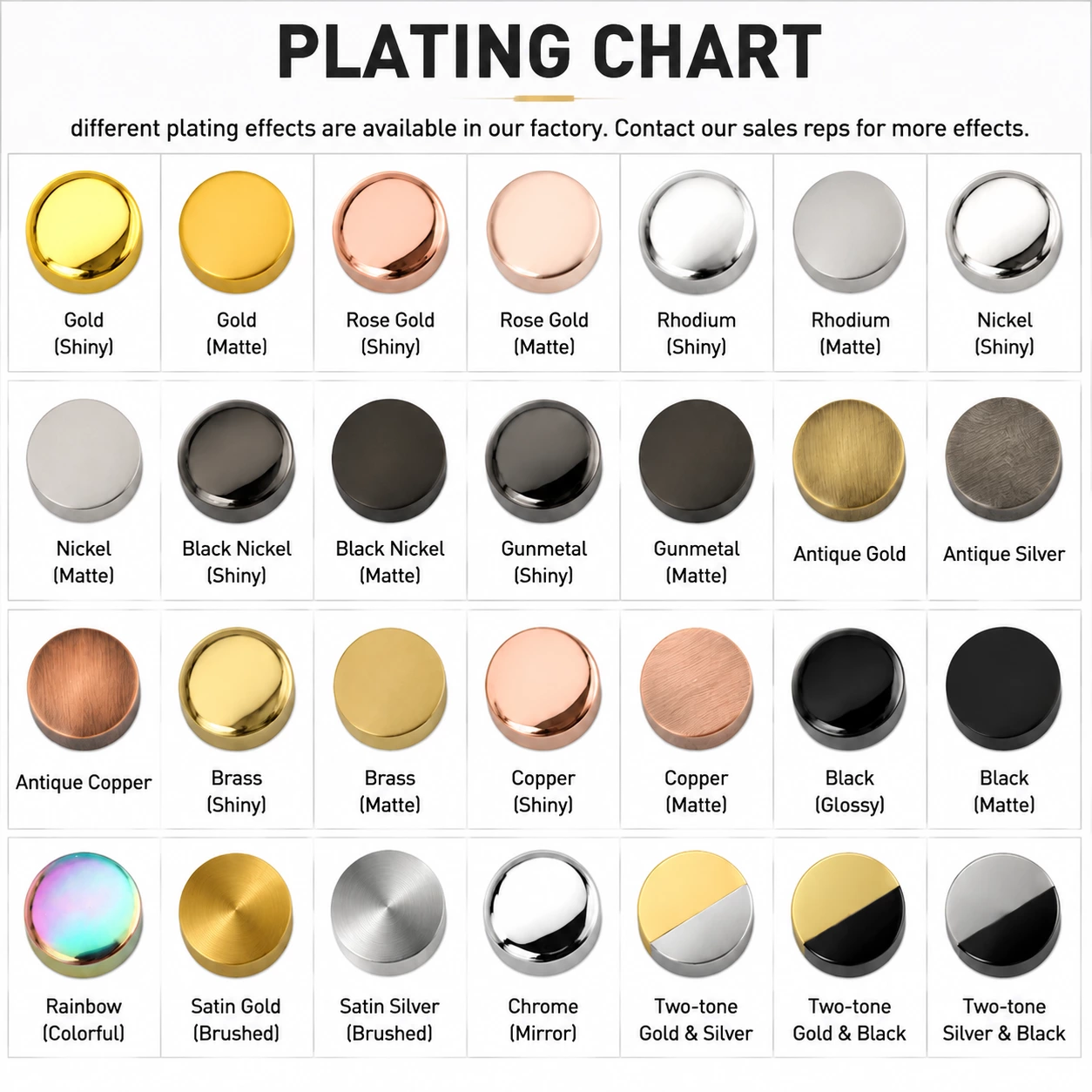
Color references
Pantone references can help communicate a target brand color, but a monitor is not a physical color standard. Enamel material, metal finish, lighting and viewing angle can all influence perception. When color is critical, agree on the reference and approval method before production.
Choose a Keychain Attachment That Fits the Product
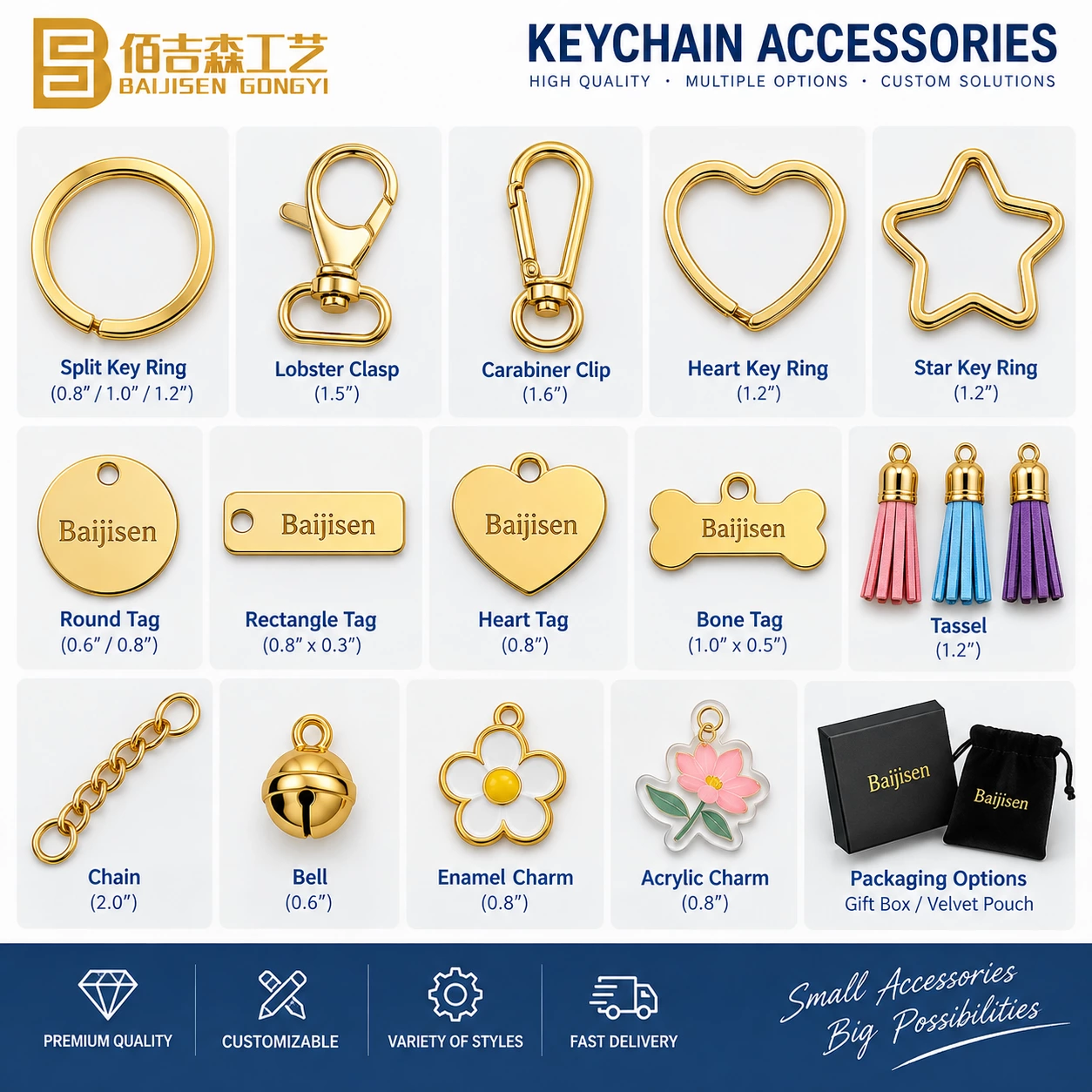
A split ring is suitable for many standard applications. A short chain allows movement between the ring and metal body, while a swivel, hook or carabiner can support other carrying methods. Premium or functional hardware should be chosen for the actual use, not appearance alone.
Attachment inspection may include ring opening and recovery, chain closure, swivel movement, assembly direction, connection security and surface consistency. If a project has a defined load or performance requirement, communicate the test method and acceptance criteria before ordering rather than relying on a general claim such as “strong.”
Packaging for Promotions, Gifts and Retail
| Packaging | Best suited to | Planning considerations |
|---|---|---|
| Individual poly bag | Bulk distribution and transit protection | Bag size, quantity per carton and labeling |
| Custom backing card | Branding and retail display | Logo, barcode, hang hole, product orientation and legal text |
| Gift box | Corporate gifts, awards and premium presentation | Insert fit, opening experience and shipping protection |
| Retail-ready package | Museums, gift shops and ecommerce | Market labeling, barcode, warnings and case-pack quantity |
Packaging should be designed with the keychain, not added after production. Product dimensions, attachment length and display direction determine the correct insert or card layout.
How Personalized Metal Keychains Are Made
Project review
The customer provides artwork, intended use, dimensions, quantity, preferred effect, packaging, destination and required arrival date. The manufacturer reviews feasibility and identifies design risks.
Production artwork
A technical proof defines the shape, dimensions, relief, colors, finish, attachment and reverse-side details. Production should begin only after the complete proof is approved.
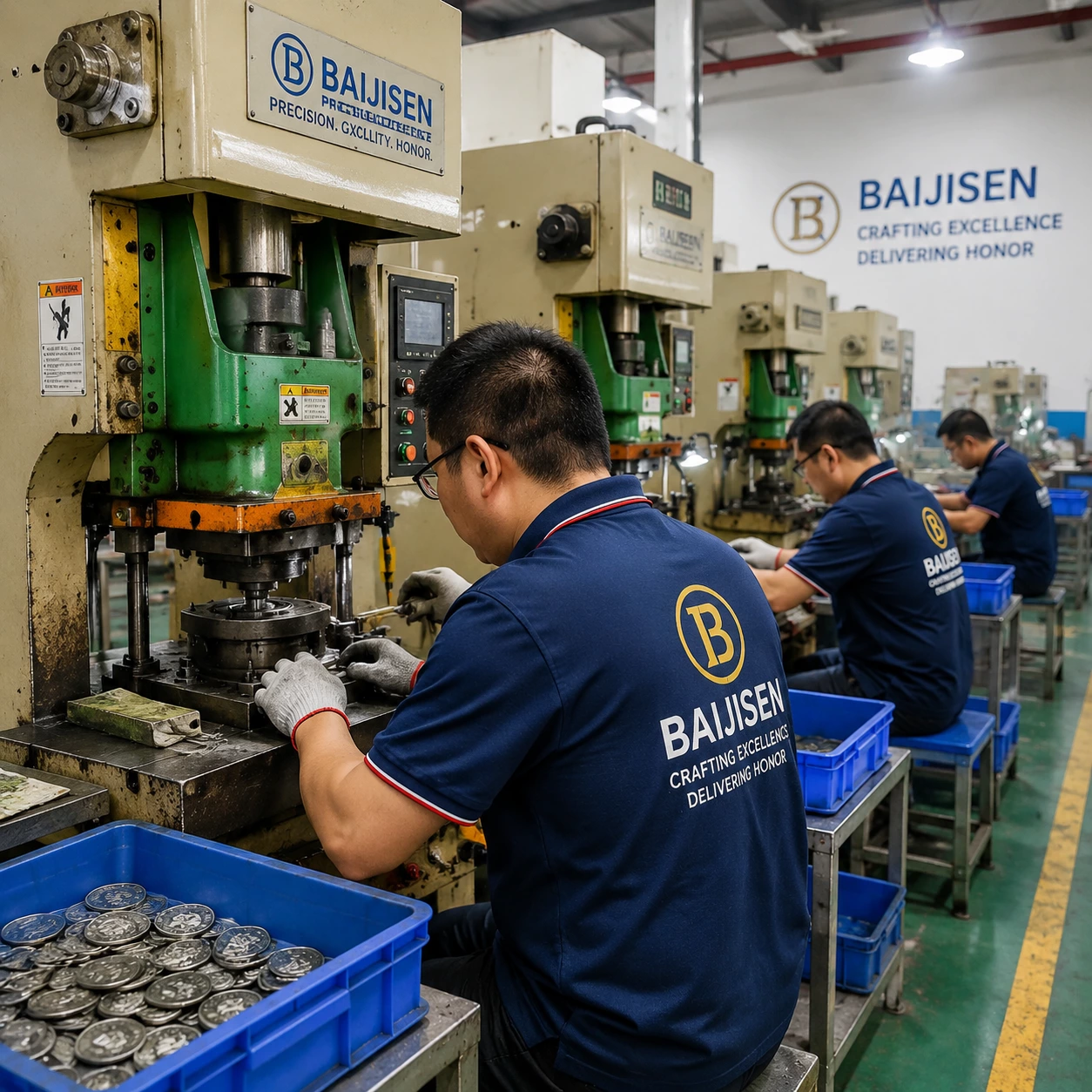
Tooling and metal forming
Depending on the approved design, tooling or production setup is prepared for stamping, casting, cutting, engraving or printing.
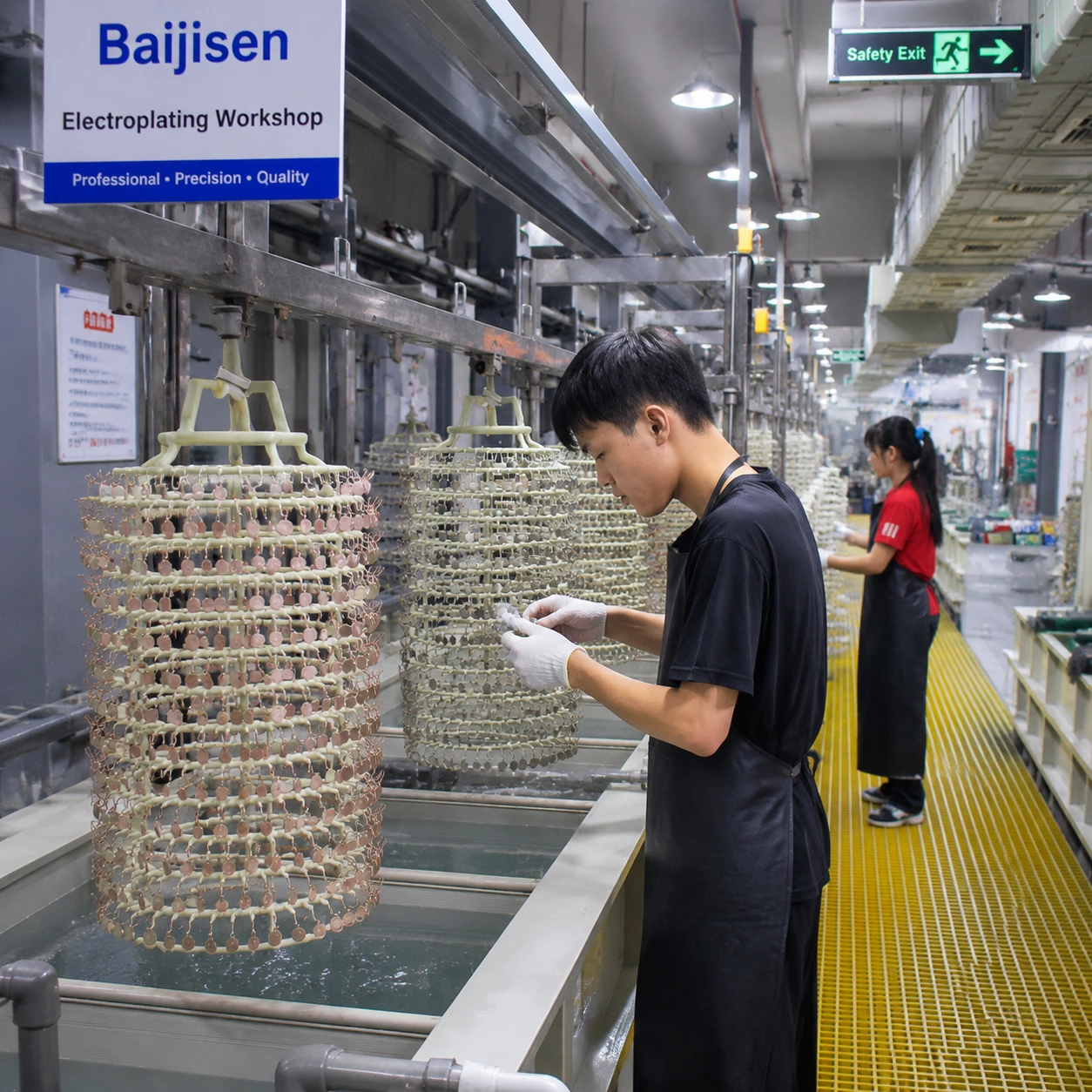
Polishing, finishing and color
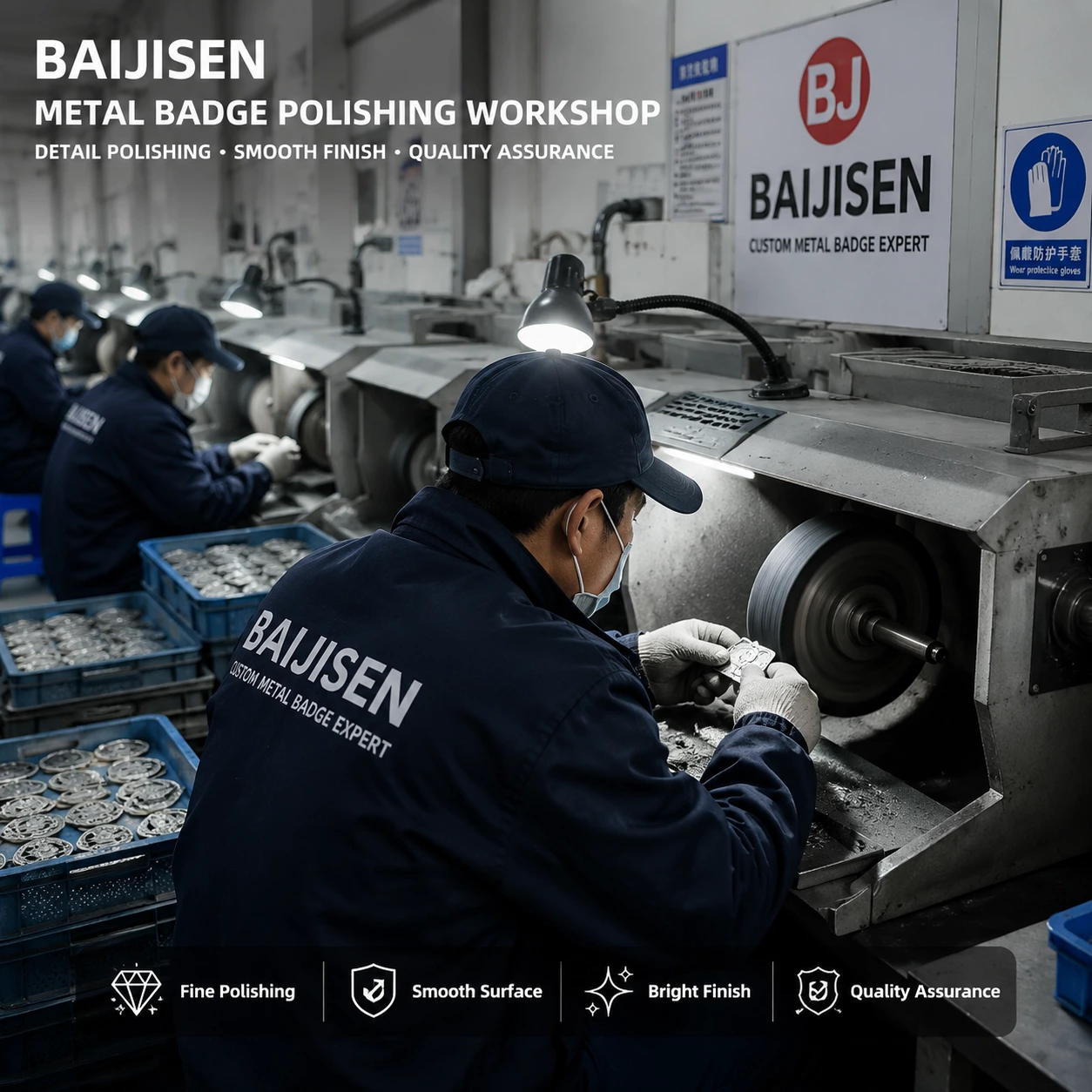
The metal body is prepared for plating, antiquing or texture. Enamel, printing and individual engraving are added in the sequence appropriate to the specification.
Assembly, inspection and packing
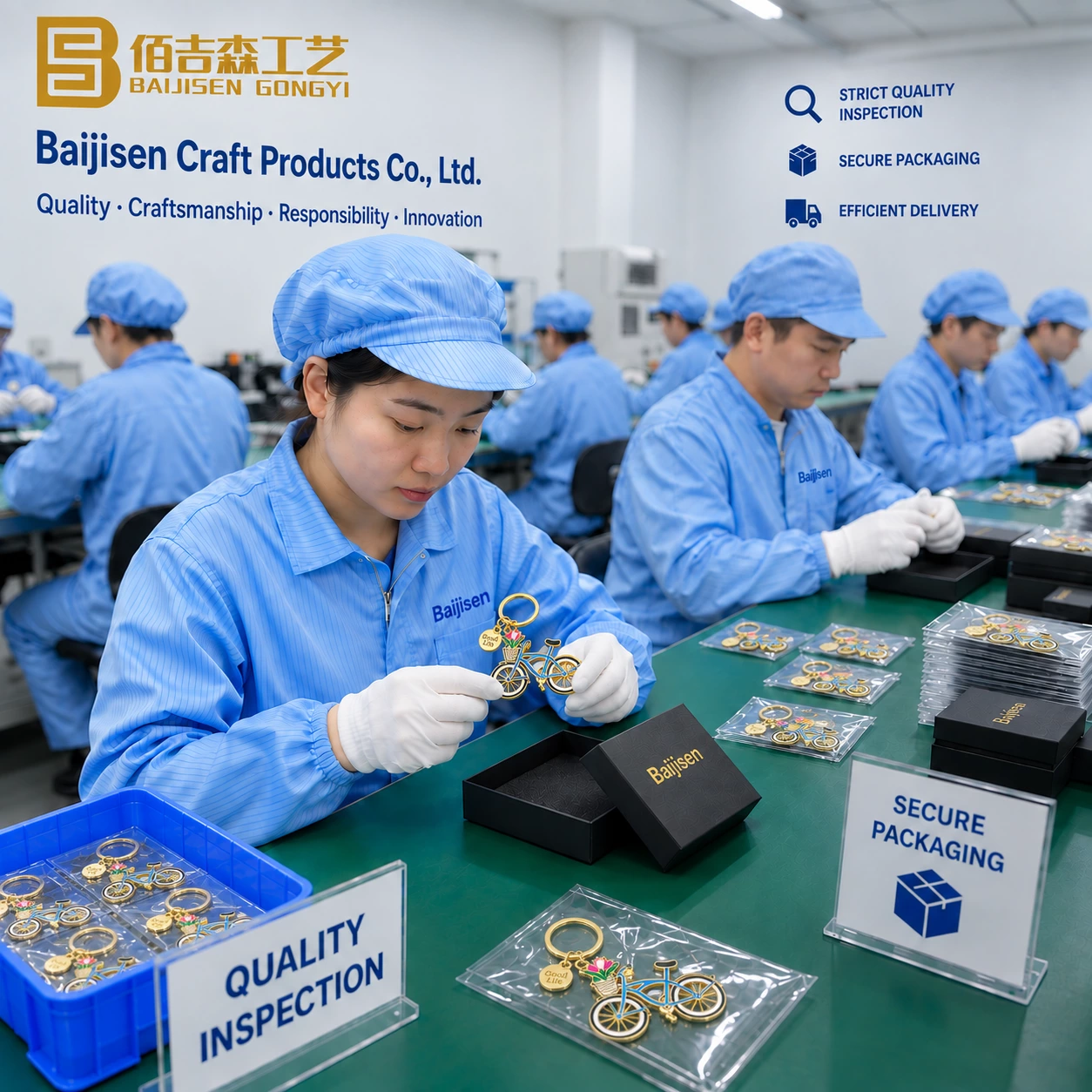
Rings, chains or other hardware are installed. Finished items are compared with the approved specification before packaging and shipment.
Quality Control Checklist for Custom Metal Keychains
Quality should be evaluated against the approved proof, sample and purchase specification rather than a vague expectation.
- Dimensions and shape: width, height, thickness, outline, edge condition and connection location.
- Artwork: logo proportions, spelling, dates, numbering, orientation and legibility.
- Metal surface: intended polish or texture, consistent finish and absence of prominent scratches, stains or burrs.
- Color and print: correct placement, complete areas, registration and comparison with the agreed reference.
- Attachment: ring, chain, swivel or hook function, closure and assembly direction.
- Personalization: names and serial numbers checked against the final approved data.
- Packaging and count: correct package, label, accessories, packed quantity and carton configuration.
For a large order, strict brand color or complex construction, discuss whether a pre-production sample or agreed reference sample is appropriate before mass production.
What Determines Price, MOQ and Production Time?
Personalized metal keychains are normally quoted from the final project specification. Cost can change with dimensions, thickness, material, quantity, one-sided or two-sided artwork, 2D or 3D relief, enamel colors, printing, finish, attachment, individual engraving, packaging and delivery destination.
Minimum order requirements may also vary by manufacturing method, tooling, hardware and packaging. A standard item receiving engraving and a fully custom molded design do not have the same setup requirements. Confirm the current MOQ against the actual artwork rather than assuming one number applies to every project.
Production timing includes artwork revisions, proof approval, tooling, sampling when required, manufacturing, inspection, packing and transit. For an event, launch or retail deadline, provide the required arrival date at the first inquiry.
Common Ordering Mistakes to Avoid
- Using poster-level detail: reduce artwork to actual size before approving fine lines and text.
- Ignoring attachment placement: the connecting hole affects balance, orientation and logo integrity.
- Approving only the front: confirm reverse orientation, finish, hardware and packaging as well.
- Comparing unmatched quotations: compare the same material, dimensions, relief, finish, attachment, packaging and shipping terms.
- Leaving retail packaging until the end: cards, barcodes and inserts need to fit the finished item.
- Submitting protected artwork without authorization: obtain permission for trademarks, characters, photographs and other intellectual property before production.
- Planning from the event date too late: include time for revisions, samples, inspection and shipping.
How to Choose a Personalized Metal Keychain Manufacturer
A suitable manufacturing partner should do more than accept an image. It should identify details that may not reproduce reliably, prepare a clear technical proof and document the agreed material, process, finish, hardware and packaging.
Ask how samples are approved, how bulk production is compared with the reference, what attachment checks are performed, how individual data is controlled and how packed quantities are verified. Confirm that company information, certificates and manufacturing claims can be supported by current evidence.
Why Work with Baijisen?
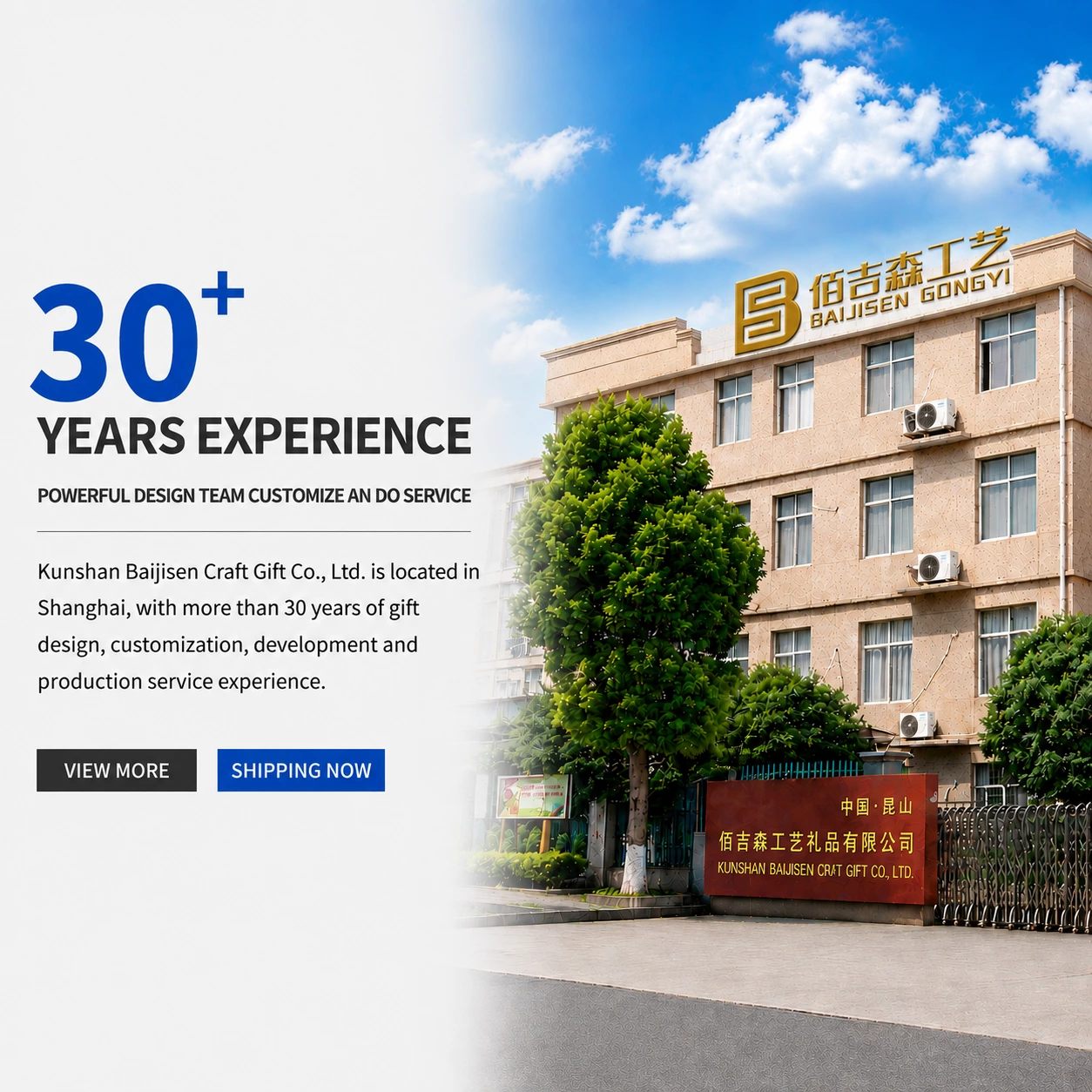
Baijisen supports custom metal product projects from artwork preparation through manufacturing, inspection and packaging. Customers can discuss custom shapes, 2D or 3D relief, enamel, printing, engraving, metal finishes, key rings, chains and presentation options as one coordinated specification.
Explore Baijisen's custom metal keychain manufacturing page, view options for custom souvenir metal keychains, read the guide to choosing a metal keychain manufacturer, or learn more about Baijisen.
Start Your Project in Five Steps
- Send the concept: provide a logo, vector file, image, sketch or reference sample.
- Define the specification: confirm dimensions, quantity, relief, finish, colors, hardware and packaging.
- Review the quotation and proof: check every word, number, color, dimension and side orientation.
- Confirm the production standard: approve the proof and, where appropriate, a sample or reference.
- Complete production and delivery: manufacture, inspect, pack and ship according to the confirmed order.
Personalized Metal Keychain FAQ
What are personalized metal keychains?
Personalized metal keychains are metal key holders customized with a logo, name, message, date, color, shape or serial number. They may be adapted from a standard item or manufactured to a fully custom design.
What is the difference between personalized and fully custom keychains?
Personalization usually adds a name, date or message to an existing format. A fully custom keychain can change the shape, dimensions, relief, colors, finish, attachment and packaging to match a brand or original design.
Can I add my company logo to a metal keychain?
Yes. A company logo can be die struck, die cast, engraved, printed or filled with enamel. Complex logos may need minor adjustments so fine lines, lettering and color areas remain clear at the finished size.
Which material is best for a custom metal keychain?
The best material depends on the design and intended use. Zinc alloy supports complex shapes and 3D relief; iron or brass can suit stamped designs; stainless steel works well for clean profiles and engraving.
Is engraving or enamel better for my design?
Engraving is suitable for names, dates, serial numbers and simple line work. Enamel is better when the design relies on defined color areas. Printing may be more appropriate for gradients, photographs or very fine detail.
Can personalized metal keychains be made in a custom shape?
Yes. A keychain can follow a logo, character, building, vehicle, product or other custom outline. The design should also account for safe edges, attachment placement, balance and everyday handling.
What artwork files should I provide?
Vector files such as AI, EPS, SVG or editable PDF are preferred. A clear PNG, JPG, photograph or sketch can also be used as a starting reference, but production artwork must still be prepared and approved.
Can both sides of a metal keychain be customized?
Yes. Both sides may carry the same design or different content, such as a logo on the front and a message, date, website or serial number on the reverse. Side orientation should be confirmed on the proof.
Can each keychain have a different name or serial number?
Individual names, dates or sequential numbers can often be laser engraved. The customer should provide a final data list and confirm spelling, format, placement, sequence and packaging requirements before production.
What affects the cost of personalized metal keychains?
Cost is influenced by size, thickness, material, quantity, one-sided or two-sided artwork, relief, colors, finish, attachment, individual personalization, packaging and delivery destination.
How long does custom metal keychain production take?
Timing depends on artwork revisions, tooling, sampling, quantity, process, packaging and shipping. Projects with a fixed event date should allow time for proof approval, production, inspection and transit.
How do I request an accurate quotation?
Send the artwork or concept, required dimensions, quantity, material or preferred effect, colors, finish, attachment, packaging, delivery country and required arrival date. Complete specifications support a more accurate project quotation.
Create Personalized Metal Keychains with Baijisen
Send your logo, artwork or concept together with the quantity, target dimensions, packaging, delivery destination and required date. Baijisen can review the project for manufacturability and prepare the next step for quotation.
This guide provides general product design and purchasing information. Feasibility, color, MOQ, cost and timing depend on the final approved specification. Customers are responsible for confirming rights to submitted logos, characters, photographs and other artwork.