中文
中文Custom Designer Brooch
Turn a logo, illustration or original concept into a production-ready metal brooch. This guide helps fashion brands, retailers, artists, organizations and corporate buyers compare processes, finishes, backings, packaging and manufacturing decisions.
A designer brooch can be a fashion statement, a retail product, a corporate symbol or a collectible piece of wearable art. Successful custom brooch manufacturing, however, requires more than placing an attractive image on metal. Proportion, line width, material, weight, surface finish, backing placement and packaging all affect how the finished piece looks, wears and performs.
This guide explains how to develop a custom designer brooch from initial artwork through production and inspection. It focuses on practical decisions for brands and bulk buyers—not on purchasing ready-made luxury jewelry.
What Is a Designer Brooch?
A designer brooch is a decorative pin built around an intentional visual concept, original shape or recognizable brand language. It may be made as fine jewelry, but the term is not limited to precious metals and gemstones. Enamel, cast metal, printing, texture and decorative components can also create a distinctive result.
Good design is not simply a matter of price. A successful brooch combines a clear idea with readable details, balanced proportions, appropriate materials and a secure attachment. Even a simple logo can become a distinctive accessory when its outline, color and metal finish are handled well.
Designer brooch vs. ordinary brooch
Ready-made brooches are sold in established designs. A custom brooch can instead be developed around a brand, collection or event, with control over shape, dimensions, plating, color, surface texture, reverse-side marks, attachment and packaging.
Brooch vs. lapel pin
| Comparison | Brooch | Lapel pin |
|---|---|---|
| Typical purpose | Decoration, fashion, gifting or collecting | Identity, recognition, branding or commemoration |
| Typical form | Often larger with greater design freedom | Often compact and easy to wear on a lapel |
| Common attachment | Bar pin, safety-pin mechanism or combined fitting | Post with butterfly, rubber or locking clutch |
| Main design concern | Composition, visual depth, weight and support | Legibility, low weight and secure positioning |
These names can overlap. Buyers should define the intended use, wearing position and attachment rather than relying on the product name alone. See Baijisen’s custom lapel pin options for smaller post-and-clutch designs.
Custom, bespoke and private label
Custom commonly means producing from customer-supplied artwork or specifications. Bespoke emphasizes deeper development for an individual project. Private label usually refers to products manufactured for sale under the buyer’s brand, often with branded cards or boxes. Explaining which model you need helps a manufacturer evaluate design, tooling and packaging correctly.
Why Brands Use Custom Designer Brooches
A brooch offers a flexible visual area and can communicate a complete story independently of the garment. It can turn a symbol, character, landmark or anniversary into an object that people wear, keep and display.
- Fashion labels and designer collections
- Artist merchandise and original character products
- Corporate anniversaries, meetings and executive gifts
- Museum, destination and gift-shop collections
- Schools, clubs, associations and membership programs
- Fundraising, recognition and commemorative events
- Hospitality, retail and service uniforms
The specification should follow the use. Retail products need strong presentation and merchandising; uniform brooches need dependable attachment and wearable weight; commemorative pieces may benefit from dates, numbering or presentation packaging.
Types of Custom Designer Brooches
Soft enamel brooches
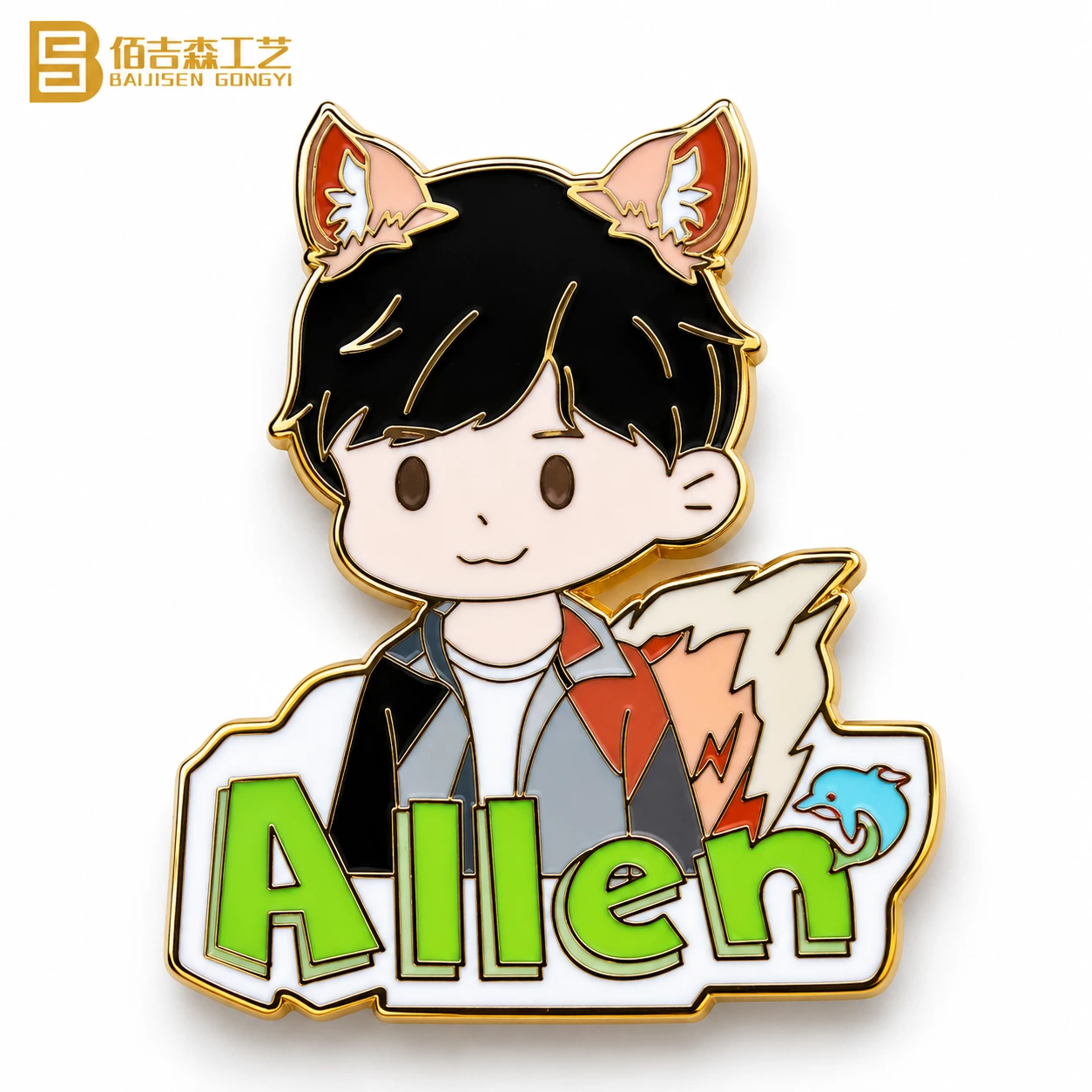
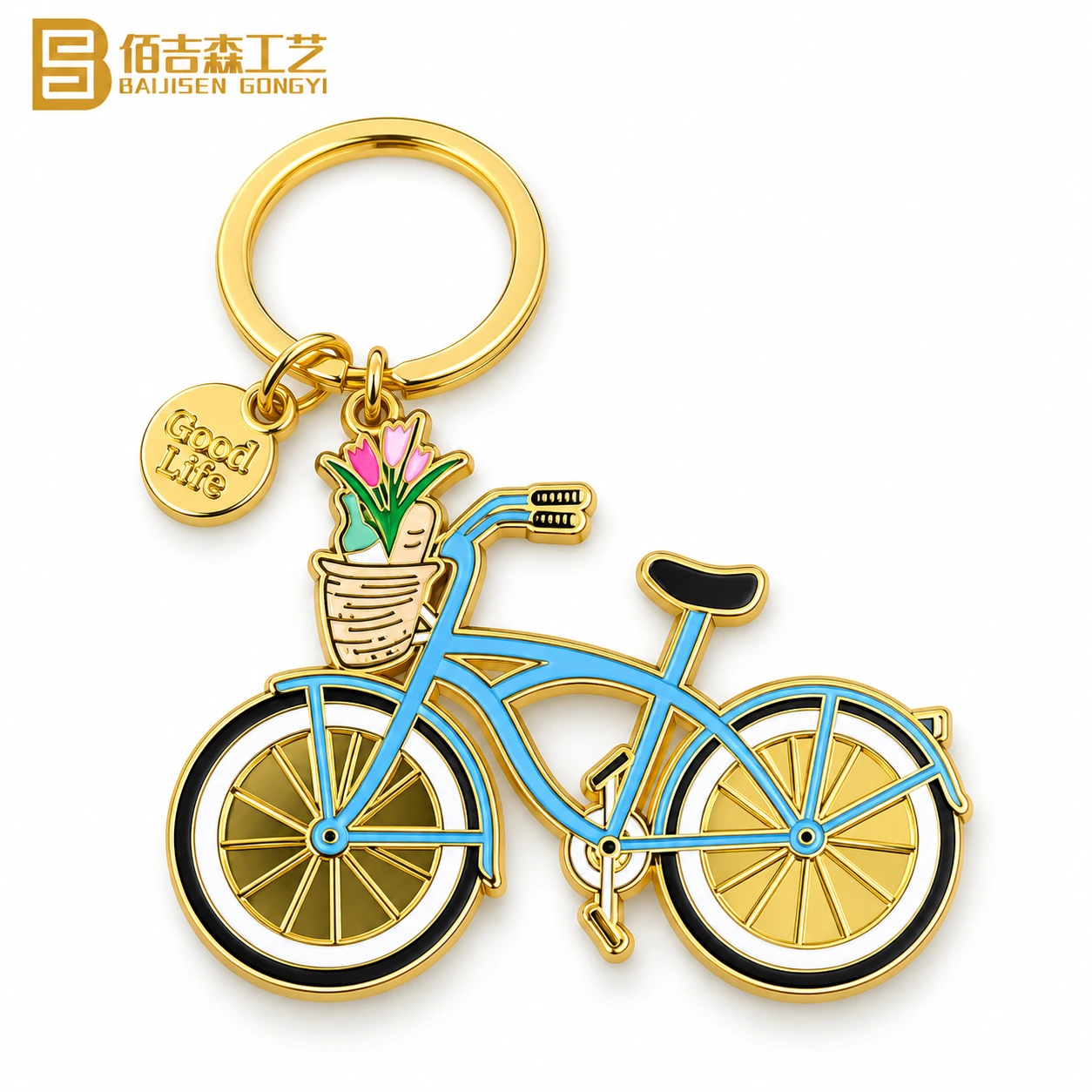
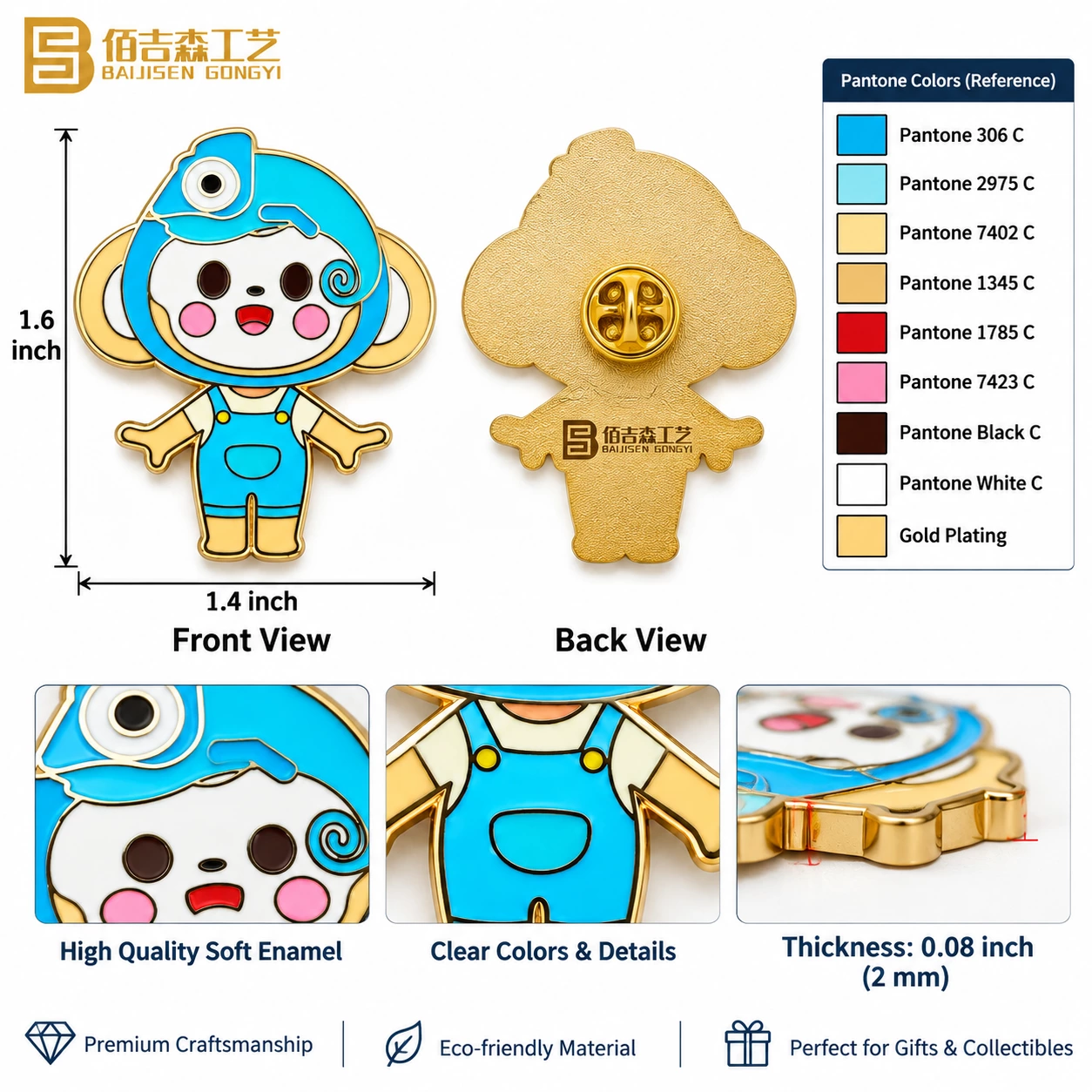
Soft enamel leaves the colored areas below the raised metal borders, creating a tactile surface and clear visual separation. It works well for bold logos, colorful illustrations, promotional designs and merchandise that benefits from visible metal detail.
Hard enamel brooches
Hard enamel is filled and polished to create a smoother surface in which the enamel and metal borders feel more level. It is often chosen for refined branding, retail collections and designs that call for a polished finish. Neither enamel type is universally better; style, use, budget and design feasibility should guide the choice.
Die-struck metal brooches
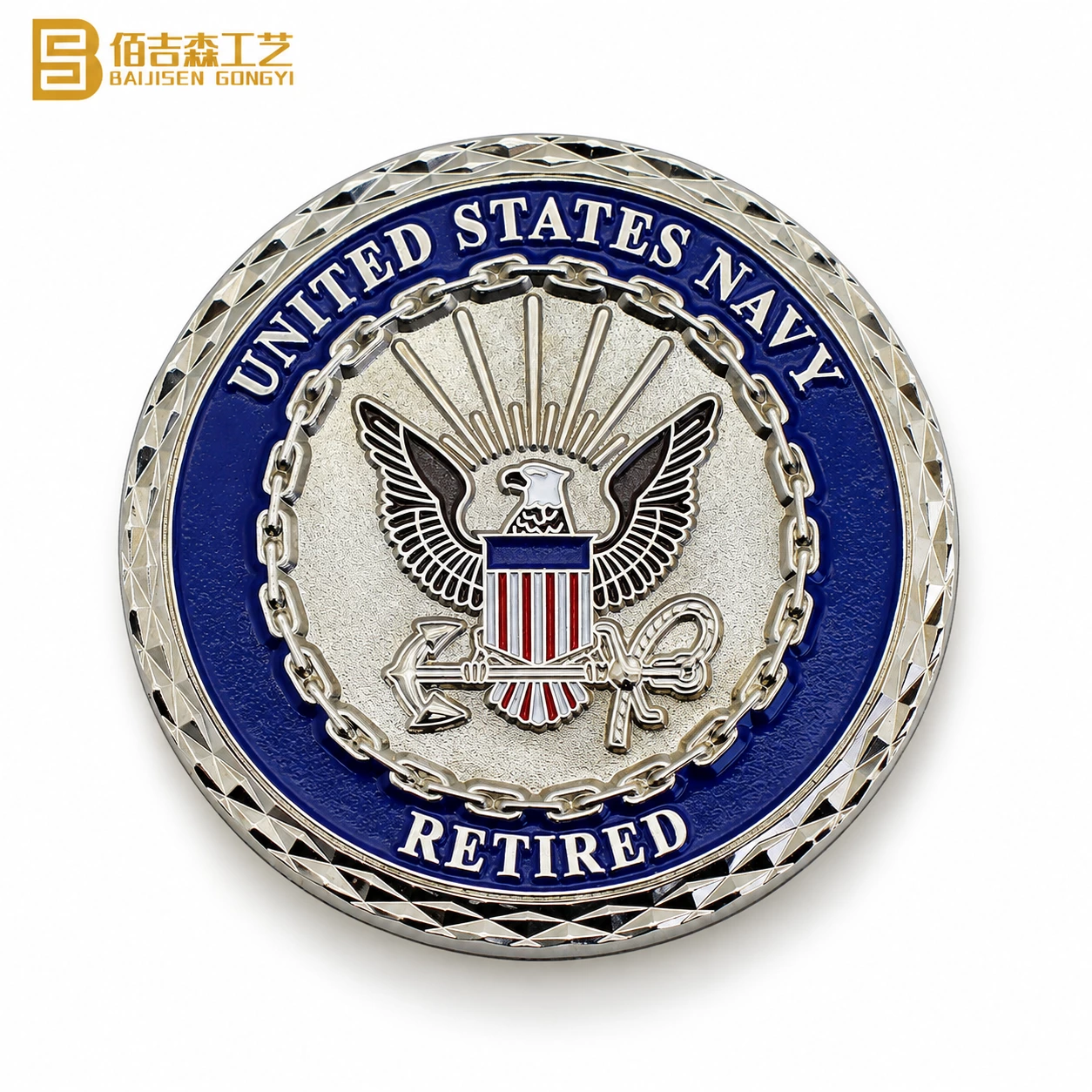
Die striking forms raised and recessed details in metal. Polished, matte or antique finishes can create contrast without extensive color. This approach suits classic emblems, recognition pieces, anniversaries and designs centered on metal texture.
Die-cast and three-dimensional brooches
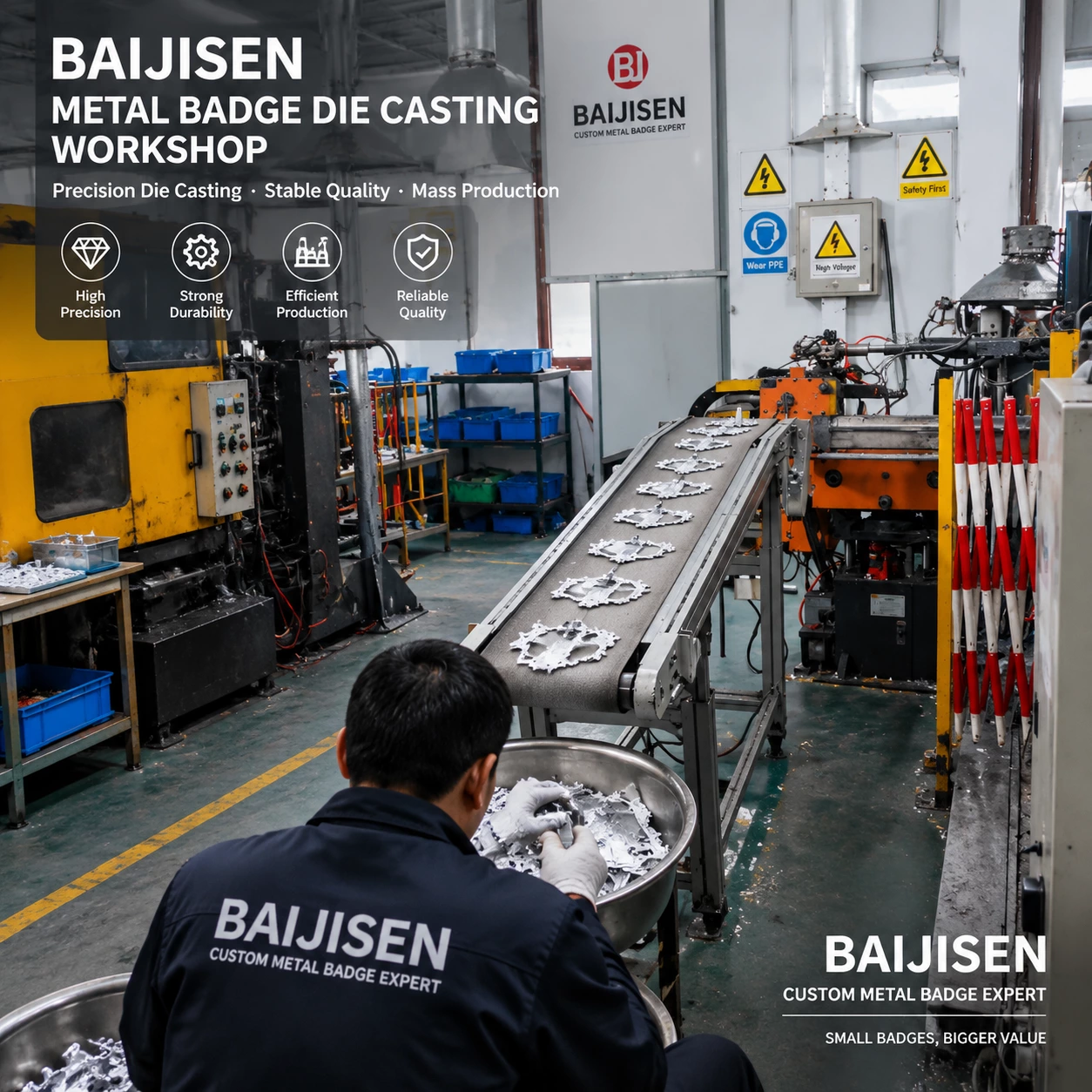
Die casting can accommodate complex outlines, open areas and sculptural relief. For large or asymmetric forms, thickness, weight, projecting elements and attachment points must be evaluated together so that the brooch does not tilt or pull excessively on fabric.
Printed brooches
Printing can reproduce gradients, photographs, very small details or color transitions that cannot be separated by metal borders. The most suitable printing method depends on the artwork, substrate and expected use, so it should be confirmed during technical review.
How to Design a Production-Ready Custom Brooch
- Define the audience and purpose. Identify who will wear or buy the product, where it will be worn, whether it is for retail or gifting, and whether branded packaging is required.
- Supply the best available artwork. AI, EPS, SVG and vector PDF files are generally easiest to adapt. Clear PNG, JPG or hand-drawn sketches can also be starting points when colors, fonts and intended dimensions are supplied.
- Simplify fragile details. Thin lines, tiny text, crowded backgrounds and numerous similar colors may lose clarity at actual size. Retain the strongest silhouette and essential information.
- Choose shape and dimensions together. A simple logo may work at a compact size; detailed art requires more room. Large solid designs must also be evaluated for weight and fabric support.
- Select color and metal finish. Pantone references can support brand-color communication, while gold, silver, black nickel or antique finishes change the entire visual character.
- Approve complete production artwork. Check dimensions, spelling, color references, plating, relief, cutouts, backing type, attachment positions, reverse marks and packaging before tooling begins.
Choosing Materials, Plating and Special Effects
Possible base metals include zinc alloy, iron, brass and other materials appropriate to the process. Their suitability varies with detail, forming method, weight, finish and cost. The final choice should be made after the manufacturer reviews the artwork and product requirements.
Bright polishing creates stronger reflection, while matte or brushed surfaces are more restrained. Antique treatments darken recessed areas and emphasize relief. Optional decorative treatments may include glitter, transparent or pearl enamel, glow effects, screen printing, laser engraving or a protective coating, subject to project feasibility.
Special effects should support the concept rather than accumulate without purpose. Their location and appearance should be identified in approved production artwork.
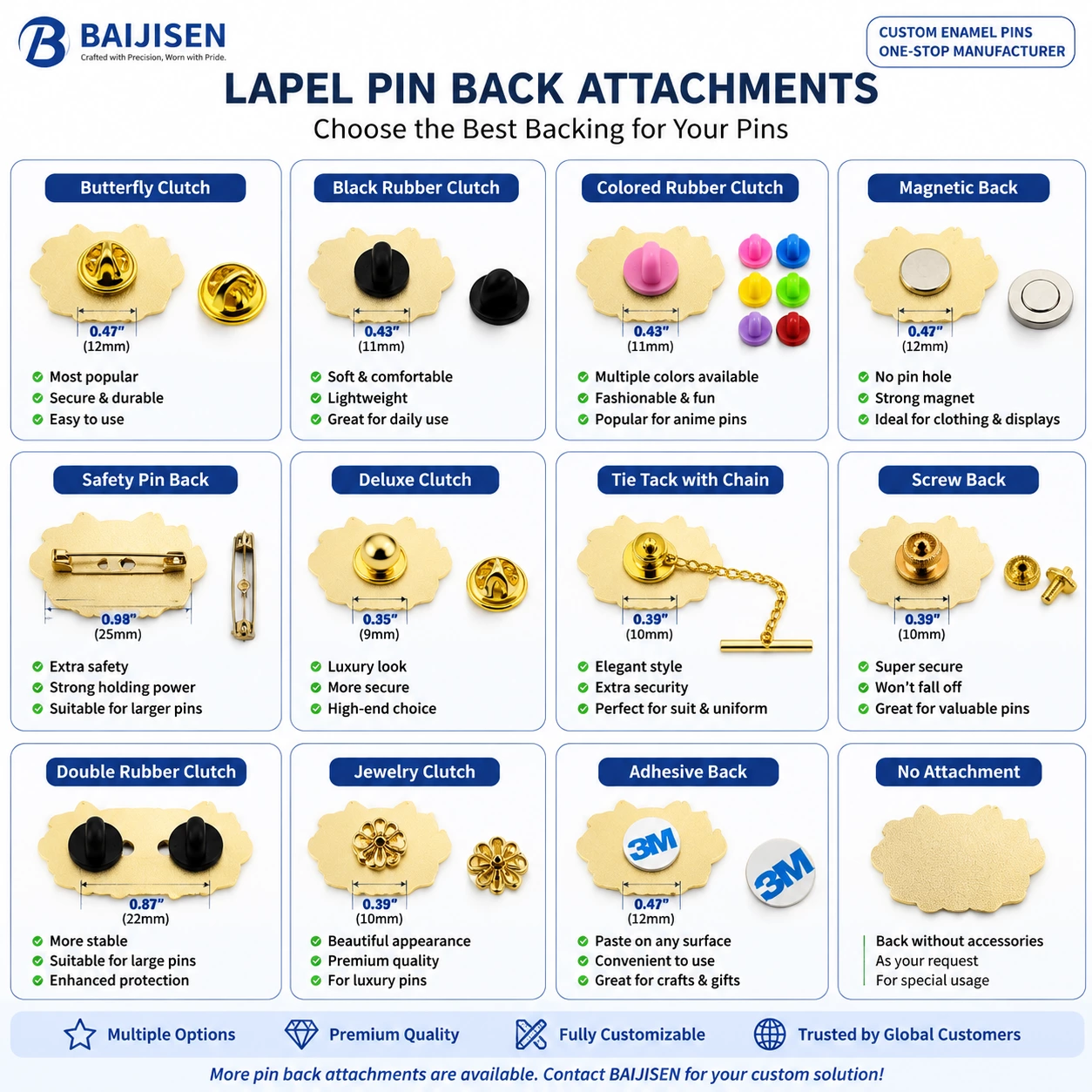
How to Choose a Brooch Backing
| Backing | Best suited to | Key benefit | Consideration |
|---|---|---|---|
| Bar pin / safety-pin mechanism | Medium or larger decorative brooches | Supports a wider area | Orientation must match the center of gravity |
| Single post with clutch | Small, lightweight logo designs | Compact and easy to use | Asymmetric pieces may rotate |
| Double posts with clutches | Long or directional designs | Reduces unwanted rotation | Both positions must be planned accurately |
| Locking clutch | Projects needing stronger retention | More resistant to accidental release | Cost and operation differ from standard clutches |
| Magnetic backing | Situations where puncturing fabric is undesirable | No post passes through the garment | Weight, magnetic strength and safety limitations require review |
Magnetic fittings are not suitable for every user or environment. Projects involving children, medical devices or specialized workplaces require a separate safety assessment and appropriate instructions.
From Artwork to Finished Brooch: Manufacturing Process
1. Artwork and engineering review
The design is checked for outline, line width, text, color separation, dimensions and attachment placement, then converted into production artwork. Any change that affects appearance should be approved before production.
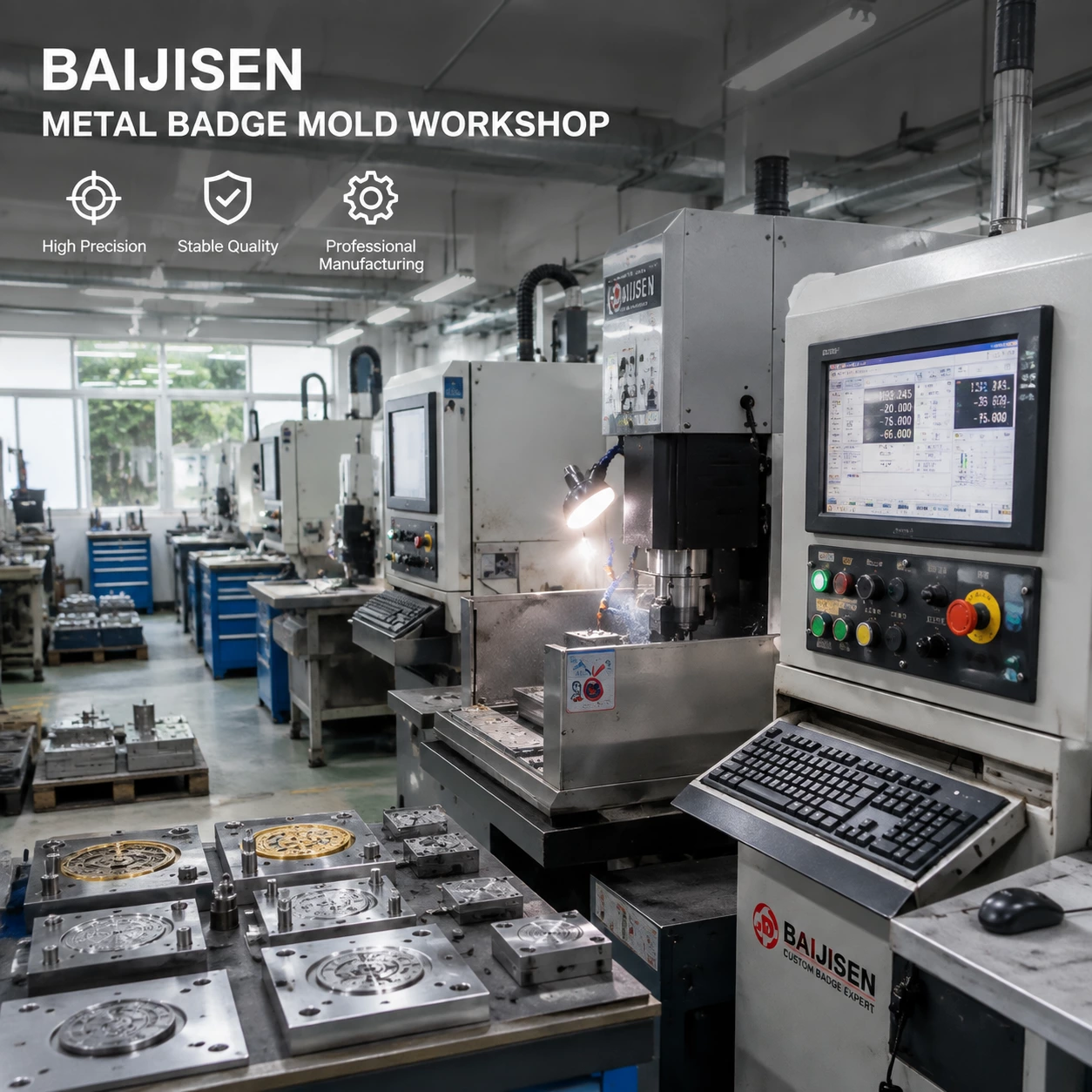
2. Tooling
The approved artwork guides the die or mold that defines the outline, borders, lettering and relief. Accurate specifications at this stage help prevent avoidable revisions later.
3. Stamping or casting
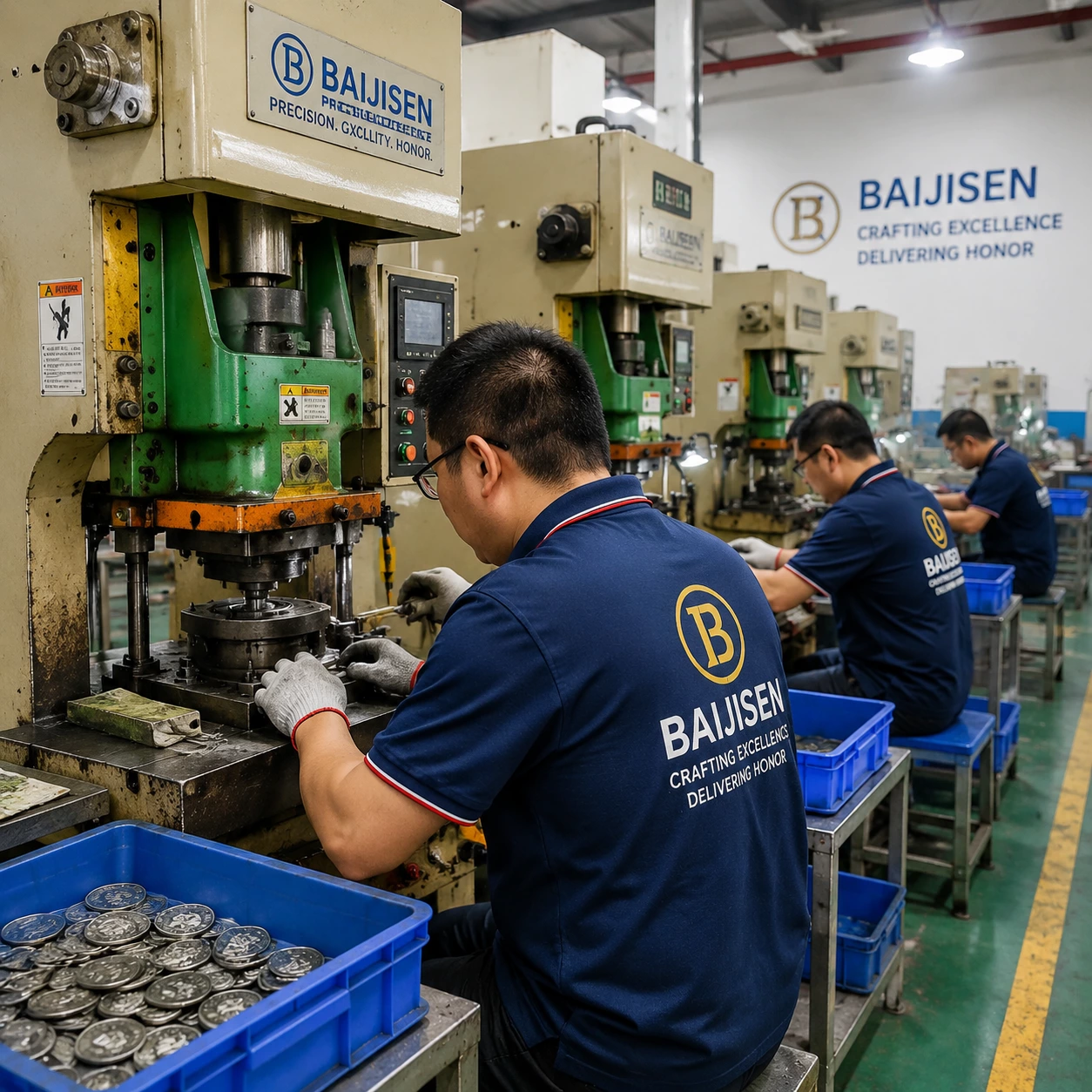
Die-struck pieces are formed by pressing the design into metal; complex outlines and dimensional structures may call for casting. The method should match the material and design depth.
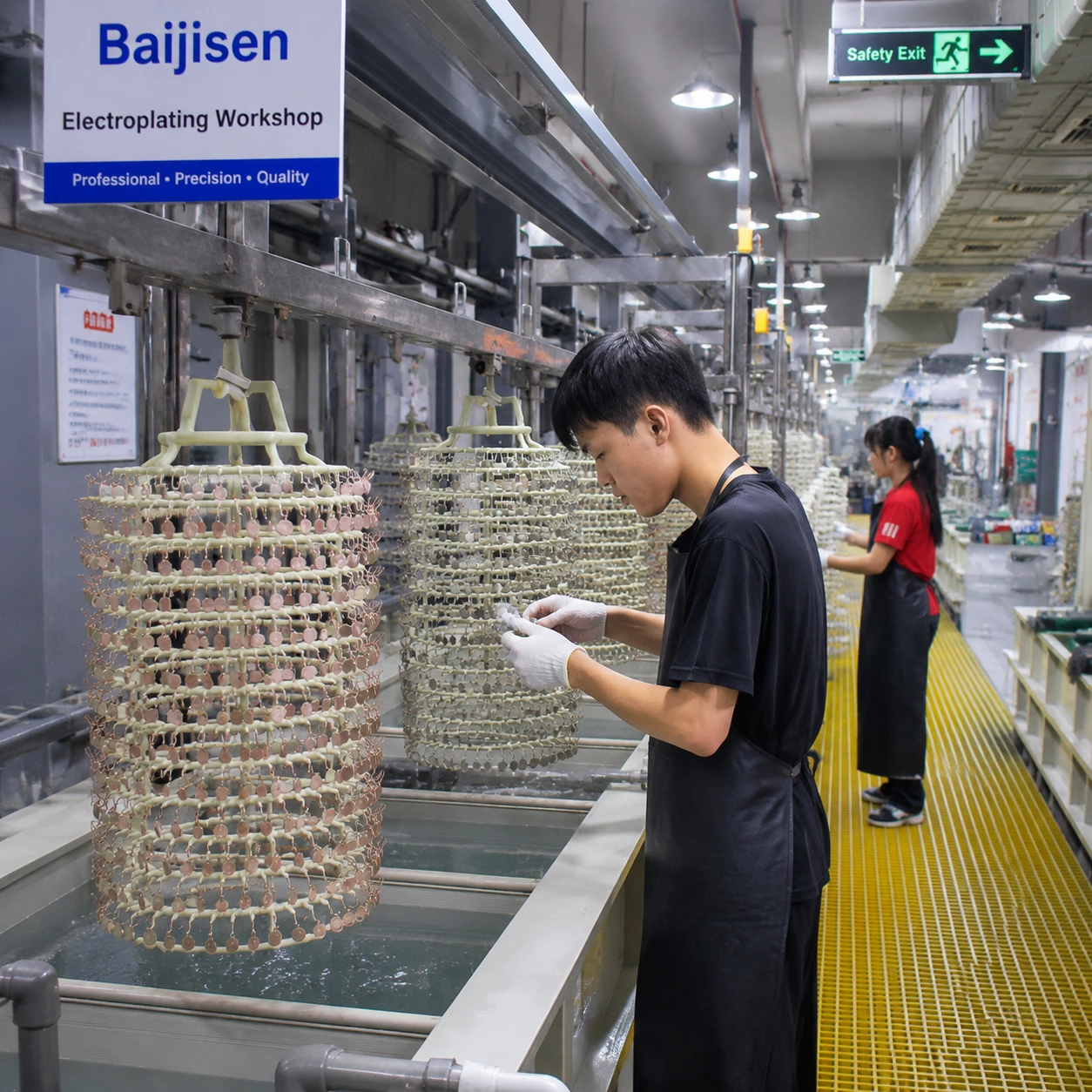
4. Trimming, polishing and plating
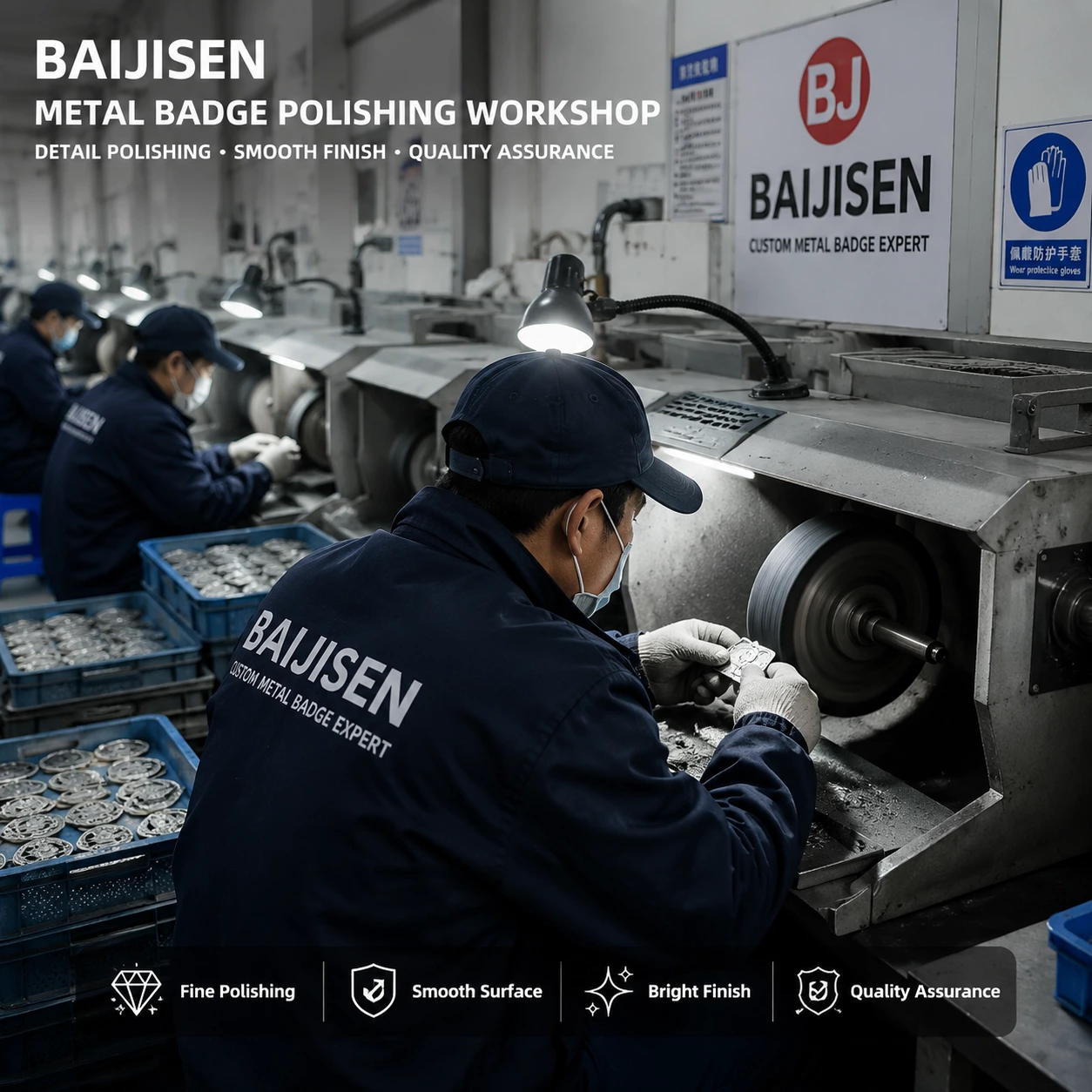
Edges and surfaces are finished before the selected plating or antique treatment is applied. Surface preparation strongly affects the appearance of exposed metal.
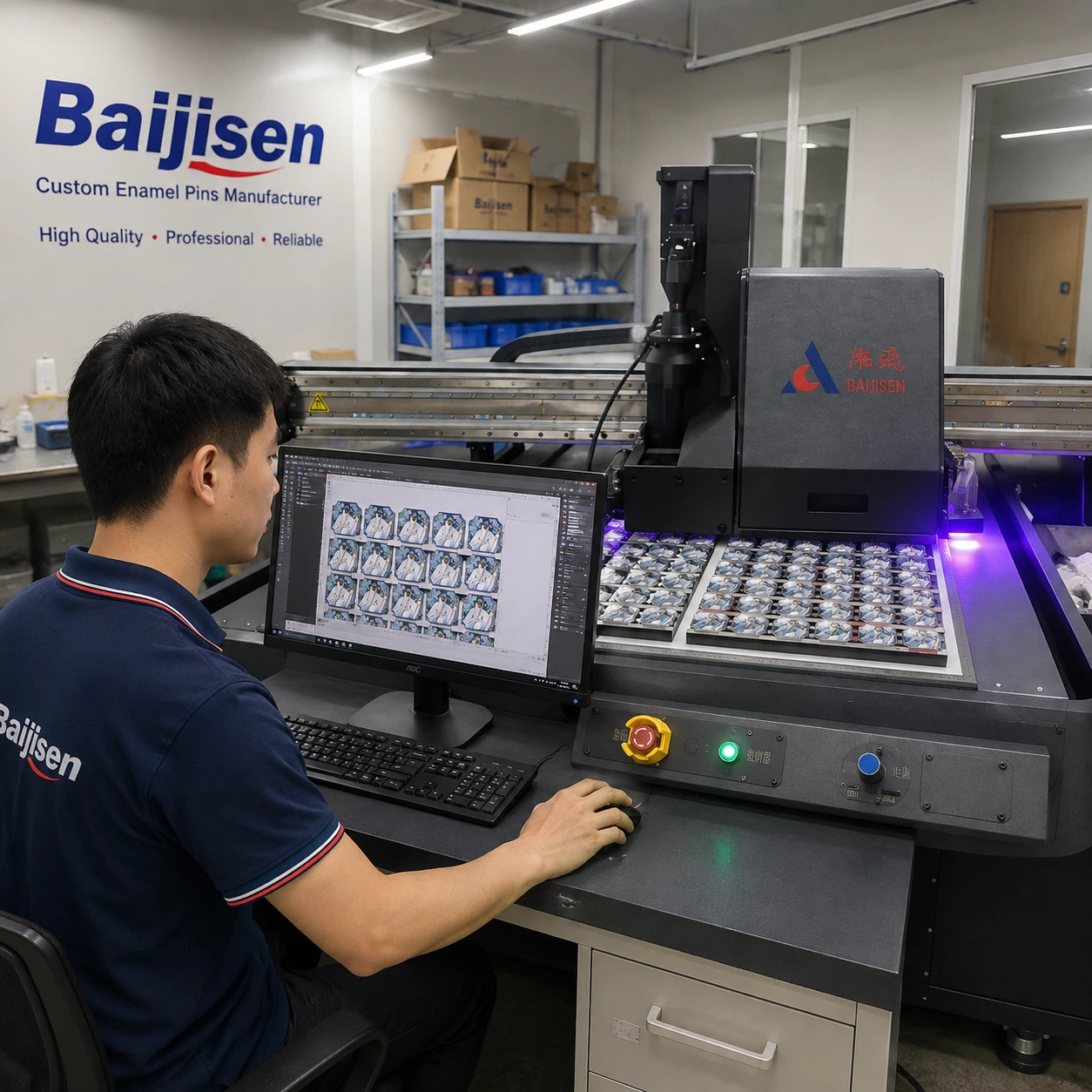
5. Enamel, printing or decoration
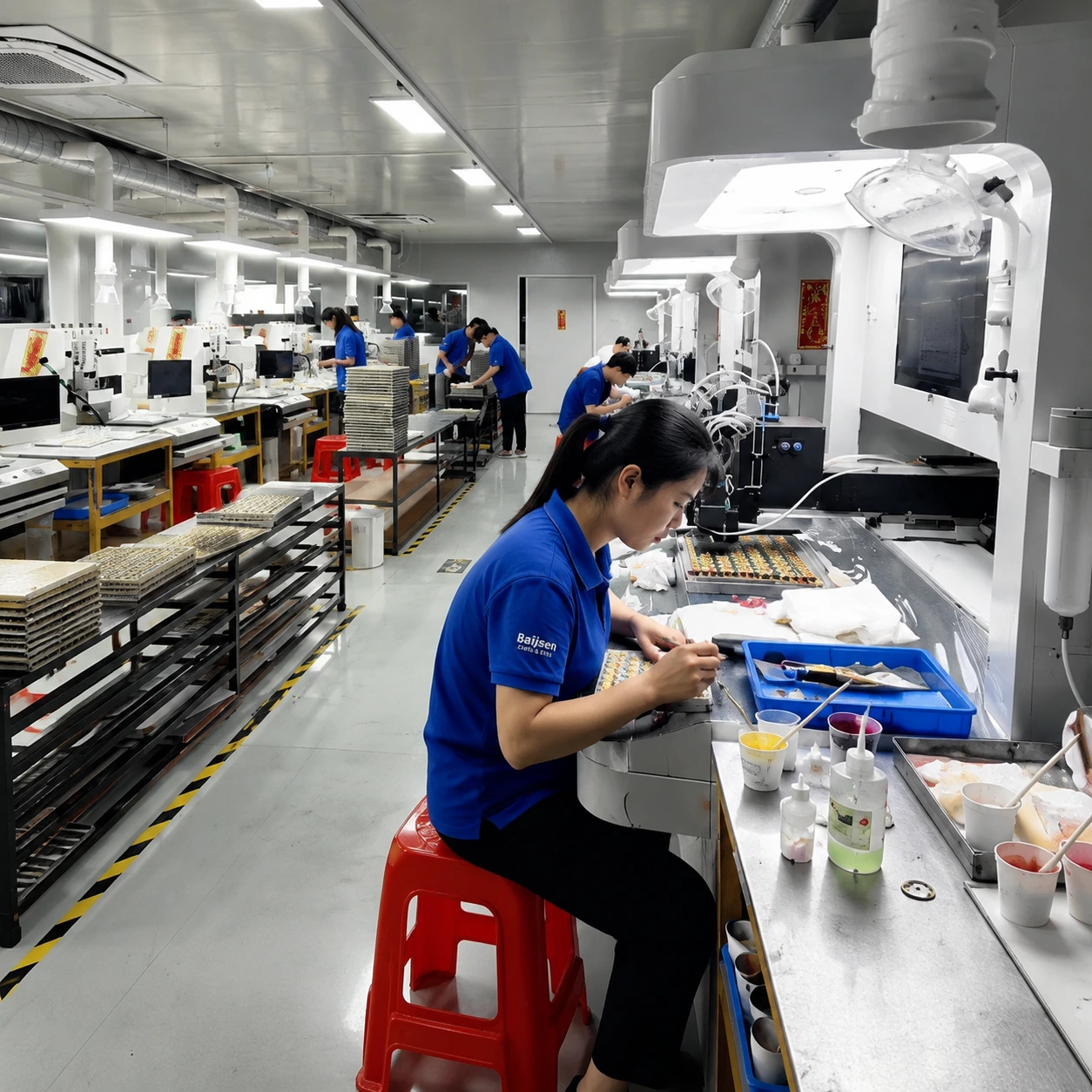
Colors are filled according to the approved layout, or printed details are applied using the selected process. Decorative components may require additional assembly and inspection.
6. Attachment assembly
Posts, bar pins, magnets or other fittings are installed in the approved positions. Placement influences both retention and how the brooch sits when worn.
7. Inspection and packaging
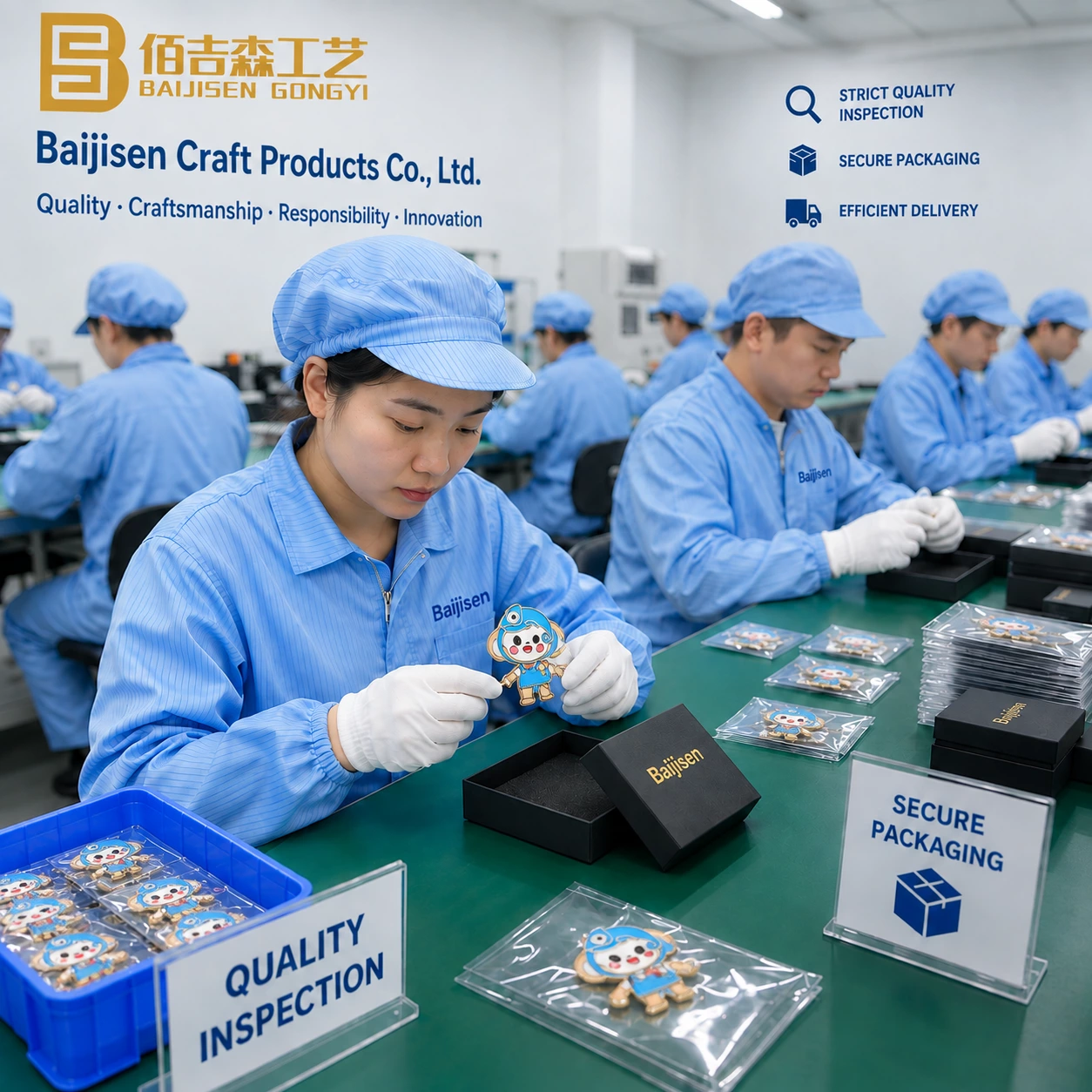
Shape, surface, color, text, attachments, quantities and packaging are checked against the approved specification before shipment preparation.
Quality Control for Custom Brooches
Quality control should verify conformance to the approved specification, not rely on the vague question of whether a piece “looks good.” Typical checks include:
- Outline, dimensions and visible deformation
- Sharp edges, scratches, spots and surface irregularities
- Missing, incorrect or misplaced color
- Logo, spelling, dates and serial information
- Attachment security, direction and placement
- Correct styles, quantities, labels and packaging
- Protection against rubbing, bending and impact in transit
If a product will be sold in a particular country or used by a specialized audience, tell the manufacturer at the quotation stage. Applicable material, labeling or testing requirements should be confirmed for that market and use. Claims such as “non-toxic,” “eco-friendly” or universally compliant should not be made without relevant supporting documentation.
Custom Packaging for Retail and Gifting
A backing card can carry a logo, product story, website, social channels, barcode and necessary instructions. Its die-cut slot, attachment position and information hierarchy should be developed around the actual brooch.
Individual bags provide basic separation for bulk distribution. Pouches can improve the gifting experience, while custom boxes suit presentation pieces, recognition and commemorative projects. Packaging should be selected with dimensions, decorative components, scratch protection, shipping method and budget in mind.
What Determines Custom Brooch Cost and Lead Time?
A meaningful quotation depends on the product specification. Cost may be affected by dimensions, thickness, material, quantity, tooling, number of colors, plating, relief, special effects, backing, reverse marking, packaging and delivery requirements.
Project timing may include artwork approval, tooling or sampling, production, inspection, packaging and shipping. Revision rounds, process complexity, order quantity, custom packaging and destination all matter. For launches, exhibitions and fixed-date events, work backward from the required delivery date and allow time for artwork changes and international transport.
Get a Project-Based Brooch Quote
Send your artwork, intended dimensions, quantity, preferred finish, backing, packaging, destination and required date for a more accurate assessment.
Email Your RequirementsCommon Custom Brooch Design Mistakes
Too much detail in a small area
Complexity does not automatically create a premium result. Preserve the elements that communicate the idea most clearly at actual size.
Text that is too small or too long
Keep essential names, dates or messages on the face. Longer information can move to the reverse or packaging.
Ignoring weight and fabric
A large solid piece may pull on lightweight material. Open areas, thickness, material and attachment points should be considered during design.
Designing only the front
An attachment in the wrong position can make a brooch tilt or rotate. Front appearance and back structure must be reviewed together.
Choosing a supplier by price alone
Total purchasing risk also includes unclear specifications, rework, inconsistent finishing, packaging errors and schedule disruption. Artwork support and process control matter.
How to Choose a Custom Brooch Manufacturer
- Review relevant samples: ask for examples using comparable materials, dimensions, plating and decoration.
- Evaluate artwork support: a useful supplier should identify fragile lines, unreadable text, weight and attachment risks.
- Confirm process capability: establish which tooling, forming, plating, coloring, printing, assembly and inspection steps apply.
- Discuss packaging early: backing cards, barcodes and boxes affect both product presentation and shipping.
- Check specification control: dimensions, colors, plating, attachments and packaging should be documented clearly.
Custom Brooch Manufacturing with Baijisen

Kunshan Baijisen Craft Gift Co., Ltd. helps customers convert logos, illustrations, sketches and brand concepts into manufacturable custom metal products. Depending on the project, buyers can discuss dimensions, base material, enamel process, metal finish, backing, reverse marking and packaging.
Production artwork and specification approval help reduce misunderstandings before manufacturing. Finished orders can then be checked for appearance, attachments and packaging according to the confirmed requirements. For international sourcing projects, supplying complete information at the start enables a more relevant feasibility review and quotation.
Learn more about Baijisen’s custom metal badges, custom lapel pins and company background.
How to Order a Custom Designer Brooch in Five Steps
- Send your design or idea. Include a logo, vector file, clear image, sketch or visual reference and describe the intended use.
- Confirm the specification. Establish dimensions, material, process, plating, colors, backing, quantity and packaging.
- Review production artwork. Check spelling, scale, color, front and back construction, and every technical note.
- Proceed with manufacturing and inspection. Production follows the approved specification through forming, finishing, decoration, assembly and QC.
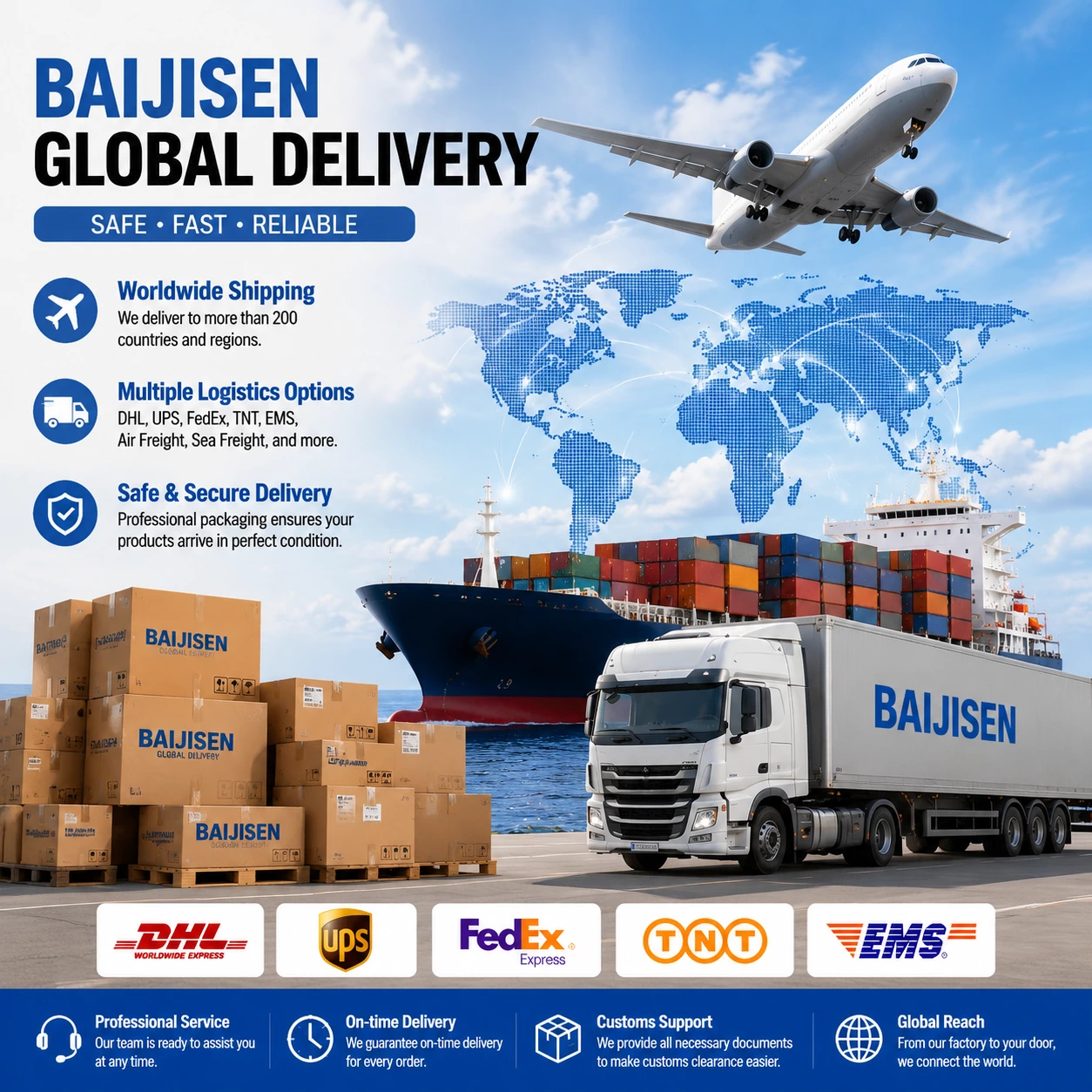
- Pack and arrange delivery. Apply the confirmed individual bag, backing card, pouch or box and prepare the order for its destination.
Custom Designer Brooch FAQ
Can a custom brooch be made from a logo or sketch?
Yes. Vector artwork is preferred, but a clear image or hand-drawn sketch can also be used as a starting point. The design should be reviewed and converted into production-ready artwork before manufacturing.
What file format is best for custom brooch artwork?
AI, EPS, SVG and vector PDF files are usually the easiest to adapt accurately. High-resolution PNG or JPG files may also be suitable references when fonts, colors and intended dimensions are supplied.
What is the difference between a brooch and a lapel pin?
Brooches are often larger and more decorative and commonly use a bar pin or safety-pin mechanism. Lapel pins are generally smaller and usually use one or more posts with clutches. The right structure depends on size, weight, fabric and use.
Which material is best for a custom brooch?
There is no single best material for every design. Detail, size, weight, forming method, finish, target use and budget should all be evaluated before a material is selected.
Can private-label brooches and packaging be customized?
A project may include custom artwork, reverse-side branding, backing cards, pouches or gift boxes. Available options should be confirmed against the product dimensions, quantity and packaging specification.
What is the minimum order quantity for custom brooches?
Minimum order requirements vary by design, material, process and packaging. Submit the artwork and estimated quantity for a project-specific assessment.
Can Pantone colors be specified?
Pantone references can be supplied for brand-color projects. Because enamel, plated metal, printed references and screens reflect color differently, reasonable material-related variation should still be expected.
How much does a custom designer brooch cost?
Cost depends on dimensions, material, quantity, tooling, colors, plating, structure, backing, special effects, packaging and delivery requirements. A design and complete specification are needed for a meaningful quotation.
How long does custom brooch production take?
Timing depends on artwork approval, tooling or sampling, process complexity, quantity, packaging and destination. Projects with a fixed event date should be planned early and include revision and shipping time.
Ready to Create Your Custom Designer Brooch?
Send Baijisen your artwork, size, estimated quantity, preferred process, finish, backing, packaging, destination and required date. These details make it easier to evaluate production and prepare a relevant quotation.
Send Your Design to Baijisen