中文
中文Custom Military Challenge Coins Guide
A successful military challenge coin does more than reproduce an emblem. It communicates identity, service and shared experience in a small metal object that must also be legible, durable and practical to manufacture. The strongest projects connect a clear purpose with disciplined artwork and complete specifications.
What Is a Military Challenge Coin?
A military challenge coin is a small medallion associated with a unit, command, mission, deployment, achievement or shared service. Coins may be presented by leaders, exchanged between members, carried as symbols of belonging or created to commemorate an event. Although many traditions are attached to challenge coins, accounts of their earliest origin vary. Treat popular origin stories as tradition rather than settled historical fact.
Modern military-style coins are also commissioned by veterans’ organizations, academies, museums, first responders, event organizers and corporate teams. A coin becomes meaningful when its imagery, words and presentation have a clear connection to the people receiving it.
| Coin purpose | Design priority | Common presentation |
|---|---|---|
| Unit identity | Recognizable emblem, motto and colors | Individual pouch or presentation box |
| Recognition | Achievement, rank, date or personalized text | Gift box or display case |
| Deployment or event | Location, operation, year and shared story | Protective capsule or pouch |
| Fundraising or membership | Clear organization identity and edition control | Backing card, capsule or retail packaging |
How to Design a Custom Military Challenge Coin
1. Define the recipient and the moment
Start with three questions: Who will receive the coin? Why will it be presented? What should the recipient remember? A retirement coin, a deployment coin and a unit membership coin may use similar materials but require different visual hierarchy.
2. Give each side one clear job
A useful approach is to place the primary emblem or symbol on the front and the supporting story on the reverse. The reverse might contain a motto, date, location, equipment silhouette, map, roster reference or recognition statement. Avoid forcing every idea onto both sides.
3. Simplify artwork for real size
Computer artwork is viewed much larger than the finished coin. Fine strokes, tiny counters in letters, dense paragraphs and subtle tonal differences may disappear in metal. Prioritize the unit name, central symbol and short message. If a detail is not essential, removing it often makes the finished coin stronger.
4. Select the right relief
| Artwork style | Best for | Watch for |
|---|---|---|
| 2D | Lettering, borders, emblems and clean flat levels | Too many narrow recessed areas |
| Multilevel 2D | Added visual depth with controlled stepped levels | Unclear hierarchy between levels |
| 3D sculpted relief | Portraits, landscapes, vehicles and organic shapes | Small text placed inside sculpted areas |
Choose Size, Thickness, Shape and Construction
There is no universal “best” challenge coin size. The correct specification balances artwork complexity, hand feel, weight, budget and packaging. A simple emblem can remain clear on a compact coin; a detailed scene, long perimeter text or sculpted portrait needs more room. Thickness also affects perceived weight and the amount of edge area available.
Round coins are traditional and efficient, but custom outlines can reinforce a shield, aircraft, state, badge or equipment shape. Internal cutouts and spinner or bottle-opener features may be possible, yet every added mechanism changes tooling, balance, inspection and cost. Use special construction only when it supports the coin’s purpose.
Metal Finishes, Enamel, Printing and Edges
Metal finish sets the tone
Bright gold or silver creates strong contrast and a formal appearance. Antique gold, silver, bronze or copper can emphasize recessed relief and produce a traditional character. Black nickel or dark finishes can complement modern tactical artwork. The same design may feel entirely different when the finish changes, so request finish-specific proofs or physical references when appearance is critical.
Color should guide the eye
Recessed enamel is useful for unit colors, flags, symbols and borders. Pantone references can communicate a target color more clearly than screen samples, although metal, enamel, lighting and display settings can still affect perception. Gradients, photographs and extremely fine elements may call for printing rather than separate enamel cells.
Edge treatments add a final detail
A plain edge keeps the focus on the faces. Rope, reeded or diamond-cut effects can create a more ceremonial or decorative frame. Suitability depends on diameter, thickness and profile; confirm the exact edge on the proof rather than relying only on a style name.
Personalization and packaging
Laser-engraved names, dates or sequential numbers can distinguish awards and limited editions. Packaging ranges from individual pouches and protective capsules to velvet boxes and display cases. Choose it according to how the coin will be stored, presented or shipped—not only its appearance in a quotation.
From Artwork to Finished Coin: The Manufacturing Process
Project review
The maker reviews the concept, rights status, dimensions, quantity, finish, colors, packaging and deadline, then identifies details that may not reproduce reliably.
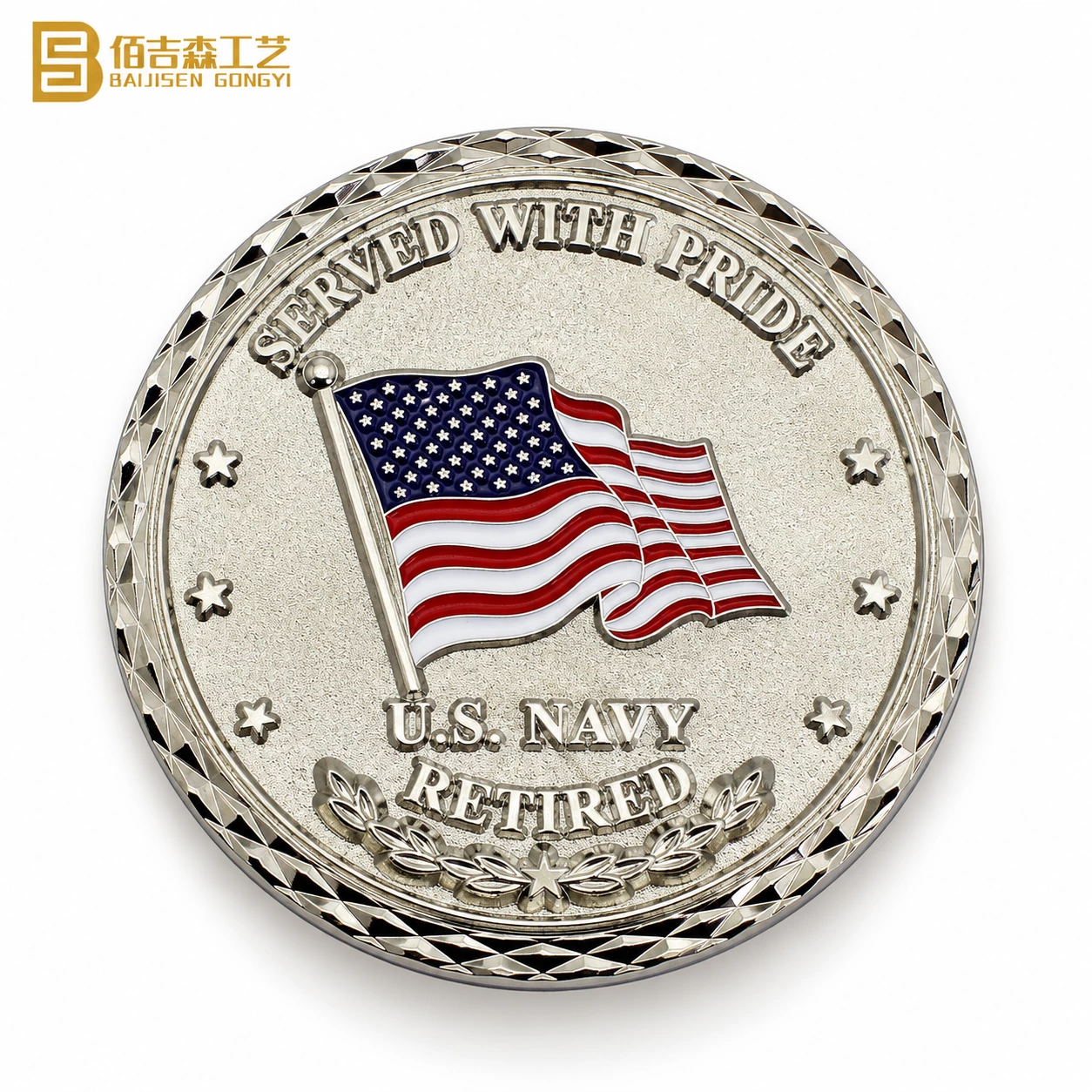
Production artwork and approval
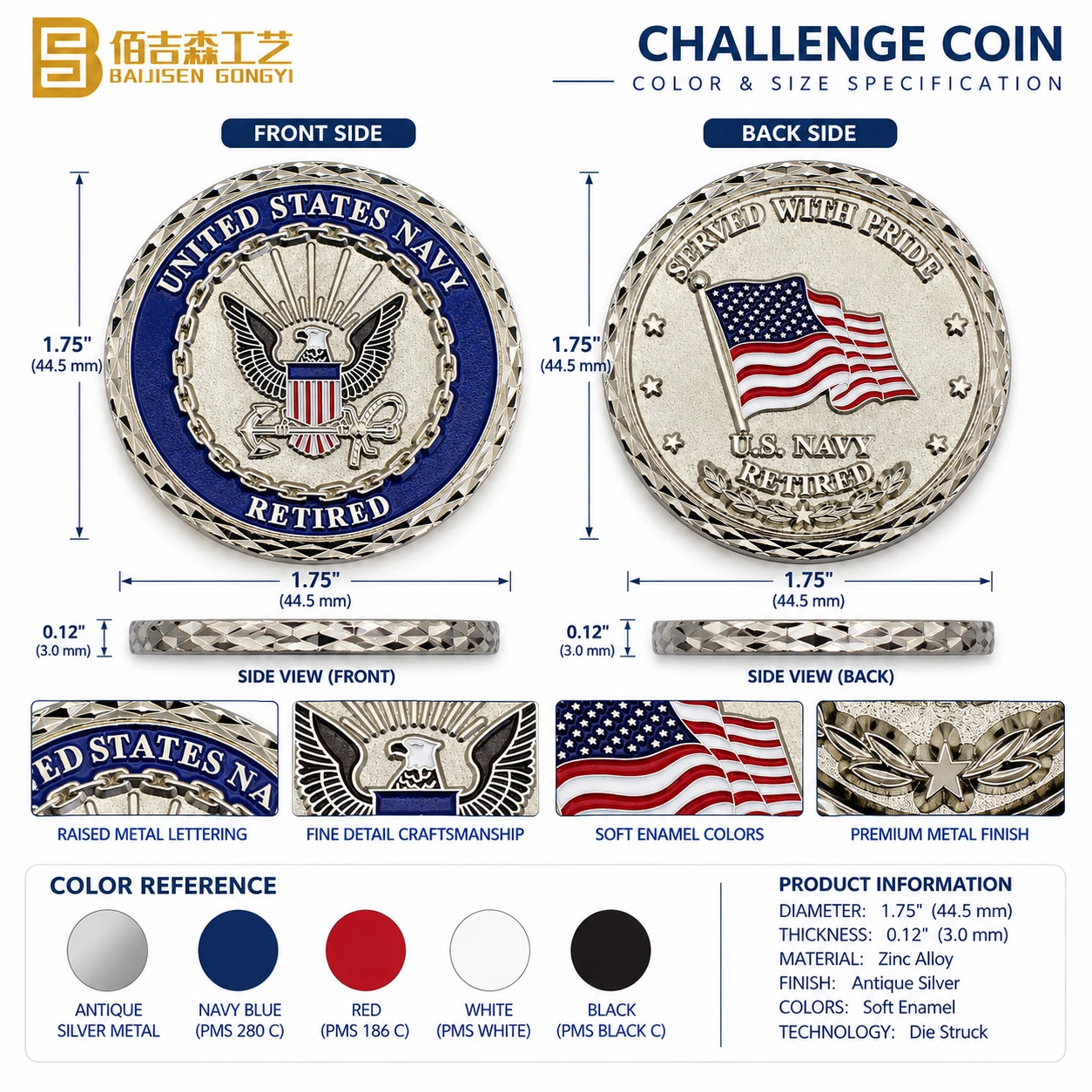
The concept is translated into a technical proof showing dimensions, metal levels, colors and side orientation. Production should begin only after the customer approves the complete proof.
Tooling and forming
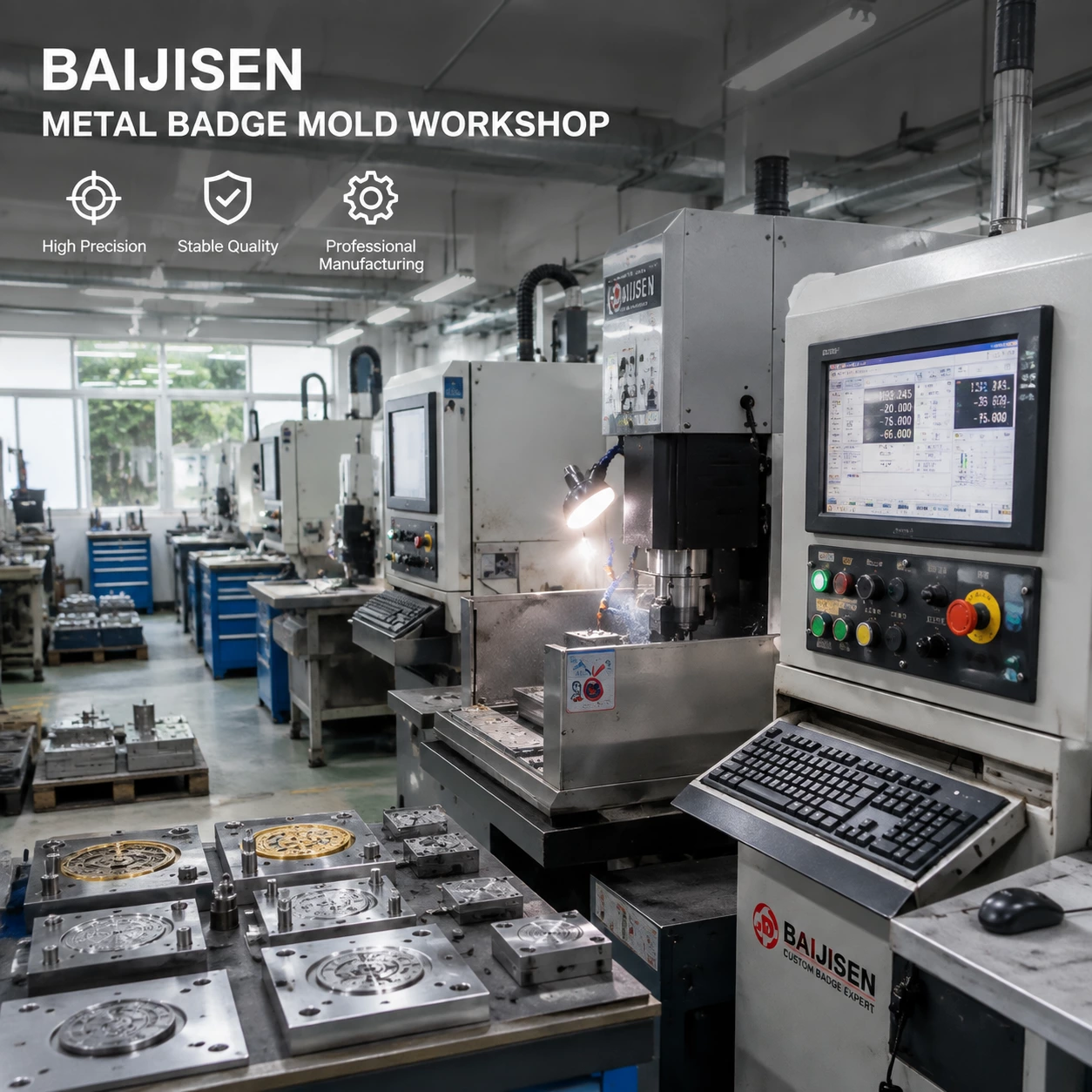
Tooling is prepared for the approved artwork. Depending on the design and construction, the coin blank is struck or cast, then trimmed and prepared for later operations.
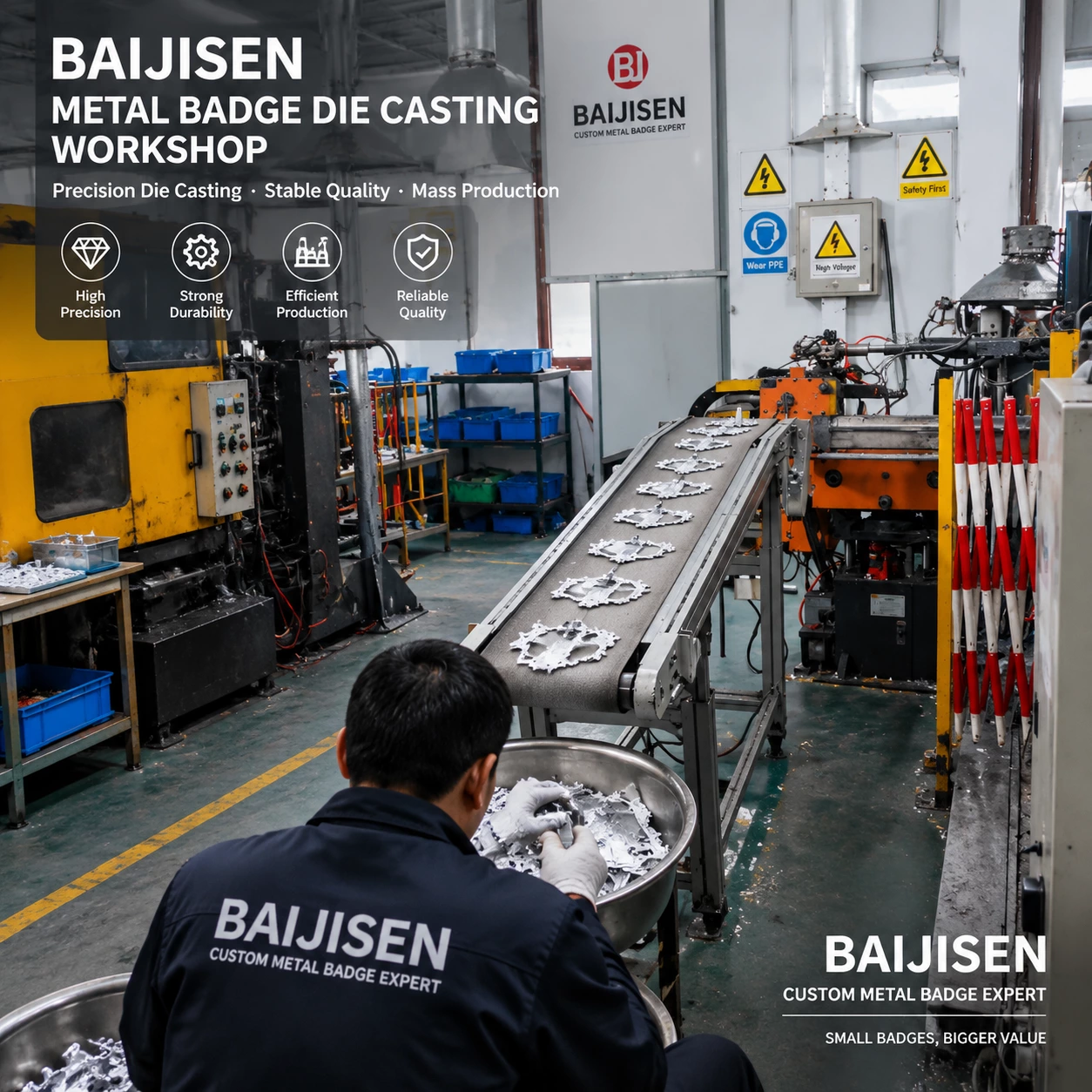
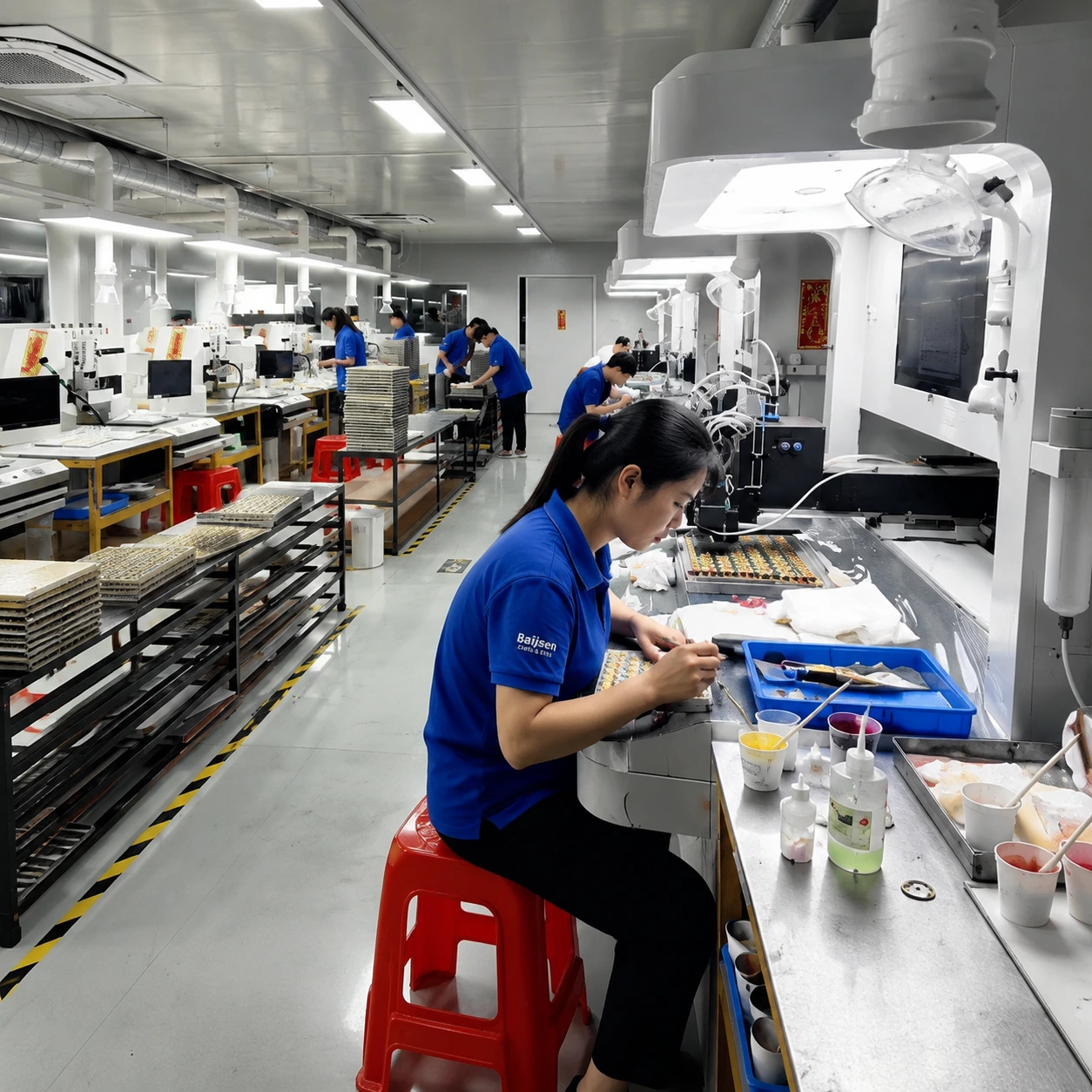
Finishing and color
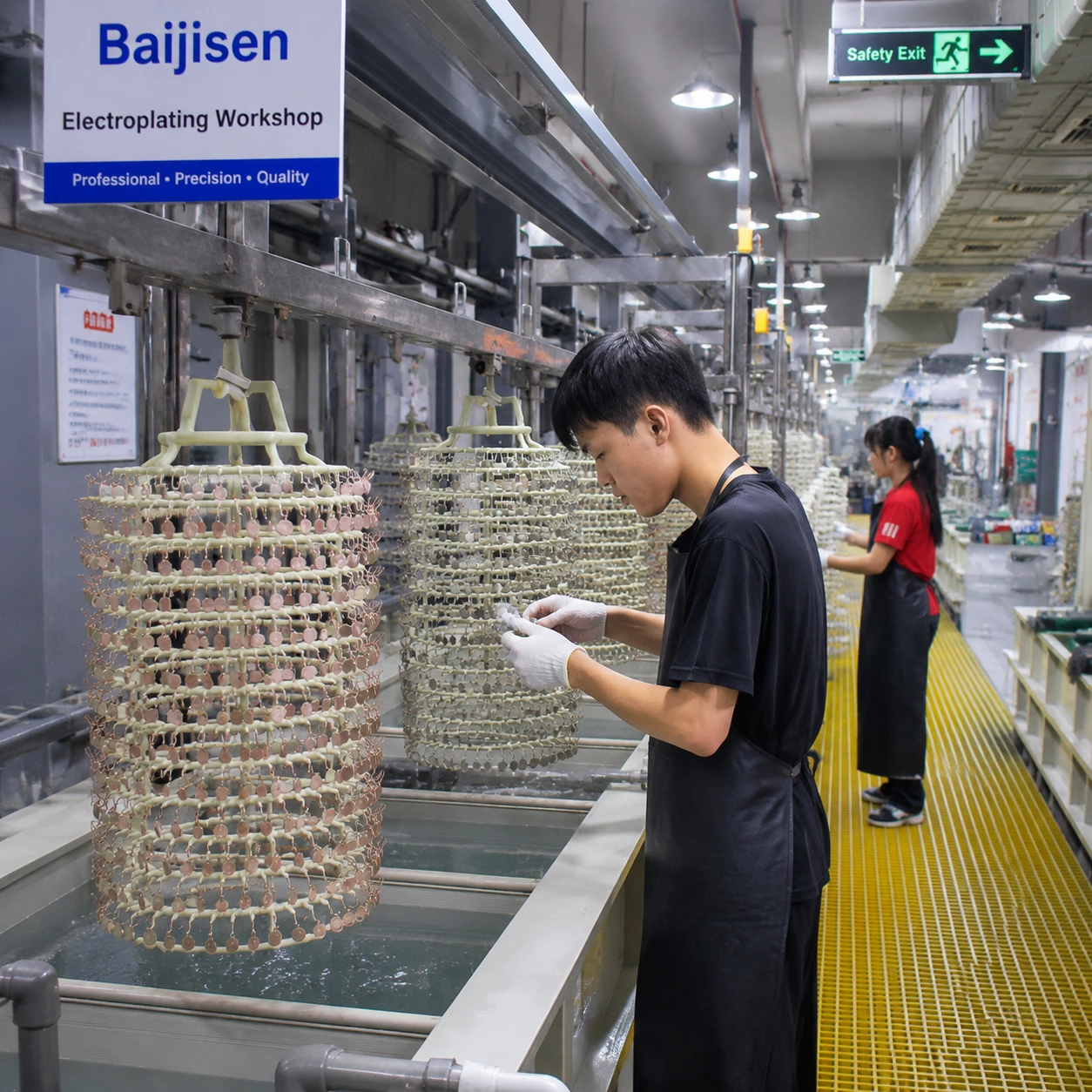
The coin is polished or textured, plated or antiqued, and filled or printed where the design requires color. Decorative edges and individual engraving are added in the appropriate sequence.
Inspection, packing and shipment
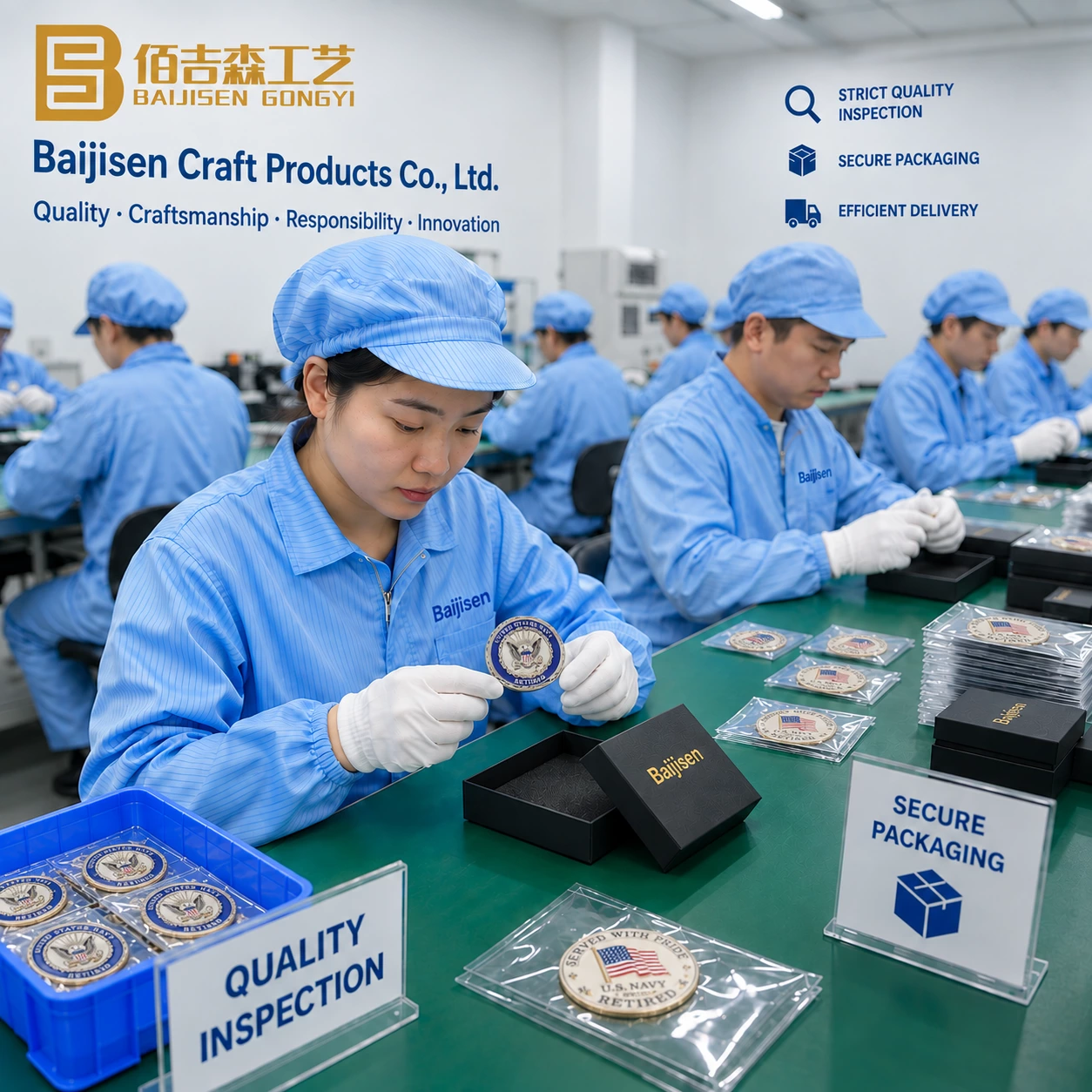
Finished coins are checked against the approved specification, packed as ordered and prepared for delivery.

What Good Challenge Coin Quality Control Should Check
Quality is not one visual judgment. A useful inspection plan compares finished coins with the approved proof and order specification.
- Dimensions and profile: diameter or outline, thickness, edge consistency and obvious deformation.
- Artwork: correct front/reverse orientation, readable wording, dates, numbers and recognizable symbols.
- Relief and surface: defined raised and recessed areas, intentional textures, acceptable polishing and no prominent damage.
- Finish and color: consistent overall appearance, correct color placement and no obvious missing or overflow areas.
- Personalization: sequence, spelling and placement of names or serial numbers.
- Packaging and count: correct package type, accessories, labeling and packed quantity.
For projects with strict appearance requirements or large quantities, discuss pre-production samples, reference samples or an agreed inspection standard before mass production.
What Determines Challenge Coin Cost and Lead Time?
Custom coins are quoted from specifications rather than a single universal price. Cost commonly changes with dimensions, thickness, quantity, two-sided complexity, 2D or 3D relief, enamel count, finish, edge, engraving, packaging and destination. Tooling and setup are spread across the order, so quantity can affect the unit price.
Lead time includes more than factory production. Allow for concept review, proof revisions, authorization, tooling, manufacturing, inspection, packaging and transit. A ceremony, reunion, retirement or deployment date should be communicated at the first inquiry. The required arrival date—not merely the desired ship date—is the useful planning deadline.
Provide these details for a more accurate quote
- Front and back artwork or a clear concept
- Target diameter, shape and thickness
- Quantity and any split quantities
- 2D, multilevel or 3D relief preference
- Finish, enamel colors and edge style
- Personalization and packaging
- Delivery country, postal code and required arrival date
Common Design and Ordering Mistakes
- Treating a coin like a poster: too much text and too many focal points reduce impact at actual size.
- Approving only a front view: reverse orientation and edge details must also be checked.
- Using unverified insignia: authorization should be resolved before tooling.
- Choosing a finish in isolation: relief, enamel and finish work together and should be reviewed as one design.
- Planning from the event date backward too late: proof revisions, sampling, inspection and transit all need contingency time.
- Comparing price without matching specifications: two quotes are comparable only when size, thickness, finish, artwork, edge, packaging and delivery terms match.
How to Choose a Military Challenge Coin Maker
Look beyond gallery images. A suitable manufacturer should ask about the coin’s purpose, identify risky details in the artwork, provide a clear production proof and document the agreed specification. Evaluate its ability to execute the relief, finish, edge, color, personalization and packaging your project actually requires.
Ask how artwork changes are handled, what is checked during inspection, whether a pre-production sample is appropriate, how bulk consistency is evaluated and how packaging quantities are verified. Clear answers reduce avoidable misunderstandings.
Working with Baijisen

Baijisen helps turn logos, sketches and reference images into custom metal product specifications. For challenge coin projects, customers can discuss artwork, dimensions, relief, finishes, colors, edges, personalization and packaging as one coordinated order. Explore the custom challenge coin manufacturing page, learn more about Baijisen, or review related custom lapel pins and metal badges.
How to Start Your Order in Five Steps
- Send your concept: include front and back ideas, logos, sketches or reference images.
- Define specifications: confirm size, thickness, quantity, relief, finish, colors, edge and packaging.
- Confirm authorization: document permission for protected marks, artwork or portraits.
- Approve the production proof: check every word, number, color, dimension and orientation.
- Confirm production and delivery: align the inspection, packaging and transit plan with the required arrival date.
Military Challenge Coin FAQ
What is a military challenge coin?
A military challenge coin is a small custom medallion associated with a unit, command, mission, achievement or shared service. It may be presented for recognition, carried as a sign of belonging or created as a commemorative keepsake.
Who can order custom military challenge coins?
Authorized military units, veterans' groups, associations, event organizers, museums, corporate teams and individuals may order custom coins, provided they have permission to use any protected names, emblems, insignia, mottos, portraits or other intellectual property in the design.
What size should a military challenge coin be?
The best size depends on artwork complexity, text length, relief, weight and presentation. A compact design can work at a smaller diameter, while detailed two-sided artwork or 3D relief generally needs more space. Ask for a full-size proof before production.
Should I choose a 2D or 3D challenge coin?
Choose 2D for crisp flat levels, lettering and emblems. Choose 3D for sculpted faces, terrain, equipment or organic forms. A multilevel 2D design can add depth without requiring fully sculpted 3D artwork.
Can military challenge coins use enamel color?
Yes. Recessed enamel can emphasize unit colors, symbols and borders. Printed details may be considered for gradients or very fine elements that cannot be separated reliably with metal lines.
What edge styles are available?
Common options include a plain edge and decorative patterns such as rope, diamond-cut or reeded effects. Availability and suitability depend on the coin's diameter, thickness, profile and manufacturing method.
Can each coin have a serial number?
Yes. Sequential numbering, individual names or short identifying text can often be laser engraved, subject to the available space and legibility requirements.
What affects the price of custom military challenge coins?
Major cost factors include size, thickness, quantity, one-sided or two-sided artwork, relief complexity, finish, enamel colors, edge treatment, individual personalization, packaging and shipping destination.
How long does challenge coin production take?
Timing varies with proof revisions, tooling, design complexity, order volume, finish, packaging and shipping. Projects tied to ceremonies or deployment dates should include time for artwork approval, production, inspection and transit.
What artwork files should I provide?
Vector files such as AI, EPS, SVG or editable PDF are preferred. A clear PNG, JPG, photograph or sketch may also be used as a starting reference, but production artwork must still be prepared and approved.
May I use official U.S. military insignia on a coin?
Military marks and insignia may be protected. The customer should obtain written authorization from the appropriate rights holder or military trademark licensing office before production. The manufacturer should not treat artwork submission as proof of permission.
How do I request a custom challenge coin quote?
Send the front and back concept, target size and thickness, quantity, finish, colors, edge, packaging, delivery country and required date. Complete specifications make feasibility, pricing and scheduling estimates more accurate.
Ready to Develop Your Custom Challenge Coin?
Send Baijisen your artwork or concept, quantity, target specifications, delivery location and required date. Our team can review the project for manufacturability and prepare the next step for quotation.
This guide provides general design and purchasing information, not legal advice. Customers are responsible for confirming rights and approvals for submitted artwork. Product feasibility, color, cost and timing depend on the final approved specification.