中文
中文Create Your Own Lapel Pin
Create your own lapel pin with expert guidance on artwork, enamel, size, plating, backings, production, packaging, costs, quality control, and quotes.
How Do You Create Your Own Lapel Pin?
To create your own lapel pin, start with a logo, sketch, image, or written idea. Choose the pin type, size, Pantone colors, plating, backing, quantity, and packaging; approve a production proof; and then proceed through tooling, manufacturing, inspection, packing, and delivery. The best process depends on the artwork, intended use, order quantity, desired finish, budget, and required delivery date.
| Your design or requirement | Recommended direction | Why |
|---|---|---|
| Visible metal lines and a textured surface | Soft enamel | Recessed color areas emphasize the raised metal borders. |
| A smooth, polished, premium finish | Hard enamel | The filled and polished surface creates a refined appearance. |
| A classic design without color | Die struck | Raised and recessed metal carries the design. |
| Gradients, photographs, or very fine detail | Printed pin | Printing can reproduce elements that traditional enamel cannot separate with metal lines. |
| Sculpted depth or a dimensional subject | 3D or die cast | Multiple relief levels create a more dimensional result. |
Creating a custom lapel pin involves more than uploading an image and waiting for a finished item. A successful pin is the result of coordinated decisions that make the artwork attractive, manufacturable, durable, comfortable to wear, and suitable for its intended use.
This guide explains the complete process—from design and materials to size, color, plating, attachments, production, cost, packaging, and supplier selection—so you can create a custom pin with fewer surprises.
What Does “Create Your Own Lapel Pin” Mean?
It means producing a metal pin around your own artwork, logo, wording, brand element, or original idea instead of buying a stock design. The shape, size, metal finish, enamel colors, surface treatment, backing, packaging, and intended application can all be specified for the project.
For example, a company pin may begin with a brand logo and require a compact size, accurate corporate colors, polished plating, and a secure backing. An artist merchandise pin may place more emphasis on expressive shapes, multiple enamel colors, printed details, glitter, or distinctive packaging.
Step 1: Define the Purpose of Your Lapel Pin
The intended use affects nearly every specification, including size, process, attachment, packaging, budget, and delivery schedule.
Corporate Logo Pins
Corporate lapel pins are often used for uniforms, conferences, anniversaries, trade shows, employee recognition, client gifts, and brand programs. Clear logo reproduction, consistent colors, refined finishes, and dependable batch quality usually matter most. Simple, recognizable artwork generally performs better than dense detail at a small scale.
Event and Promotional Pins
Trade shows, launches, sports events, festivals, charity campaigns, seasonal promotions, and brand activations often require bold colors and a clear message. High-volume event orders should balance visual impact, unit cost, packaging speed, and the required arrival date.
School, Club, and Membership Pins
Schools, associations, clubs, and membership organizations use pins to represent identity, achievement, rank, service, or a commemorative year. Crests, initials, dates, and level markers should remain readable at actual size.

Artist and Brand Merchandise
Original characters, anime-inspired artwork, illustrations, band merchandise, fashion labels, and creator products can use irregular shapes, multiple colors, black nickel or gold plating, screen-printed details, glitter, transparent enamel, and other effects.

Souvenir and Gift Pins
Tourist destinations, museums, landmarks, sporting events, and commemorative programs often need a balance of instant recognition, durability, presentation, and collectible appeal.
Step 2: Prepare a Production-Friendly Design
Start with the File You Have
Preferred artwork formats include AI, EPS, SVG, and vector PDF because paths and dimensions can be adjusted accurately. PSD, PNG, JPG, logo images, reference photos, and hand sketches can also serve as starting points. When vector artwork is unavailable, the manufacturer may redraw the design, define metal boundaries, assign color references, and prepare a digital proof for approval.
Keep Important Elements Clear
A design that looks detailed on a monitor may lose clarity when reduced to about one inch. Long wording, thin strokes, small logos, crowded backgrounds, and too many tiny color areas may be difficult to reproduce consistently.
- Prioritize the most important symbol or message.
- Remove unnecessary shadows and background elements.
- Enlarge critical wording and simplify fine strokes.
- Use metal boundaries as intentional parts of the design.
- Review the artwork at the proposed finished size.
Choose and Communicate Colors
Define primary, secondary, background, and metal colors. Pantone references can reduce ambiguity when brand color control is important. However, screen displays emit light, while enamel and plated metal reflect light, so an exact visual match across all materials and viewing conditions should not be assumed.
Custom Lapel Pin Artwork Requirements
The table below identifies the items that should be confirmed before production. Exact minimum dimensions can vary by design, base metal, tooling, enamel process, and finishing method. Baijisen should review the actual artwork before any value is treated as a guaranteed production limit.
| Artwork item | Practical requirement | What to confirm with the manufacturer |
|---|---|---|
| File format | AI, EPS, SVG, or editable vector PDF is preferred; clear raster artwork can be redrawn when necessary. | Whether artwork redrawing is required and whether any design fee applies. |
| Metal line width | Lines must be wide enough to form cleanly and separate enamel areas. | The verified minimum for the selected material, size, and process. |
| Enamel fill area | Each traditional enamel color area normally needs sufficient space and a closed metal boundary. | The smallest reliable fill area for the specific design. |
| Text | Use simple letterforms and review legibility at actual finished size. | Minimum lettering for raised, recessed, engraved, or printed text. |
| Colors | Use solid color references for traditional enamel; gradients normally require printing. | Pantone references, color count, and process compatibility. |
| Outer shape | The perimeter must be manufacturable and sufficiently strong. | Whether thin points, internal cutouts, or complex edges need adjustment. |
| Posts | Post position should support the center of gravity and intended wearing direction. | Whether one or two posts are advisable. |
Step 3: Choose the Right Lapel Pin Process
| Process | Appearance | Best suited to |
|---|---|---|
| Soft enamel | Recessed color areas with raised metal lines and a tactile surface | Promotions, colorful logos, character artwork, souvenirs, and merchandise |
| Hard enamel | Smooth, polished surface with enamel and metal finished at a similar level | Premium corporate pins, long-term use, refined brands, and retail products |
| Die struck | Metal-focused relief with polished, matte, or antique finishes | Awards, service pins, classic emblems, anniversaries, and commemorative designs |
| Printed | Supports gradients, photographs, fine detail, and areas without metal separation | Complex graphics, detailed text, tonal artwork, and photographic designs |
| 3D or die cast | Sculpted depth, curved forms, and multiple relief levels | Portraits, animals, buildings, dimensional logos, and complex shapes |
Soft Enamel Pins
Soft enamel is popular because raised metal lines remain visible above the filled areas, creating texture and strong visual separation. It works well for designs that benefit from defined outlines and an energetic, dimensional look.
Hard Enamel Pins
Hard enamel is filled and finished to create a smooth, polished surface. It is often selected when the brief calls for a clean, premium, or business-oriented appearance.
Die-Struck Metal Pins
Die-struck pins emphasize the metal itself through raised and recessed areas, polishing, sandblasting, or antique treatments. They are well suited to timeless, formal, and commemorative designs that do not require many enamel colors.
Printed and 3D Pins
UV, screen, or offset printing may be appropriate when the artwork contains gradients, photographic detail, or very fine elements. A 3D or die-cast method can create sculpted depth for designs where relief is a central feature.
Step 4: Select an Appropriate Pin Size
Common custom sizes range from approximately 0.75 to 2 inches, but the correct dimension depends on artwork complexity, visibility, placement, weight, and use.
- Small pins: lightweight and discreet; a good fit for simple marks and professional wear.
- Medium pins: often provide a practical balance between detail and comfort for brands, events, souvenirs, and character art.
- Large pins: allow more text, colors, and detail, but can add weight and affect attachment choice, packaging, and freight.
Use two posts when a larger or asymmetrical design needs additional stability or is likely to rotate during wear.
Step 5: Choose Metal and Plating
Plating defines the outlines and all exposed metal areas, so it changes the mood of the entire design.
- Gold: warm and premium; often used for gifts, commemorative pins, and formal branding.
- Silver or nickel: clean, modern, and adaptable to corporate or minimalist artwork.
- Black nickel: creates dark, high-contrast borders for contemporary illustrations and character designs.
- Antique gold: provides an aged, traditional appearance for heritage and collectible themes.
- Antique silver: works well for historical subjects, classic emblems, and sculpted relief.
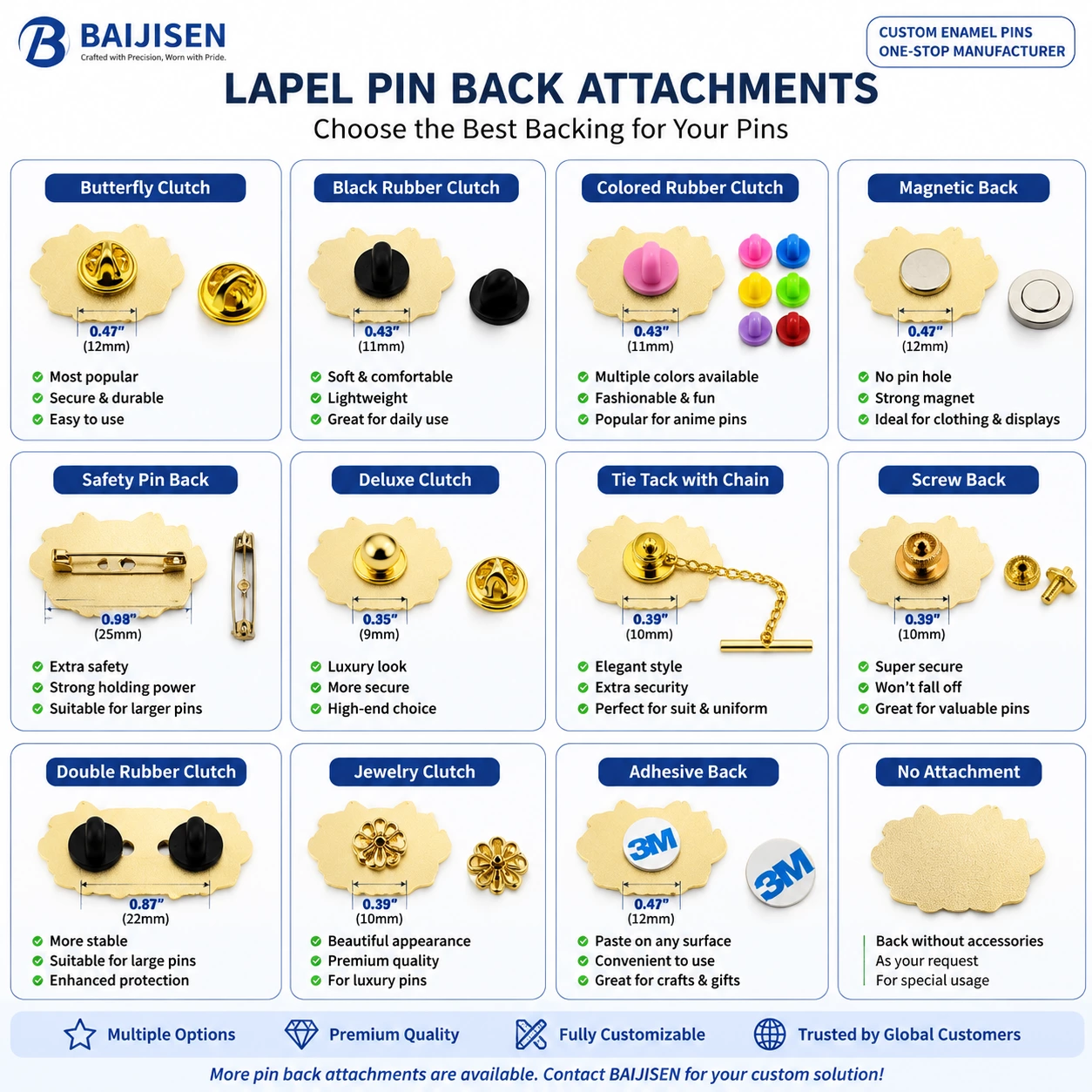
Step 6: Select the Lapel Pin Backing
| Backing | Main advantage | Typical use |
|---|---|---|
| Butterfly clutch | Familiar, convenient, and economical | General promotions and everyday pins |
| Rubber clutch | Soft feel and easy handling | Casual wear and merchandise |
| Deluxe or locking clutch | More secure retention | Premium pins and higher-value applications |
| Magnetic backing | No pin post passing through fabric | Shirts, jackets, and garments where punctures are undesirable |
| Safety-pin backing | Supports certain larger formats | Badges, brooch-style pieces, and special applications |
The best attachment depends on security, comfort, garment type, pin size, and budget. Confirm the post count and position on the proof, especially for long or asymmetrical shapes.
How Custom Lapel Pins Are Manufactured
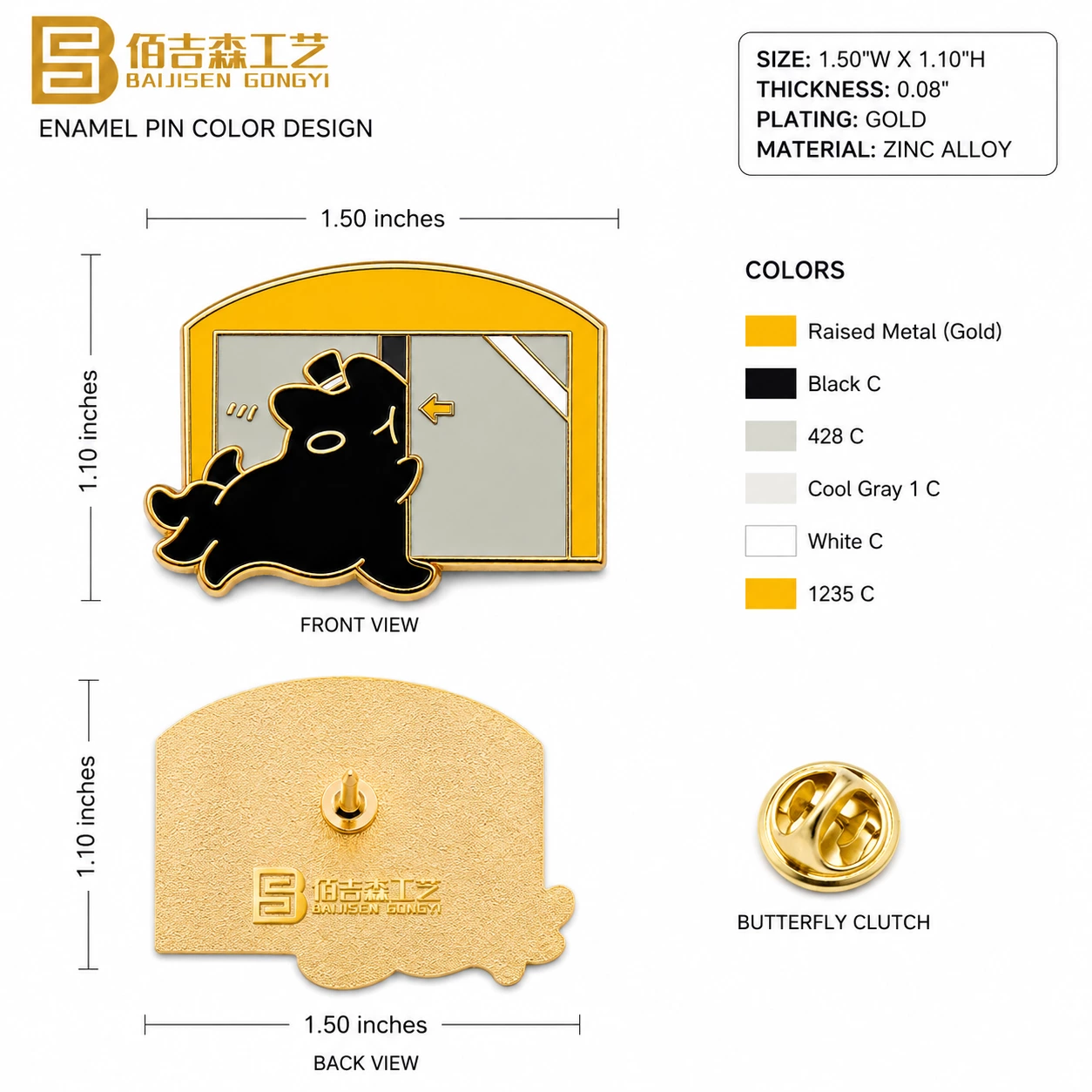
1. Digital Proof and Engineering Review
The submitted concept is converted into production artwork showing dimensions, colors, plating, shape, text, and attachment placement. This is the customer’s most important approval point.
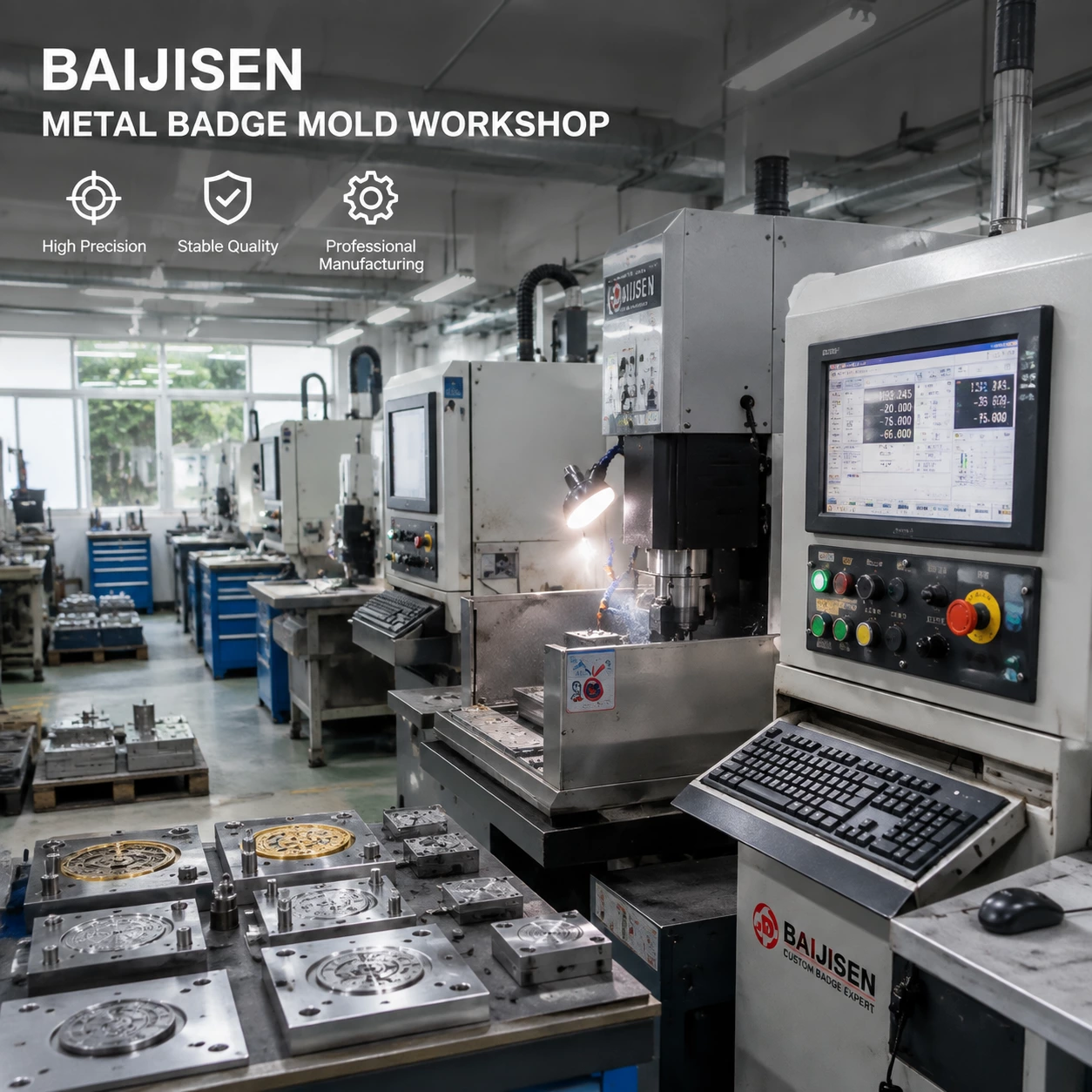
2. Tooling
After approval, tooling is prepared for traditional metal processes. Its accuracy affects the outer shape, metal lines, lettering, and raised or recessed structure.
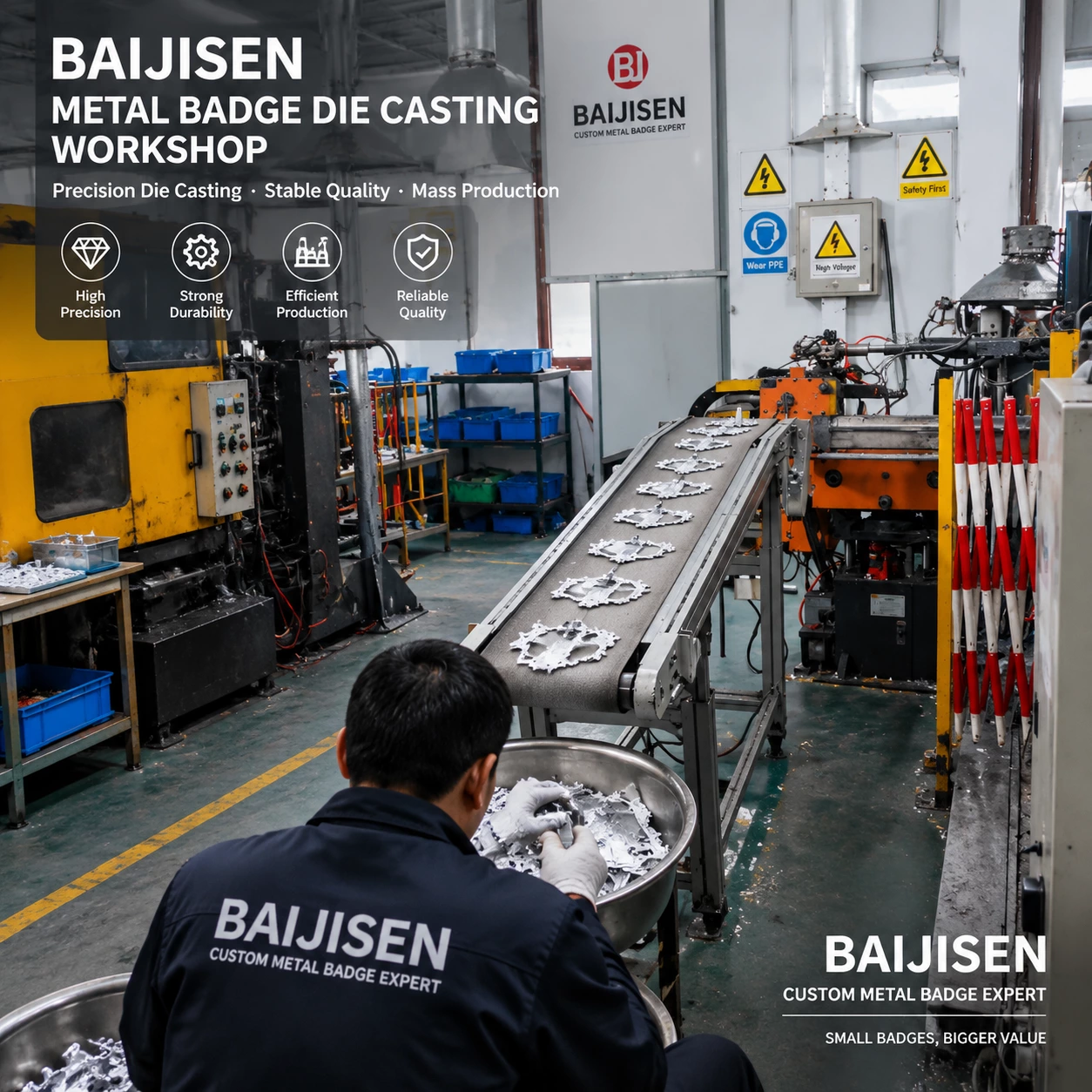
3. Die Striking or Casting
Die striking presses the design into metal and is widely used for enamel pins and badges. Casting may be selected for complex outlines, cutouts, or dimensional forms.
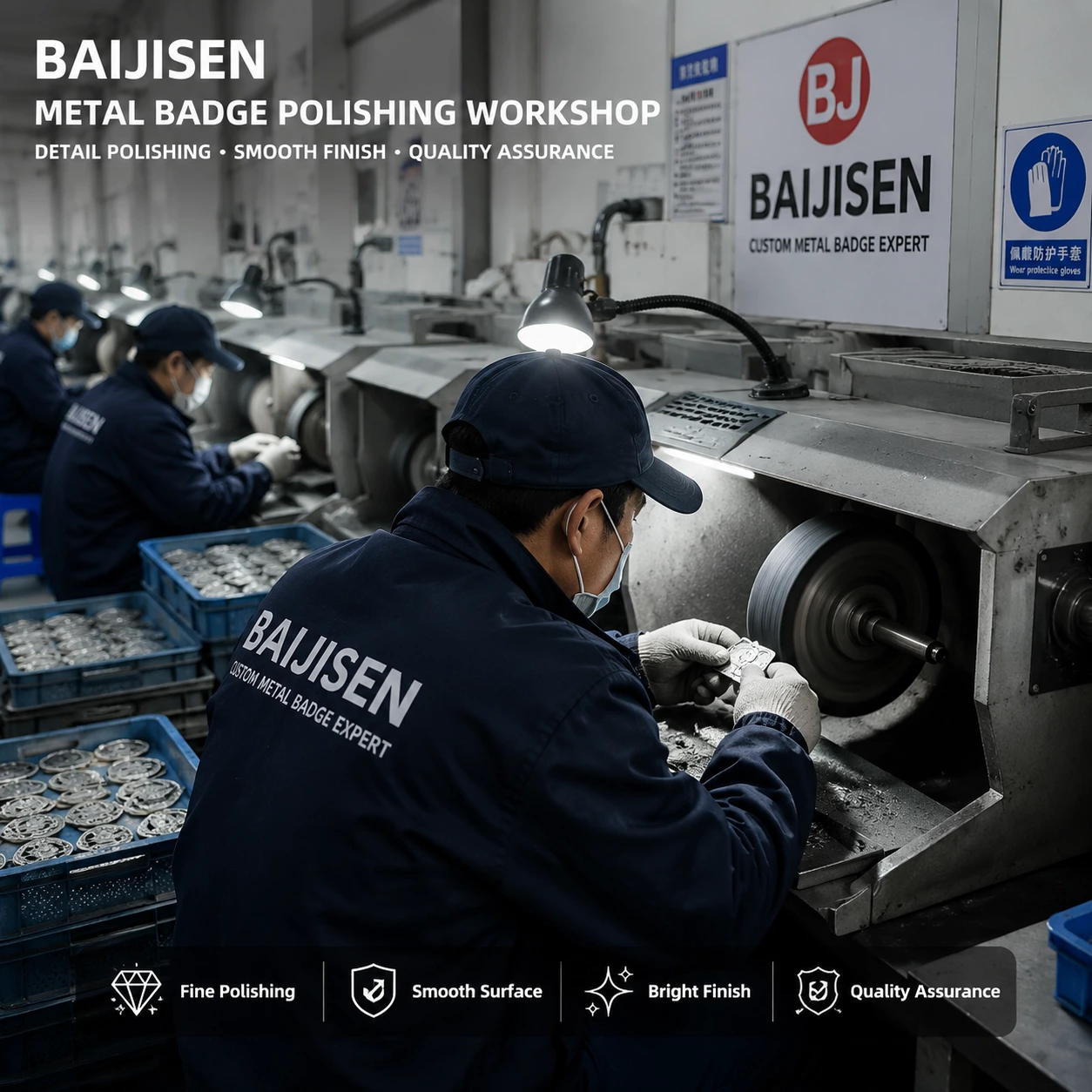
4. Cutting, Shaping, and Polishing
The base piece is trimmed to its profile and refined. Irregular edges, internal cutouts, and intricate shapes can require additional processing. Polishing prepares visible metal areas for the intended finish.
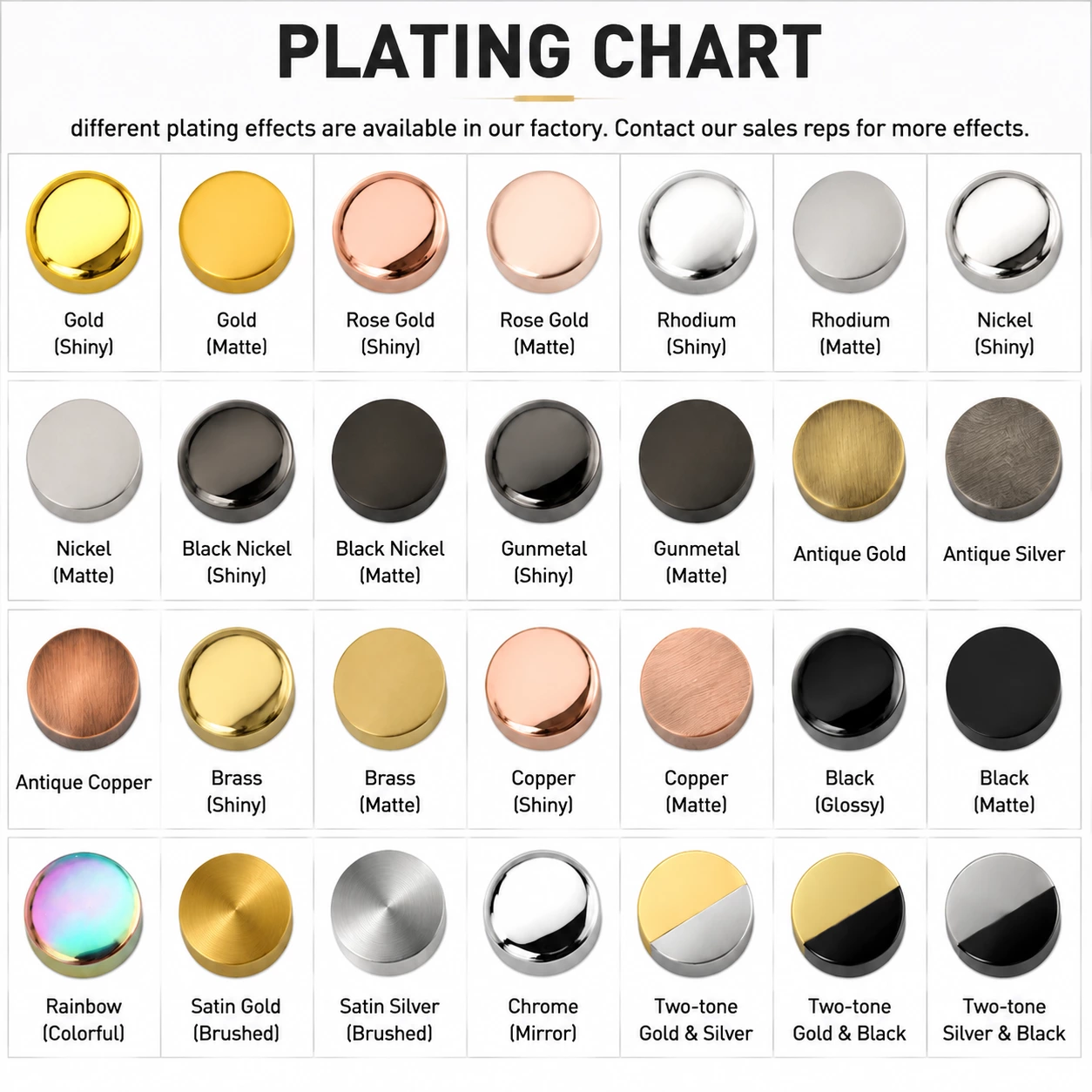
5. Plating
The part receives the approved finish, such as gold, nickel, black nickel, or an antique treatment. Plating establishes the final tone of the exposed metal.
6. Enamel Filling, Baking, and Finishing
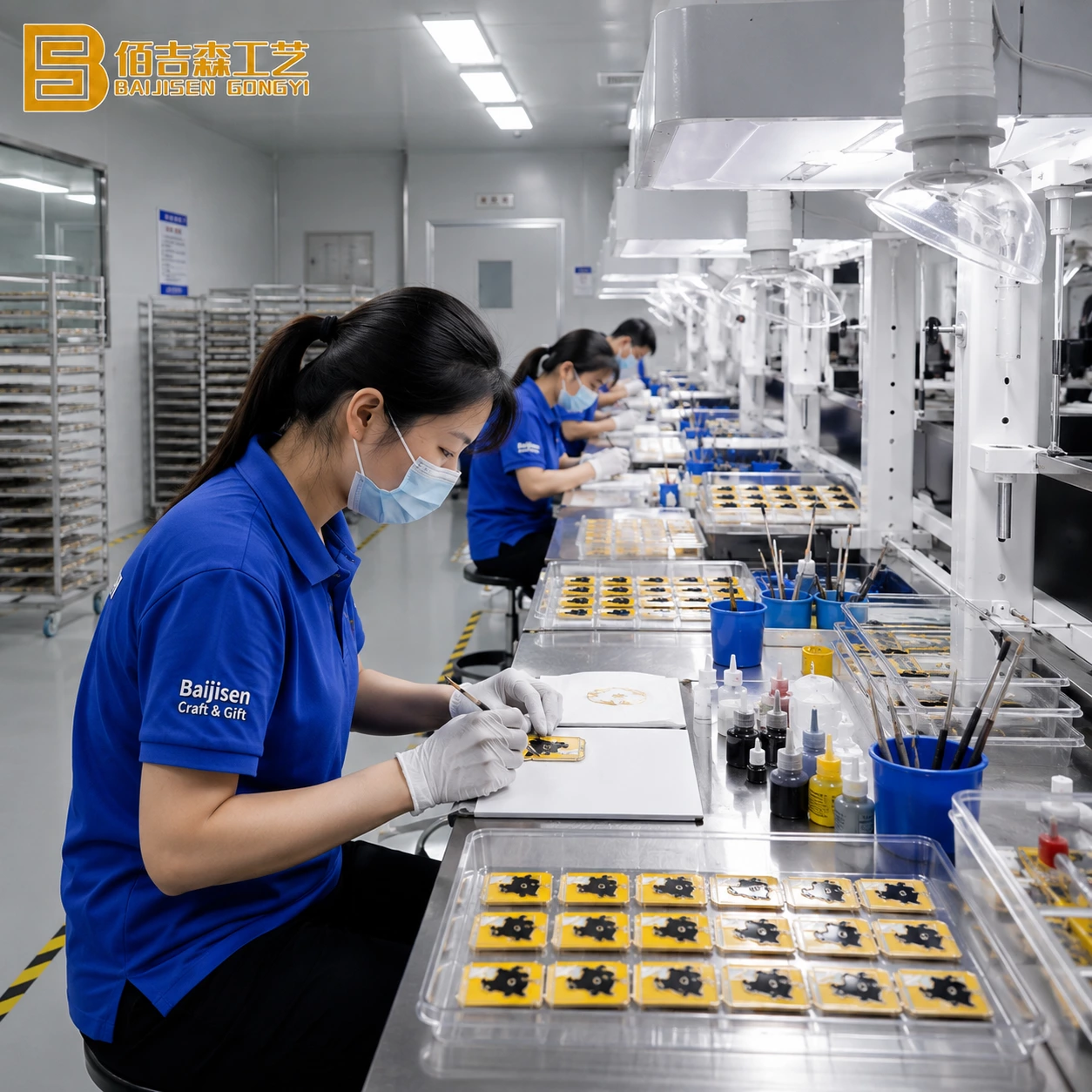
For enamel products, colors are filled according to the proof and then cured. Hard enamel normally requires additional grinding and polishing to create its smooth surface. Exact workflows vary by process and design.
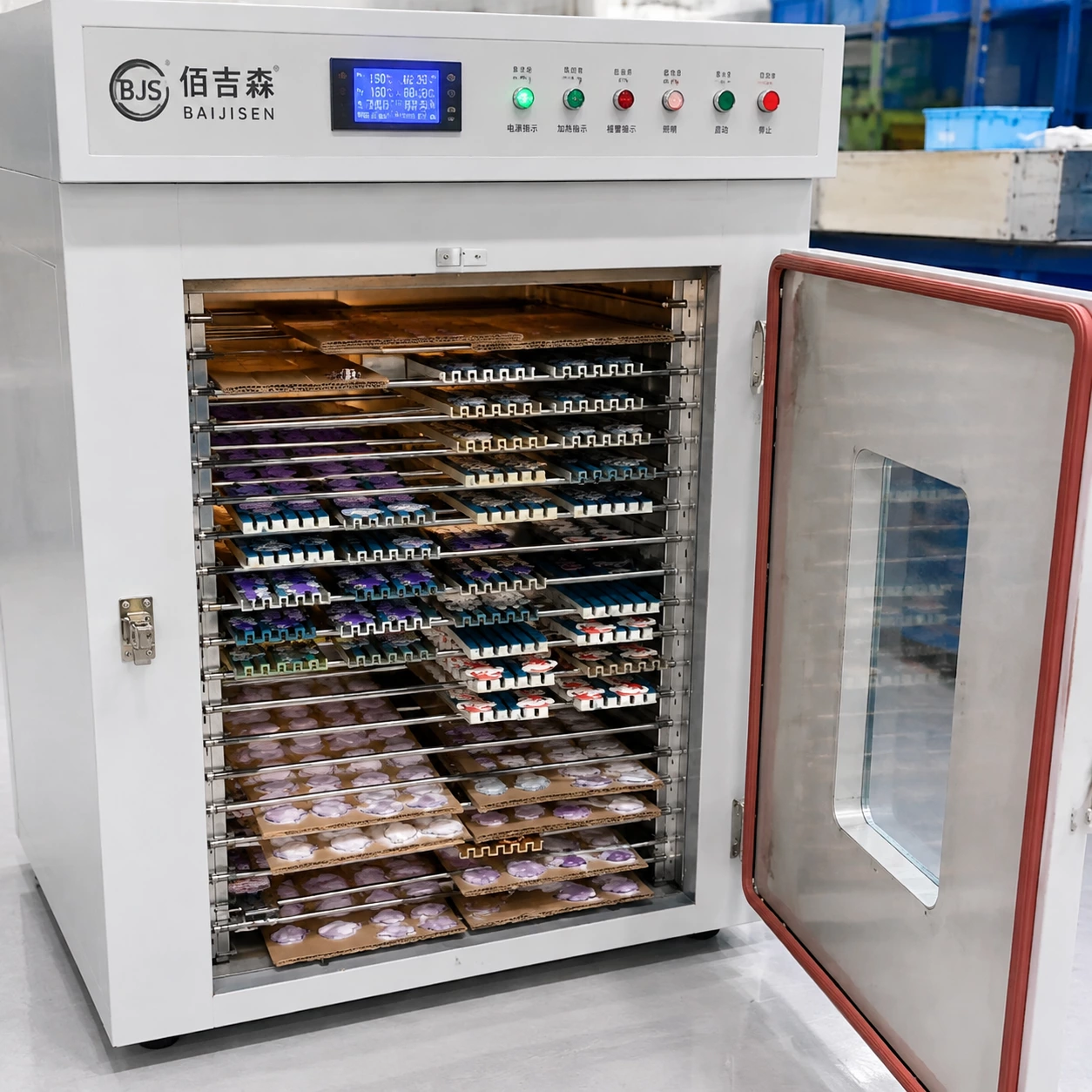
7. Attachment Installation
Posts or other attachments are fitted to the back. Position and bond strength should be checked before packing.
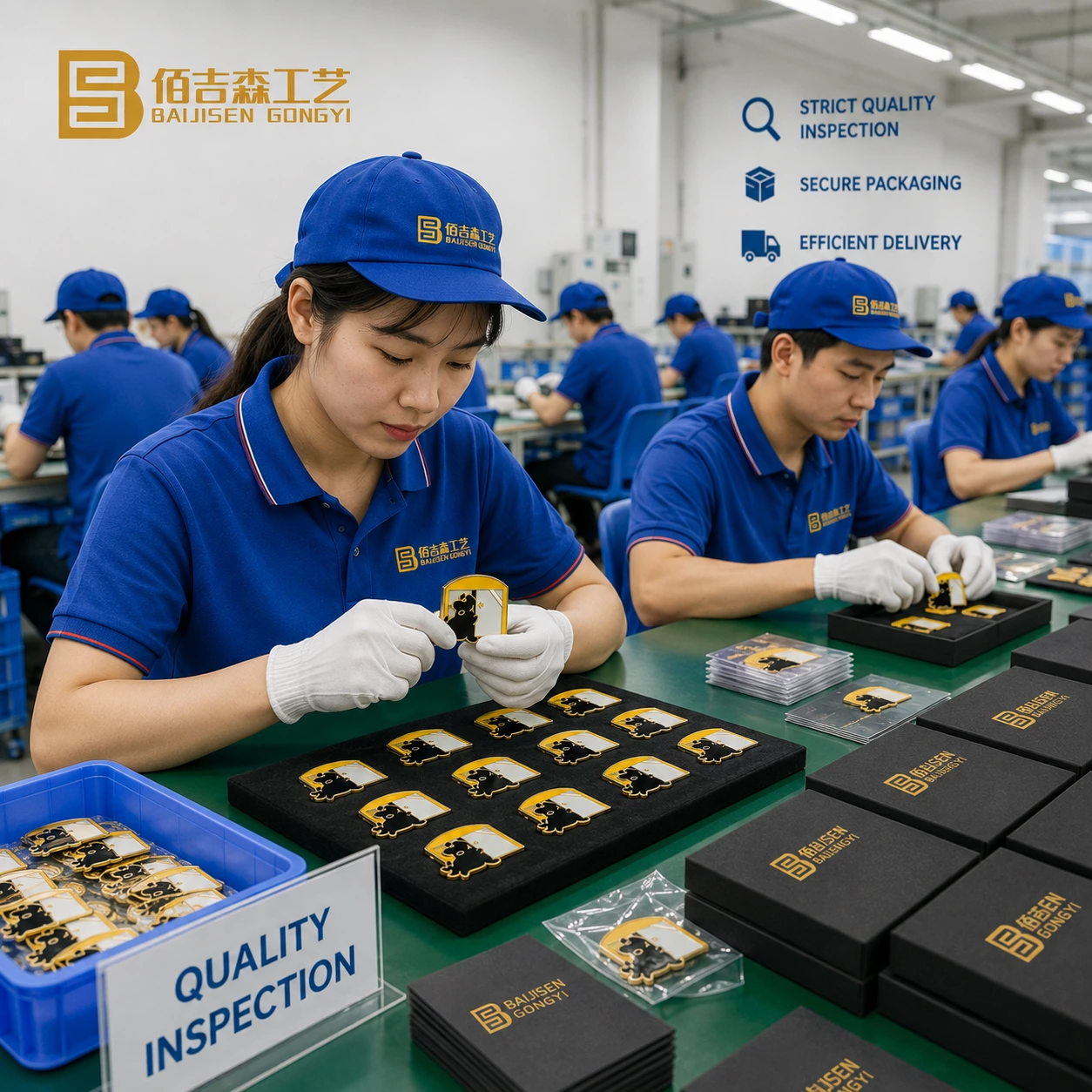
8. Quality Inspection
A practical QC process checks shape, visible surface condition, enamel filling, color placement, text and logo accuracy, attachment security, quantities, and packaging requirements.
9. Packaging
Options can include individual poly bags for efficient bulk distribution, custom backing cards for retail presentation, or gift boxes for awards, commemorative programs, and executive gifts. Backing cards may carry a logo, website, social channel, barcode, product details, or care information.
How to Make a Custom Pin More Distinctive
- Glitter enamel: adds sparkle to character, holiday, fashion, and promotional designs.
- Glow-in-the-dark enamel: creates visibility in low-light conditions for creative themes.
- Transparent enamel: allows underlying metal texture to contribute to the visual effect.
- Pearlescent enamel: introduces a softer, shifting color appearance.
- Screen printing: adds fine lines, small text, or details over a prepared surface.
- Laser engraving: can add numbering, a logo, web address, or information on the back.
- Cutouts: use negative space to create a distinctive silhouette.
- Sequential numbering: supports limited editions and collectible or membership series.
Special effects should be considered during artwork preparation rather than added late, because they can affect layout, process compatibility, cost, and production time.
How Much Does It Cost to Create a Custom Lapel Pin?
There is no single price that applies to every custom pin. The final quotation depends on the actual design and specifications.
- Size: larger products generally require more metal and material.
- Quantity: tooling and setup costs are distributed across the order, so unit pricing often changes with volume.
- Manufacturing process: soft enamel, hard enamel, printing, die striking, and 3D methods have different workflows.
- Colors and detail: added colors or complex fill areas can increase production work.
- Plating: standard and specialty finishes may carry different costs.
- Attachments: backing style and post quantity influence the quotation.
- Special effects: glitter, transparent enamel, engraving, printing, and other additions require extra processing.
- Packaging: a basic individual bag and a printed card or custom gift box have different cost structures.
- Shipping: weight, quantity, destination, service level, and delivery method affect freight.
How Long Does Custom Lapel Pin Production Take?
The goods will be dispatched within approximately 15 days.
The schedule usually includes artwork preparation and revisions, proof approval, tooling and production setup, metal forming, plating, coloring or printing, finishing, attachment installation, inspection, packaging, and international transportation.
Timing varies according to process complexity, quantity, factory schedule, packaging, approval speed, destination, and shipping service. If the pins are required for a trade show, anniversary, holiday, competition, conference, or launch, begin early enough to allow for artwork changes, manufacturing, QC, and transit.
Common Mistakes When Creating a Lapel Pin
Designing Only for the Screen
Always assess the artwork at actual finished size. Elements that look clear when enlarged may become unreadable on a small metal product.
Using Lines or Text That Are Too Fine
Extremely thin metal lines and tiny type can limit manufacturing consistency and legibility. Preserve essential information and simplify secondary detail.
Using Too Many Colors
More colors do not automatically produce a stronger result. A controlled, coordinated palette often improves recognition.
Treating Metal Borders as a Limitation
Metal lines are also a visual component. Gold, silver, and black nickel can make the same artwork feel entirely different.
Ignoring the Backing
Daily wear calls for comfort; valuable pins may need stronger retention; delicate garments may benefit from a magnetic option. The attachment should follow the application.
Approving the Proof Too Quickly
Check spelling, capitalization, dates, size, Pantone references, plating, and post placement. Changes after tooling or production begins may add cost and delay.
Choosing a Supplier on Unit Price Alone
Color errors, scratches, weak attachments, plating issues, incorrect packaging, and late delivery can cost more than the initial purchasing difference. Evaluate production capability, communication, QC, and delivery planning together.
How to Choose a Custom Lapel Pin Manufacturer
- Relevant manufacturing capability: confirm that the supplier can support the tooling, forming, plating, coloring, finishing, and inspection required by your design.
- Artwork support: a capable supplier should identify details that require simplification and help convert references into production-ready artwork.
- Process range: access to soft enamel, hard enamel, die-struck, printed, 3D, and multiple plating options makes it easier to fit the process to the project.
- Quality control: ask how appearance, color placement, text, attachments, quantities, and packaging are checked.
- Packaging support: retail, gifting, and distribution projects may need backing cards, barcodes, gift boxes, or specific packing configurations.
- Clear communication: dimensions, color references, materials, attachments, packaging, schedule, and delivery terms should be documented before production.

Why Create Custom Lapel Pins with Baijisen?
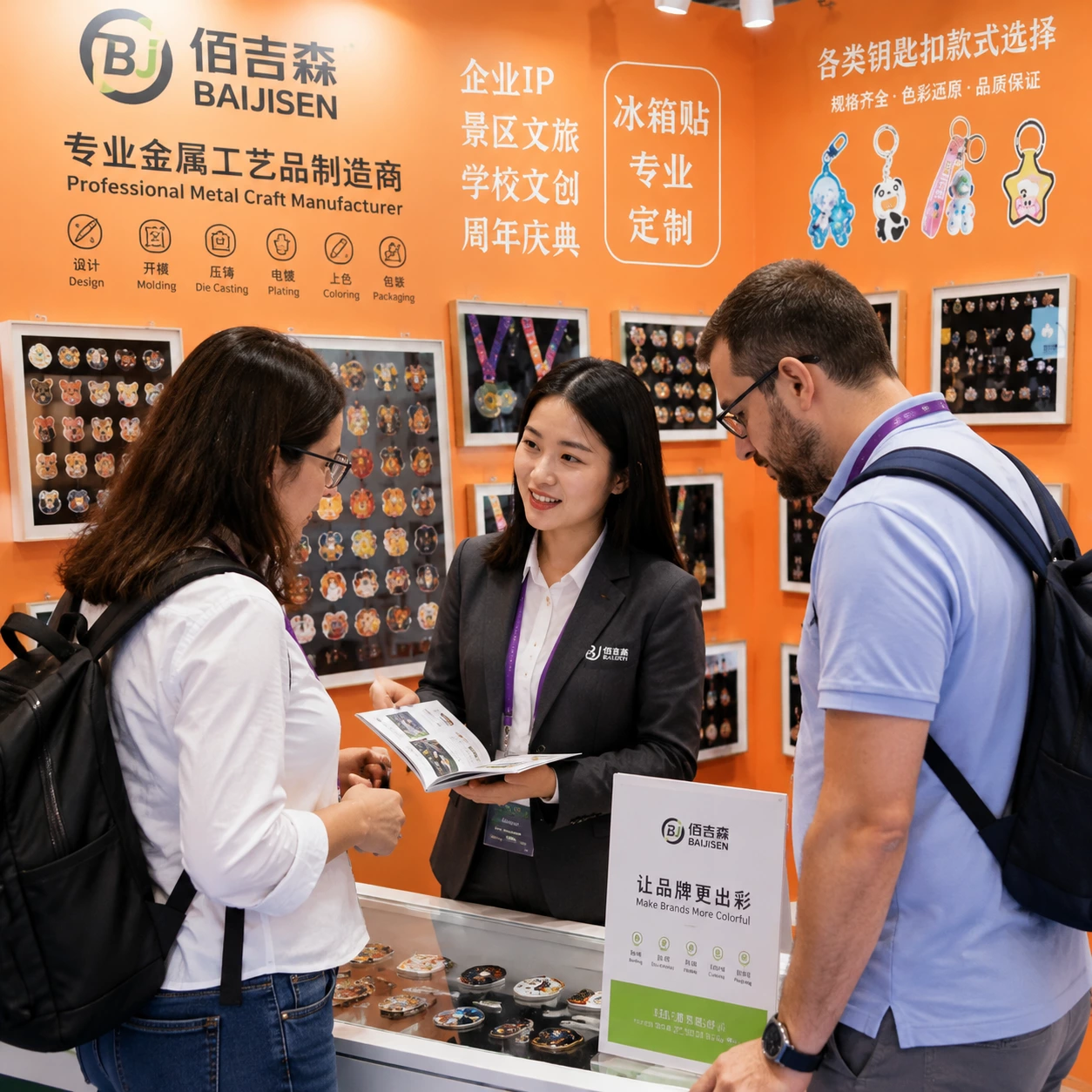
Baijisen works with customers who need custom metal badges, enamel pins, and branded gifts for corporate programs, events, promotions, retail, souvenirs, clubs, and creative merchandise.
From Concept to Production Artwork
Customers can begin with a logo, vector file, image, sketch, product reference, or Pantone color requirement. The design can then be reviewed and prepared around the selected production specifications.
Multiple Customization Options
Depending on the project, enamel type, metal treatment, plating, backing, packaging, and special effects can be coordinated to support the intended appearance, use, and budget.
Process and Quality Control
Custom pins pass through several connected stages. Careful control from proof approval and tooling through coloring, finishing, inspection, and packing helps reduce avoidable color, surface, attachment, and packaging problems.
Support for International B2B Orders
For international sourcing, product specifications must be considered together with quantity, packaging, production schedule, destination, and freight. Providing complete project details early supports more accurate technical recommendations and quotation.
What Information Is Needed for an Accurate Lapel Pin Quote?
An accurate quotation starts with a complete project brief. Missing information can result in a provisional price that changes after artwork or packaging requirements are reviewed.
| Information | Why it matters |
|---|---|
| Artwork, logo, sketch, or reference | Determines shape, detail, tooling, process, and whether redrawing is needed. |
| Finished width and height | Affects material use, weight, legibility, backing choice, packaging, and freight. |
| Order quantity | Changes production planning and the distribution of tooling and setup costs. |
| Preferred pin process | Soft enamel, hard enamel, die struck, printed, and 3D pins require different workflows. |
| Plating and colors | Defines the exposed metal finish and enamel or printed color requirements. |
| Backing and post quantity | Affects security, comfort, rotation resistance, and accessory cost. |
| Special effects | Glitter, transparent enamel, printing, cutouts, and engraving add production steps. |
| Packaging | Individual bags, backing cards, display packs, and gift boxes have different requirements. |
| Destination and delivery date | Allows production and shipping options to be reviewed against the required arrival date. |
Create Your Own Lapel Pin in Five Steps
Send Your Idea
Provide a logo, image, sketch, reference, or design file.
Choose the Specifications
Confirm size, process, colors, plating, backing, quantity, packaging, and destination.
Approve the Production Artwork
Check the logo, wording, dimensions, color references, metal finish, and attachment placement.
Begin Manufacturing
The approved design moves through tooling, metal forming, plating, coloring or printing, finishing, attachment installation, and inspection.
Pack and Deliver
The finished pins are packed according to the order requirements and prepared for shipment.

Frequently Asked Questions
Can I create my own lapel pin without design experience?
Yes. You can begin with a logo, image, reference, or hand-drawn sketch. A manufacturer can help convert it into production-ready artwork.
Which file formats are best for custom lapel pins?
AI, EPS, SVG, and vector PDF are preferred. A clear PNG or JPG can also be used as a reference when vector artwork is unavailable.
Can a corporate logo be used directly?
Yes. Corporate logos are among the most common custom pin designs. Complex marks may need careful simplification so that important elements remain clear at the chosen size.
What is the best size for a lapel pin?
There is no universal best size. A simple logo can work at a compact dimension, while character art or detailed illustrations may require more space. Choose according to artwork complexity, placement, weight, and use.
Is hard enamel better than soft enamel?
Neither is universally better. Soft enamel has recessed color areas and tactile metal lines; hard enamel provides a smooth, polished surface. The right choice depends on the design, intended use, budget, and desired finish.
What is the minimum order quantity?
Minimum order quantity 30 PCS.
How much does a custom lapel pin cost?
Cost depends on size, quantity, process, colors, plating, attachments, special effects, packaging, and shipping. The most reliable approach is to request a quotation based on the actual design.
How long does production take?
The goods will be delivered approximately 15 days after normal production. It can be expedited upon customer request. The scheduling of large quantities needs to be done in advance, including the modification of artworks, molds, order quantities, the complexity of the process, the production schedule, packaging, and international transportation.
Which backing is best?
A butterfly or rubber clutch suits many everyday pins. A locking clutch offers additional security, while a magnetic backing can avoid puncturing the garment. Select it according to use, garment, size, and value.
Can I specify Pantone colors?
Yes. Pantone references are commonly used when brand color control is important, although enamel and metal surfaces may appear different from screen colors.
Can backing cards and gift boxes be customized?
Yes. Depending on the project, custom backing cards, individual bags, gift boxes, and other retail or presentation packaging can be considered.
Ready to Create Your Own Lapel Pin?
Send Baijisen your logo, artwork, or sketch together with the required size, quantity, process, plating, backing, packaging, destination country, and target delivery date. The clearer the brief, the more accurately the project can be reviewed and quoted.
Get a Custom Lapel Pin QuoteFinal specifications, MOQ, price, and lead time are confirmed according to the design and order requirements.