中文
中文How to Wear a Lapel Pin
Learn how to wear a lapel pin correctly on suits, blazers and formalwear. See proper placement, styling rules, backing options and practical tips for a polished look.
A lapel pin may be small, but it can communicate company identity, membership, recognition, support for a cause, commemoration or personal style. The effect depends on more than the artwork. Position, scale, orientation, garment fabric and attachment all influence whether the pin looks polished and stays secure.
This guide explains where a lapel pin should go, how to attach it, how to coordinate it with formal and casual clothing, and how the pin's construction affects real-world wear.
Where Does a Lapel Pin Go?
The traditional position is the upper part of the wearer's left lapel. On many suit jackets, a small buttonhole marks the natural location. If the jacket has no usable buttonhole, position the pin in approximately the same area while respecting the lapel's shape.
A well-placed pin should:
- Sit on the upper left lapel rather than close to the breast pocket or lapel tip.
- Follow the visual direction of the lapel.
- Display text, logos, flags or figures in the correct orientation.
- Avoid pulling the lapel out of shape.
- Remain stable while the wearer stands, walks or sits.
Why is the left side traditional?
The left lapel has long been the conventional place for a boutonniere and later for badges and decorative pins. It also creates a familiar visual relationship with the breast pocket, pocket square and the jacket's overall tailoring.
This convention is a reliable default, not an absolute fashion law. Creative styling may use the right side, but uniforms, official badges and organizational insignia may follow specific rules that should take priority.
How to Put On a Lapel Pin in Six Steps
- Put on the jacket and find the position. Use the left lapel buttonhole when it is open and suitable. Judging the position while wearing the garment is more accurate than laying it flat.
- Remove the backing. Hold the pin face or base of the post and release the butterfly clutch, rubber clutch or locking mechanism without pulling aggressively.
- Insert the post. Pass it through the buttonhole or carefully through a suitable area of fabric. Check delicate material before puncturing it.
- Set the orientation. Make sure the logo, lettering and design are upright. Align long-stick designs with the natural angle of the lapel.
- Secure the backing. Push or lock the attachment completely into place behind the lapel.
- Check the result. Stand naturally and confirm that the pin is straight, stable and not pulling the fabric.
Should a Lapel Pin Be Worn on the Left or Right?
Choose the left lapel when no other rule applies. It is the safest option for business meetings, weddings, award ceremonies, corporate events and commemorative occasions.
A different position may be appropriate when:
- A uniform or organization specifies another location.
- An official name badge or insignia already occupies the traditional area.
- An asymmetrical garment requires a different visual balance.
- Several decorative pins form an intentional fashion arrangement.
How to Wear a Lapel Pin on a Suit
Use the lapel buttonhole when possible
An open lapel buttonhole gives the pin a natural position and reduces the need to create another hole in the fabric. Some jackets have a decorative buttonhole that is sewn shut. Do not cut it open unless a qualified tailor confirms that it can be finished properly.
Match the pin to the lapel width
A narrow lapel generally looks better with a visually light, uncomplicated pin. A wider lapel can support a more noticeable design. Consider the outline, color contrast and weight—not only the stated dimensions.
Respect the lapel angle
Keep circular, square and logo pins upright. A long-stick, feather or linear pin may follow the lapel's angle, provided that the result looks deliberate and the pin does not hang loosely.
Single-breasted and double-breasted suits
The upper left lapel remains the usual location for both styles. Because a double-breasted jacket already has stronger lines and more visible buttons, a restrained pin often produces a cleaner result.
How to Wear a Lapel Pin on a Blazer
Casual and unstructured blazers allow more freedom in color and subject. Bright enamel, character art and playful shapes can work well, but soft construction may provide less support than a traditional suit jacket.
Before wearing the pin, check whether the fabric supports its weight, whether the post suits the fabric thickness and whether the pin remains stable when the lapel moves. A lighter pin, a locking back or a two-post design may help on soft fabrics.
What If the Jacket Has No Lapel Buttonhole?
Insert the post through suitable fabric
On resilient woven material, the post can be inserted directly through the left lapel. Decide on the position before piercing the material and avoid repeatedly testing the same area.
Use a magnetic backing
A magnetic back can hold the pin without puncturing the garment. Its effectiveness depends on the fabric thickness, magnet strength and pin weight, so test it on the actual garment before an event. People who use or carry devices affected by magnets should follow the applicable product or medical safety guidance.
Ask a tailor about the buttonhole
If you wear pins regularly, a tailor can determine whether a decorative buttonhole can be made functional. The answer depends on the jacket's construction and finish.
How to Wear Different Types of Lapel Pins
Enamel pins
Soft enamel and hard enamel pins commonly use one or more short posts with separate clutches. Insert the post and secure the back. Give extra attention to asymmetrical or top-heavy designs because they are more likely to rotate.
Long-stem lapel pins
Position the decorative top near the buttonhole and let the stem follow the line of the lapel. Depending on the intended style, the lower cap may be concealed behind the lapel or shown as part of the design.
Floral pins and boutonniere-style pins
Place them at the traditional buttonhole area. Since these designs often have more volume, avoid combining them with a large boutonniere, bold pocket square and multiple other pins.
Magnetic pins
Place the decorative face on the outside and align the magnetic component behind the lapel. Gently move the fabric to verify that the pin will remain in place.
Safety-pin brooches
These suit larger badges and heavier outerwear. Close the clasp completely and keep the point protected behind the garment.
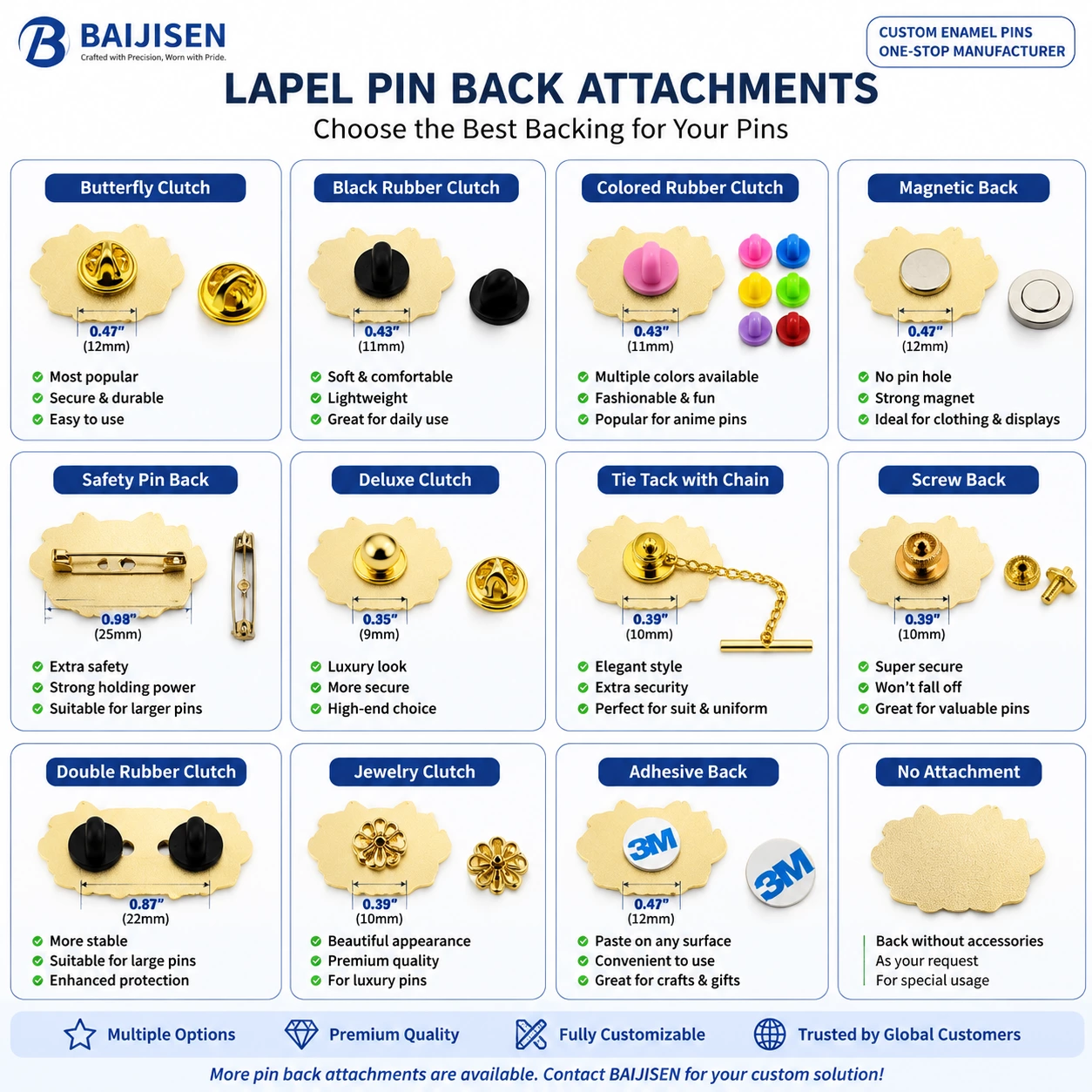
Lapel Pin Backing Options
| Backing | Main benefit | Suitable uses | What to check |
|---|---|---|---|
| Butterfly clutch | Common and quick to attach | Corporate events, trade shows and general wear | Confirm that it is fully seated and check it after repeated use |
| Rubber clutch | Soft feel and multiple color options | Casual wear and branded merchandise | Use a clutch that fits the post securely |
| Locking clutch | Stronger retention | Important, valuable or frequently worn pins | Use the correct release mechanism rather than pulling |
| Magnetic back | No post passes through the fabric | Formalwear and fabrics where a pinhole is undesirable | Fabric thickness, pin weight and magnet-related safety |
| Safety-pin back | Supports a wider attachment area | Large badges, coats and workwear | Make sure the point is fully enclosed |
| Two posts | Controls direction and limits rotation | Wide, long, asymmetrical or heavier designs | Post positions should be planned during product design |
Wearing a Lapel Pin in Business Settings

Business styling should be clear, restrained and appropriate to the wearer's role. A simple company logo or membership pin on the left lapel is usually enough.
Meetings and formal appointments
If you also wear a patterned tie, pocket square and cuff links, reduce competing colors. The pin should reinforce identity without dominating the outfit.
Trade shows and corporate events

Consistent placement helps visitors recognize a brand or team. Give participants one standard position and orientation instead of allowing pins to appear randomly on collars, pockets and lapels.
Employee recognition
Pins that represent service, achievement or role should follow company policy. If several levels are used, build a clear system through controlled differences in design, finish or color.
How to Wear a Lapel Pin at a Wedding
A wedding lapel pin can identify the groom or wedding party, commemorate the date or serve as a keepsake. The upper left lapel is still the standard position, but the pin must be considered together with the boutonniere, tie, bow tie and pocket square.
- Coordinate the metal finish with a watch, cuff links or other visible hardware.
- Echo a wedding color without forcing an exact match.
- Use related designs to distinguish the groom and wedding party.
- Test the pin before the wedding to check orientation and fabric support.
- Use the buttonhole or a non-piercing option for delicate formalwear.
If a large fresh boutonniere already occupies the area, an additional statement pin may look crowded. A small commemorative pin can work when it remains subordinate to the flowers.
How to Wear Lapel Pins Casually
Lapel pins also work on denim jackets, workwear, wool coats, hats, canvas bags and backpacks.
Denim and workwear
Durable fabric can support a wider range of pins. Multiple small pins work best when connected by a color palette, collection or subject rather than scattered without a visual plan.
Coats
Thick material may require a suitable post length and enough clearance for the clutch. Avoid placing a heavy pin on an unsupported edge.
Bags and backpacks
Movement and friction create a greater risk of loss. Use a secure backing and place the pin away from straps, zippers and high-contact areas.
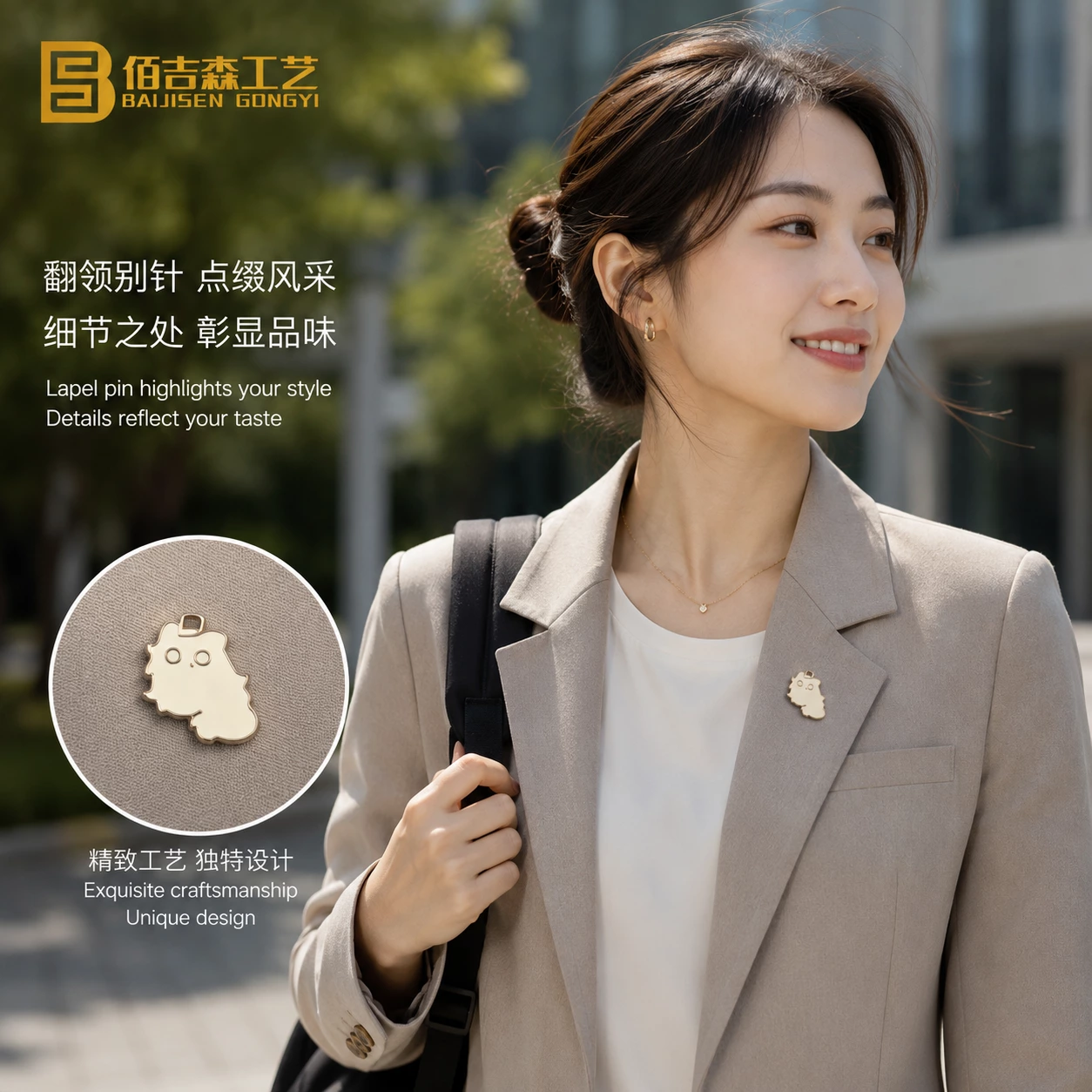
How Women Can Style a Lapel Pin
Women can wear lapel pins on blazers, dresses, coats, scarves and bags. The left lapel is a dependable choice for professional and ceremonial settings, while casual styling can be more flexible.
- Blazers: use the left lapel or the equivalent upper-left position on a collarless jacket.
- Dresses: place a light pin near the left neckline or upper chest only when the fabric can support it.
- Coats: larger designs may work, but the post and backing must suit the material thickness.
- Scarves: first check whether the weave is vulnerable to snagging or visible holes.
- Asymmetrical garments: let the pin support the garment's visual balance unless an official badge rule applies.
Can You Wear a Lapel Pin with Other Accessories?
With a tie
Yes. A tie occupies the center line while a lapel pin sits to the left. Choose a simple pin with a highly patterned tie, or use restrained enamel color to complement a solid tie.
With a pocket square
Coordinate rather than copy. A small color in the pin may echo a secondary color in the pocket square, but both should not compete as equally bold focal points.
With a tie bar
A tie bar and lapel pin can be worn together. Compatible metal tones often create a more coherent result. If cuff links, jewelry, a boutonniere and a bold pocket square are also present, remove some elements to maintain clarity.
How Many Lapel Pins Should You Wear?
One pin is normally the most polished choice for business and formal occasions, especially when it represents a company, membership, award or official identity.
Multiple pins can work in casual outfits when they share a clear theme, compatible finishes, intentional spacing and a visible hierarchy. Official medals, service pins and organizational insignia must be arranged according to their own rules.
How to Choose the Right Lapel Pin Size
There is no single ideal size for every design. The right choice depends on lapel width, artwork complexity, weight and intended use.
- Small pins suit simple logos, uniforms, membership marks and understated business wear, but very small text may become unreadable.
- Medium pins often balance visibility and comfort for corporate events, clubs, weddings and brand merchandise.
- Large pins allow greater detail and stronger visual impact, but require careful evaluation of weight, fabric support and attachment security.
Print the artwork at actual size and place it against the intended garment before production. An enlarged screen preview does not show the true wearing scale.
How to Keep a Lapel Pin from Spinning or Drooping
Rotation is usually caused by an off-center post, uneven weight, soft fabric or a loose clutch. To improve stability:
- Make sure the backing is fully secured.
- Use the buttonhole or a stable section of fabric.
- Choose two posts for wide, long or asymmetrical designs.
- Use a locking clutch when greater retention is needed.
- Avoid placing a heavy pin on thin or loosely structured material.
- For a custom design, position the post closer to the product's center of gravity.
Will a Lapel Pin Damage a Suit?
Any post that passes through cloth may leave a temporary or permanent mark. The result depends on the weave, material, post condition, number of punctures and method of removal.
- Use an open lapel buttonhole whenever possible.
- Avoid piercing the same area repeatedly.
- Check the jacket lining and internal construction before insertion.
- Consider magnetic attachment for silk, satin, fine knitwear or delicate formalwear.
- Do not force a bent, blunt or rough post through the garment.
- Release the clutch before withdrawing the post in a straight, controlled motion.
- Ask a tailor or garment-care professional when the clothing is valuable or the fabric is unfamiliar.
Common Lapel Pin Mistakes
- Placing it too low: a pin close to the breast pocket loses focus and may conflict with a pocket square.
- Displaying it at the wrong angle: inverted text or a tilted logo weakens the intended message.
- Ignoring proportion: a large pin can overwhelm a narrow lapel, while a tiny detailed pin may be unreadable.
- Failing to secure the backing: test the attachment gently before leaving for an event.
- Using too many accessories: choose a primary focal point and simplify the rest.
- Ignoring fabric: an attachment suitable for denim may not be appropriate for silk or fine wool.
- Overlooking official rules: uniforms and formal insignia may have mandatory positions and arrangements.
Lapel Pin Placement by Occasion
| Occasion | Recommended position | Style approach | Security priority |
|---|---|---|---|
| Business meeting | Near the left lapel buttonhole | Simple, professional and relevant | Check the clutch before the meeting |
| Trade show | One consistent left-lapel position | Standardize design and orientation across the team | Consider stronger retention for long periods of movement |
| Wedding | Upper left lapel | Coordinate with formalwear, flowers and metal accessories | Test in advance and protect delicate fabric |
| Corporate uniform | Follow the company dress standard | Prioritize clear recognition and consistency | Choose an attachment suitable for frequent use |
| Award ceremony | Left lapel or specified official position | Let the recognition pin remain the focal point | Use secure retention for valuable pieces |
| Casual blazer | Usually the left lapel | Allow more color and personality | Match the backing to the fabric |
| Denim jacket | Collar or upper chest | Create an intentional theme or collection | Use a locking clutch for active wear |
| Bag or backpack | Away from straps and high-friction areas | Use for collecting or themed display | Focus on preventing snagging and loss |
Why Lapel Pin Design Affects Wearability
A successful pin must work on clothing, not only in a product photograph. Shape, weight, center of gravity, post layout and backing choice all affect comfort and stability.
Shape and center of gravity
Round, square and symmetrical designs are generally easy to balance. Long, uneven or top-heavy shapes may need a repositioned post or a second attachment point.
Weight
Thicker metal, large dimensions and dimensional attachments increase the load on a lapel. Product weight should correspond to the expected garment and wearing time.
One post or two
A single post is convenient for a small, balanced pin. Two posts provide directional control for horizontal logos, wide shapes and designs that would otherwise rotate.
Logo orientation
The attachment layout must reflect the final wearing angle. Reviewing only a flat production drawing can miss the way the artwork will sit on an angled lapel.
How to Standardize Lapel Pins for a Team or Event
Corporate teams, schools, clubs, conferences and nonprofit events often need many people to wear the same pin. Clear instructions improve brand consistency and event photography.
- Specify the left side or the applicable uniform position.
- Show a consistent height and artwork orientation.
- Identify whether roles or recognition levels use different versions.
- Explain how to attach and remove the backing.
- Provide storage instructions for reuse after the event.
A simple placement illustration on the backing card or instruction card can reduce reversed designs, inconsistent positions and unsecured clutches.
How to Design a Custom Lapel Pin for Real-World Wear
Before ordering company logo pins, event badges, wedding keepsakes or branded merchandise, determine who will wear them, what clothing they will use, how long the pins will remain in place and whether frequent removal is expected.
Useful project information includes:
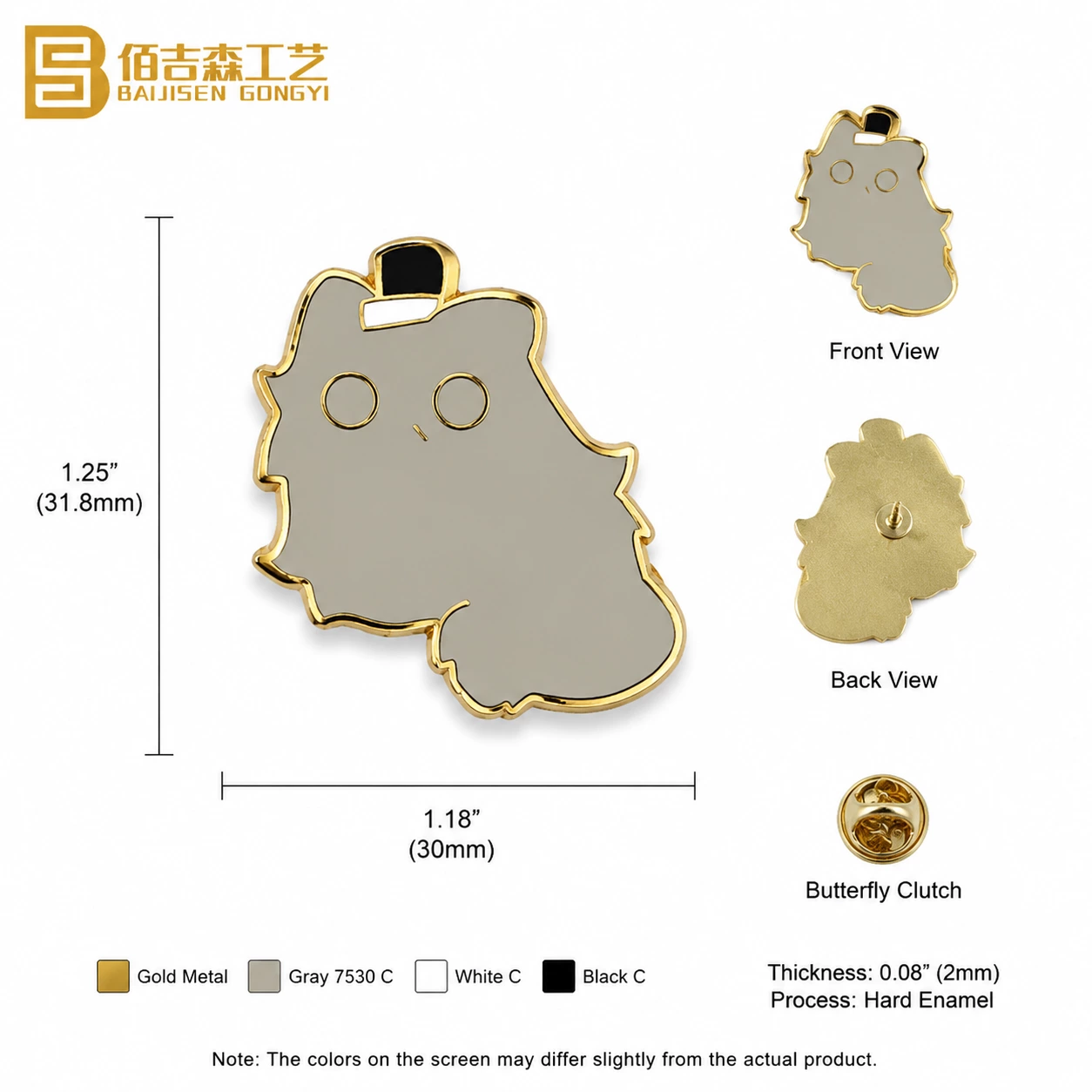
- Logo, vector artwork, image, sketch or product reference.
- The intended occasion and audience.
- Expected garment and fabric type.
- Preferred dimensions and order quantity.
- Enamel, metal finish, plating and color preferences.
- Requirements for anti-rotation, retention or non-piercing attachment.
- Backing cards, instructions, retail packaging or gift boxes.
- Destination and required delivery date.

Custom Lapel Pins from Baijisen

Kunshan Baijisen Craft Gift Co., Ltd. works with businesses, brands, event organizers and international buyers on custom metal gifts and badges. A lapel pin project can be evaluated around its intended use—not only its front artwork.
Depending on the design and order requirements, relevant choices may include enamel styles, metal finishes, plating, post layout, butterfly or rubber clutches, locking attachments, magnetic options, backing cards and gift packaging.
Visit the custom lapel pin page to discuss a project, or explore the Baijisen website. Available processes, order requirements, production timing and pricing should be confirmed from the actual artwork and specifications.
How to Order Custom Lapel Pins
- Send your idea. Provide a logo, artwork, image, sketch or reference and explain the intended use.
- Confirm specifications. Review size, process, finish, color, post layout, backing, quantity and packaging.
- Approve the production artwork. Check spelling, proportions, color references, orientation and attachment positions.
- Production and inspection. The agreed design moves into production and is checked for appearance, finish, attachment and packaging.
- Packaging and delivery. Products are packed according to the project and prepared for shipment.
Frequently Asked Questions
Which side should a lapel pin go on?
Traditionally, it goes on the wearer's left lapel at or near the buttonhole. Follow official uniform or organizational rules when they specify another position.
How high should a lapel pin be?
Place it in the upper portion of the left lapel around the natural buttonhole area. Avoid positioning it too close to the breast pocket, lapel tip or shirt collar.
Can you wear a lapel pin without a buttonhole?
Yes. Carefully insert the post through a suitable fabric or use a magnetic backing if you want to avoid a new hole. Test delicate garments first.
Can a lapel pin be worn on the right?
It can be used on the right for creative styling, but the left remains the conventional choice in business and formal settings. Official badges should follow their own rules.
Can you wear a lapel pin on a shirt?
Yes, but shirts are usually less structured than jackets. Use a lightweight pin and avoid pulling the collar or damaging delicate fabric.
Can you wear a lapel pin on a tie?
A standard lapel pin is not a substitute for a tie bar. Its post and backing may not hold a tie correctly and can mark the fabric.
Can you wear a lapel pin with a boutonniere?
Yes, but both occupy a similar area. If the boutonniere is large, omit the statement pin or choose a small commemorative design that does not compete with the flowers.
How do you keep a lapel pin from falling off?
Secure the clutch fully and avoid high-friction positions. Consider a locking clutch for valuable pins, extended wear or active events.
How do you prevent an asymmetrical pin from rotating?
Use two posts, position the post nearer the center of gravity, select a more secure backing or reduce the product weight during custom design.
Are magnetic lapel pins secure?
Security depends on magnet strength, fabric thickness, pin weight and movement. Test the complete assembly on the actual garment before use.
Final Lapel Pin Checklist
- Is the pin on the correct left-lapel position or in the required official location?
- Are the logo, lettering and artwork upright?
- Is the backing completely secured?
- Does the lapel remain flat without pulling or drooping?
- Is the pin proportional to the garment?
- Does it complement rather than compete with other accessories?
- Will it stay stable during normal movement?
- Has delicate fabric been protected appropriately?
Make a Small Detail Meaningful
Wearing a lapel pin correctly is straightforward: place it on the upper left lapel or through the buttonhole, keep the design upright, use an attachment suited to the garment and check its stability before leaving. The best result comes from coordination among placement, proportion, fabric, accessories and product construction.
If you are developing pins for a company, uniform, trade show, wedding, club, commemorative event or retail program, include the wearing conditions in the design brief. The right shape, weight, post position and backing can make the finished pin comfortable, stable and professional in actual use.
Create Custom Lapel Pins with Baijisen
Send your logo, artwork or idea together with the intended use, garment type, quantity and packaging requirements. Baijisen can help evaluate suitable specifications for your custom lapel pin project.