中文
Custom Made Pins
Custom made pins turn a company logo, original illustration, organization emblem or event theme into a wearable product. They can be developed for employee recognition, uniforms, conferences, retail merchandise and commemorative programs.
How do you get custom pins made? Send your artwork or concept, intended use and quantity for each design. Compare suitable constructions, confirm dimensions and attachments, review a complete quotation, and approve the artwork and any agreed sample before production.
Baijisen provides custom metal craft and gift manufacturing services. This guide focuses on metal pin projects and the decisions that help turn an initial idea into a clear order.
Prepare Your Project Brief Explore Baijisen Pin Products
A finished design is not required to begin the discussion. Share the reference you have and identify where advice is needed.
Start with the Kind of Pin You Want to Make
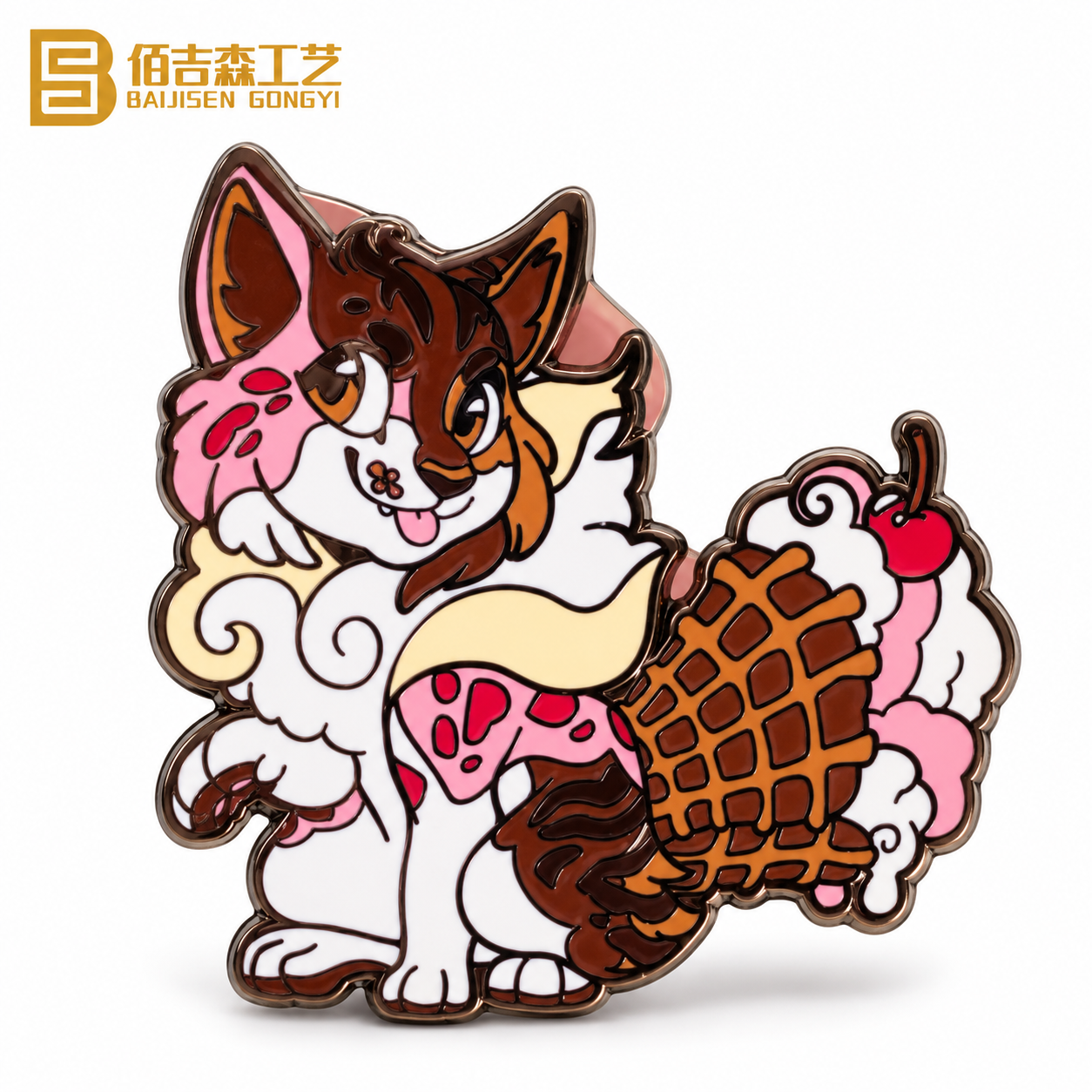
Colorful Enamel Pins
Compare enamel constructions for logos, mascots and illustrations that work as separated color areas.
First decisions: Surface profile, metal borders, size and colors.
Compare Enamel Options
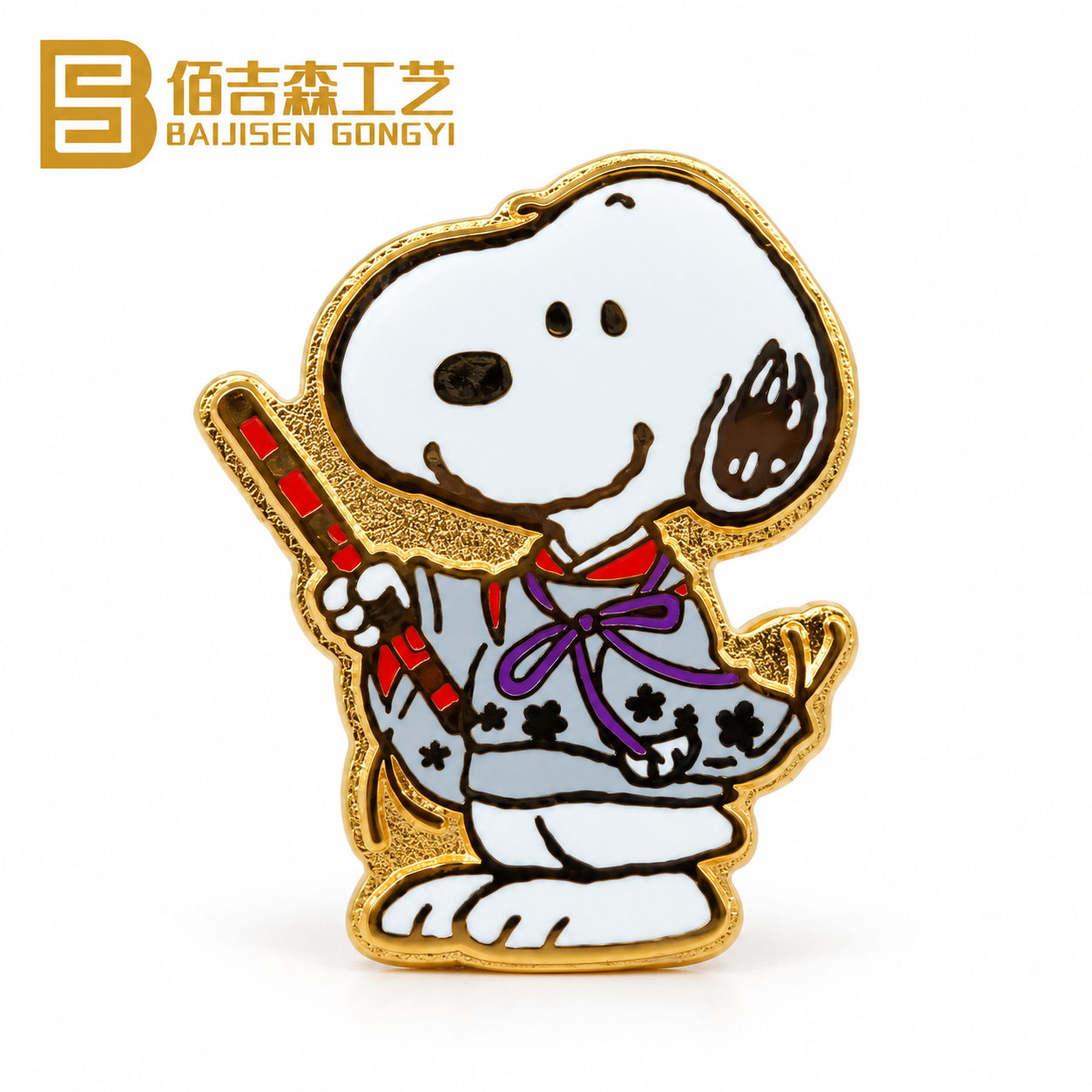
Metal Relief Pins
Compare metal-focused designs for emblems, monograms, recognition and commemorative projects.
First decisions: Relief, texture, finish and lettering contrast.
Review Metal ConstructionsPrinted or Dimensional Designs
Discuss printing for photographic or gradient artwork, or dimensional metal when sculpted volume is important.
First decisions: Image requirements, depth, structure and weight.
Review Design RequirementsThese are project directions, not stock listings. Confirm the specific construction against your actual artwork.
What Are Custom Made Pins?
Custom-made pins are produced around a customer's artwork or specifications rather than selected solely from an existing stock design. Depending on feasibility, the project can define the image, wording, outline, dimensions, colors, finish, backing and packaging.
Custom Manufacturing Is Different from Stock Purchasing
A stock order depends on an existing product and inventory. A custom project adds design review, approval and production before delivery.
If you need a specific logo, event date or branded presentation, custom manufacturing is worth discussing. If you need one existing accessory, verify the retailer's stock and conditions.
Define the Material and Service Model
Metal enamel pins, printed acrylic products, pin-back buttons and one-of-a-kind jewelry can all appear under broad custom-pin descriptions. Their appearance, setup and ordering conditions differ.
This guide concentrates on custom metal pins. Made to order does not automatically mean every operation is performed by hand.
Which Construction Fits Your Artwork?
| Option | Appearance | Main review points |
|---|---|---|
| Soft enamel | Recessed color below raised metal borders | Fill areas, linework and any coating |
| Hard enamel | A comparatively smooth surface | Fine details and finish compatibility |
| Uncolored metal | Relief, texture and exposed metal | Readable contrast and surface treatment |
| Printed construction | Printed imagery and color transitions | Source image, actual size and protection |
| 3D metal | Sculpted volume and curved surfaces | Modeling, thickness, weight and structural details |
Soft Enamel vs. Hard Enamel
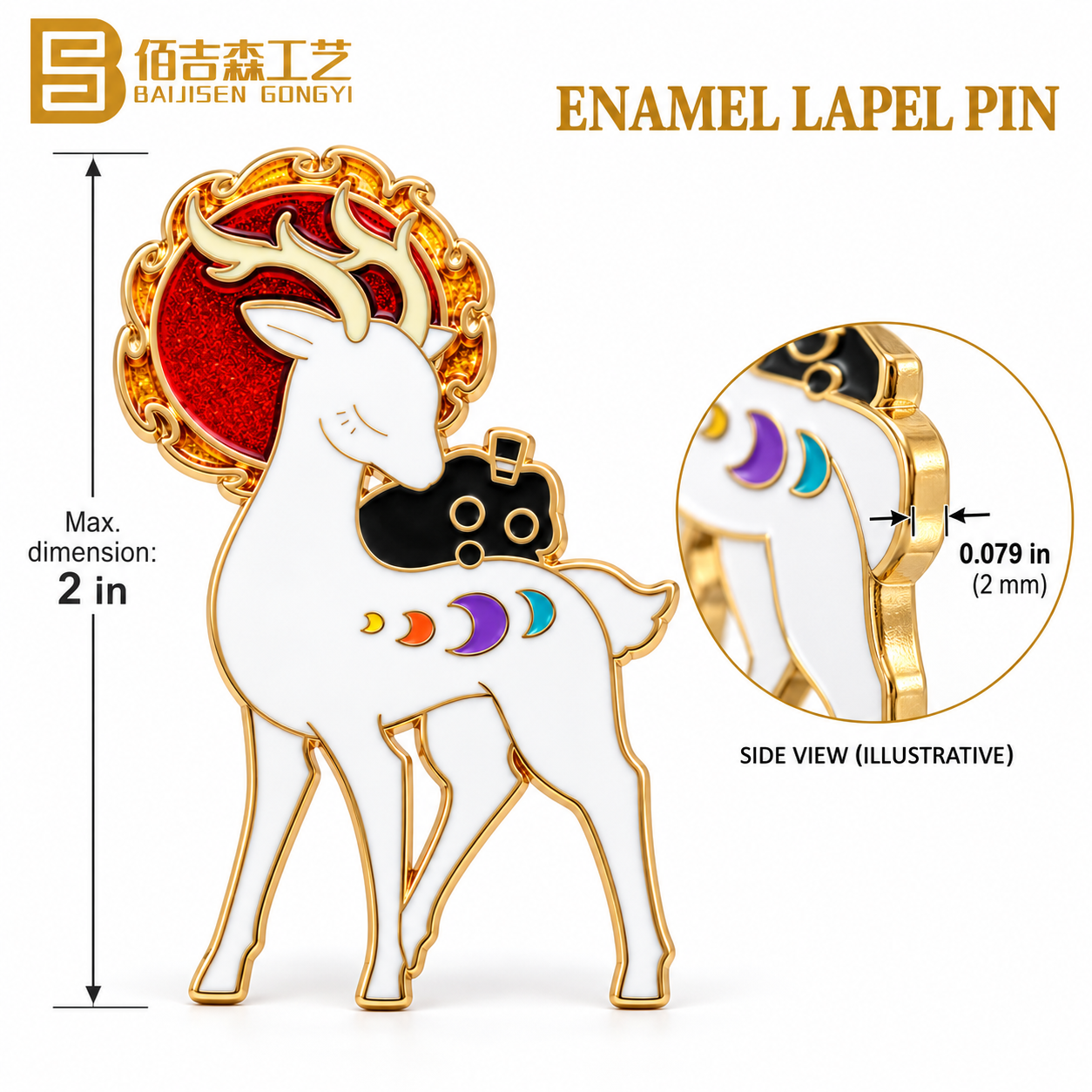
Compare soft enamel when raised metal boundaries and a textured surface are part of the brief. Compare hard enamel when a comparatively level surface is important.
Neither is universally better. Small lettering, narrow fill areas and the requested finish need review for the actual design. An optional clear coating can also change the surface effect.
Metal Relief and Die Striking
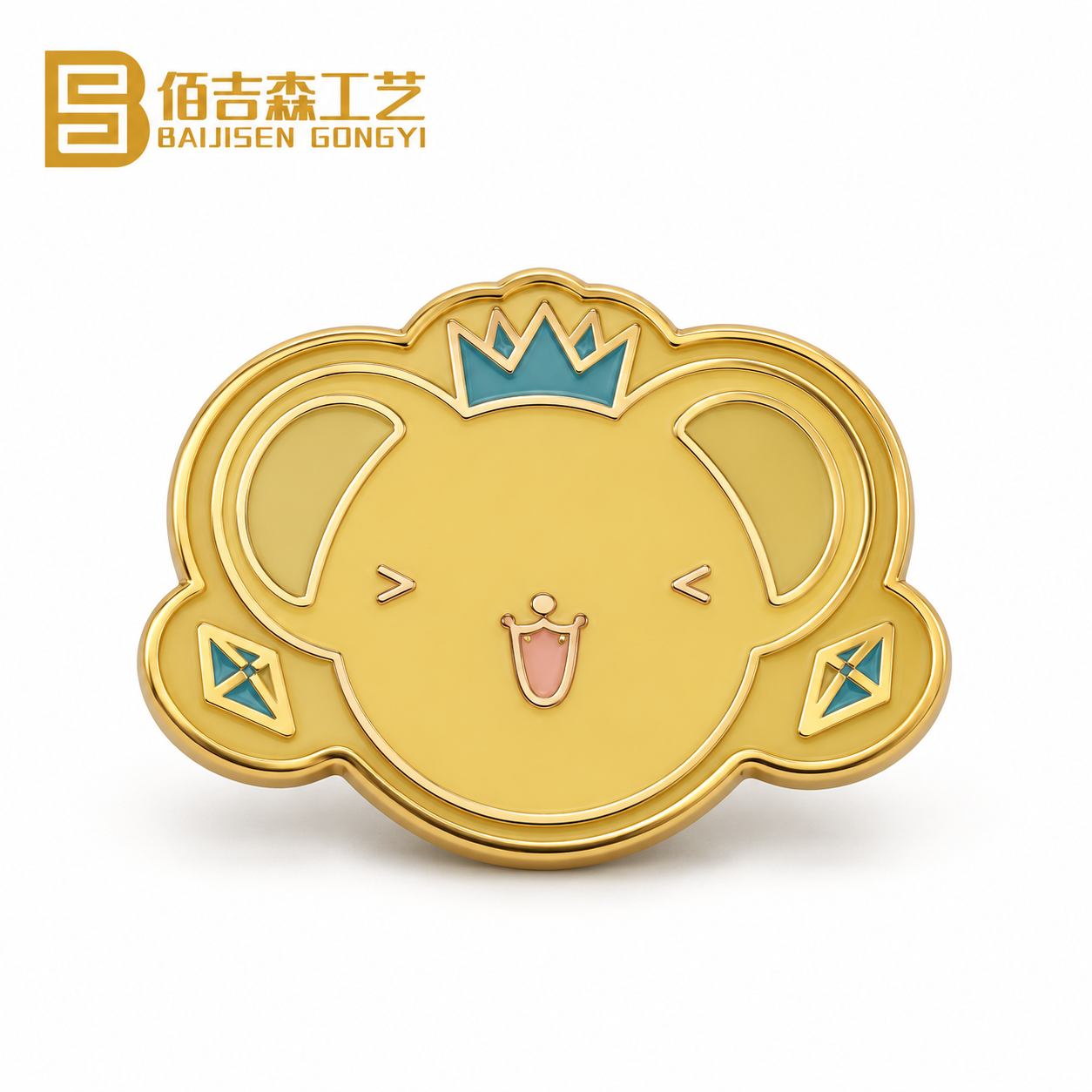
An uncolored metal design uses raised and recessed areas, texture and polishing to communicate the artwork. It can suit emblems and metal-focused recognition products.
Die striking is a forming method and can also be used for enamel-filled products. Specify that no enamel color is required if you want an all-metal appearance.
Printed Details
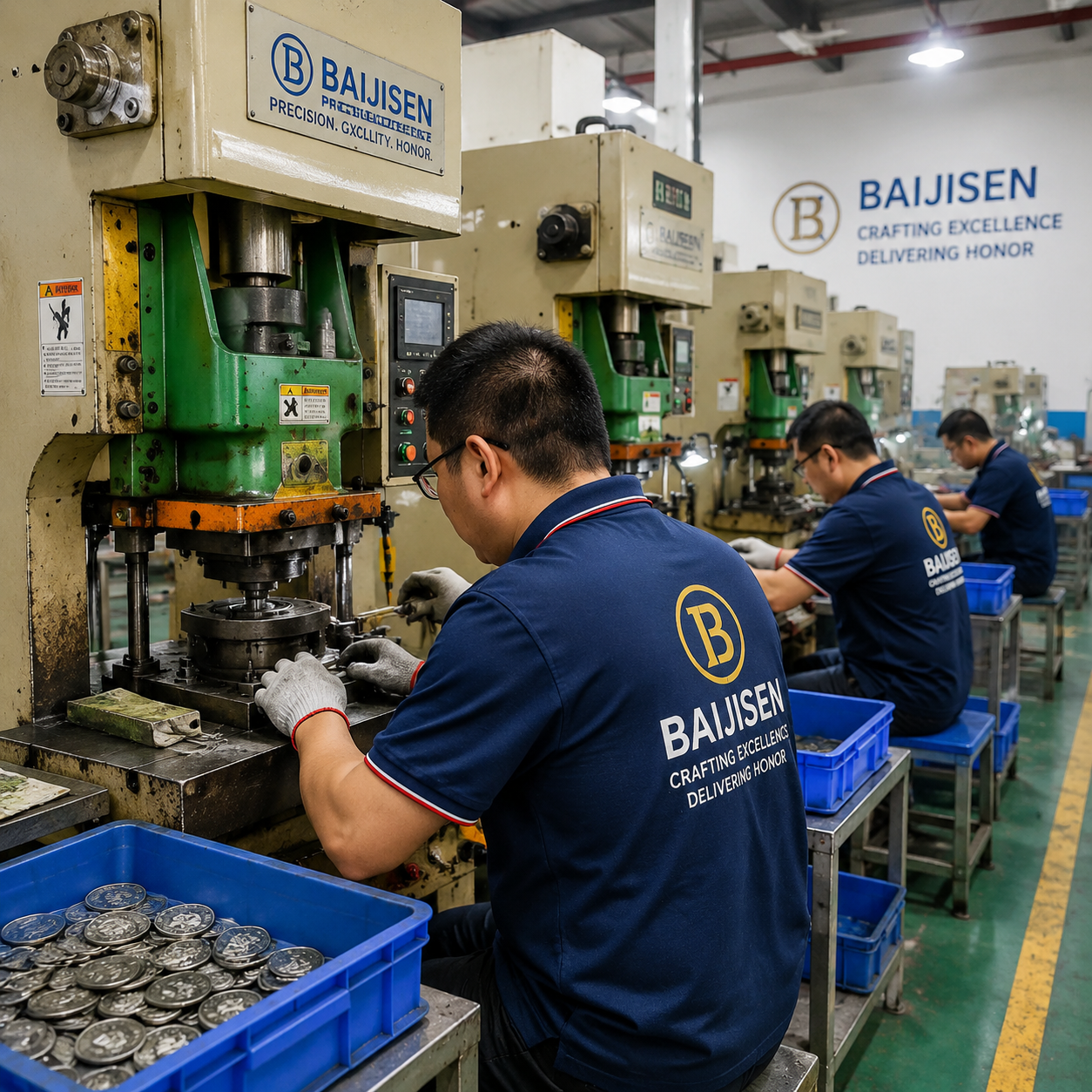
Printing may be suitable for photographs, continuous gradients or elements that do not divide effectively into enamel areas. Confirm the printing method, base and protective finish.
Review the design at actual size. Printing does not make every small detail distinguishable.
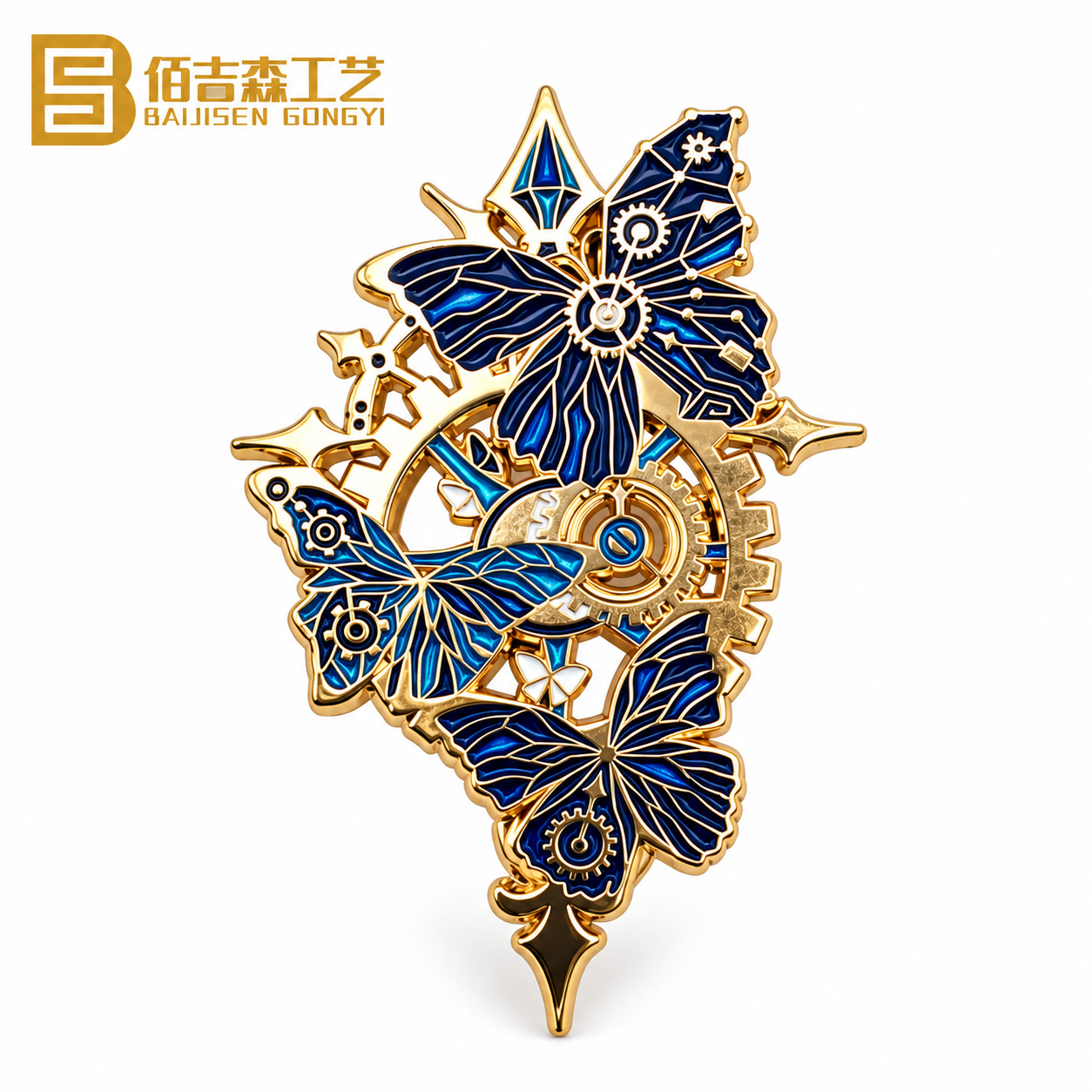
Dimensional Metal
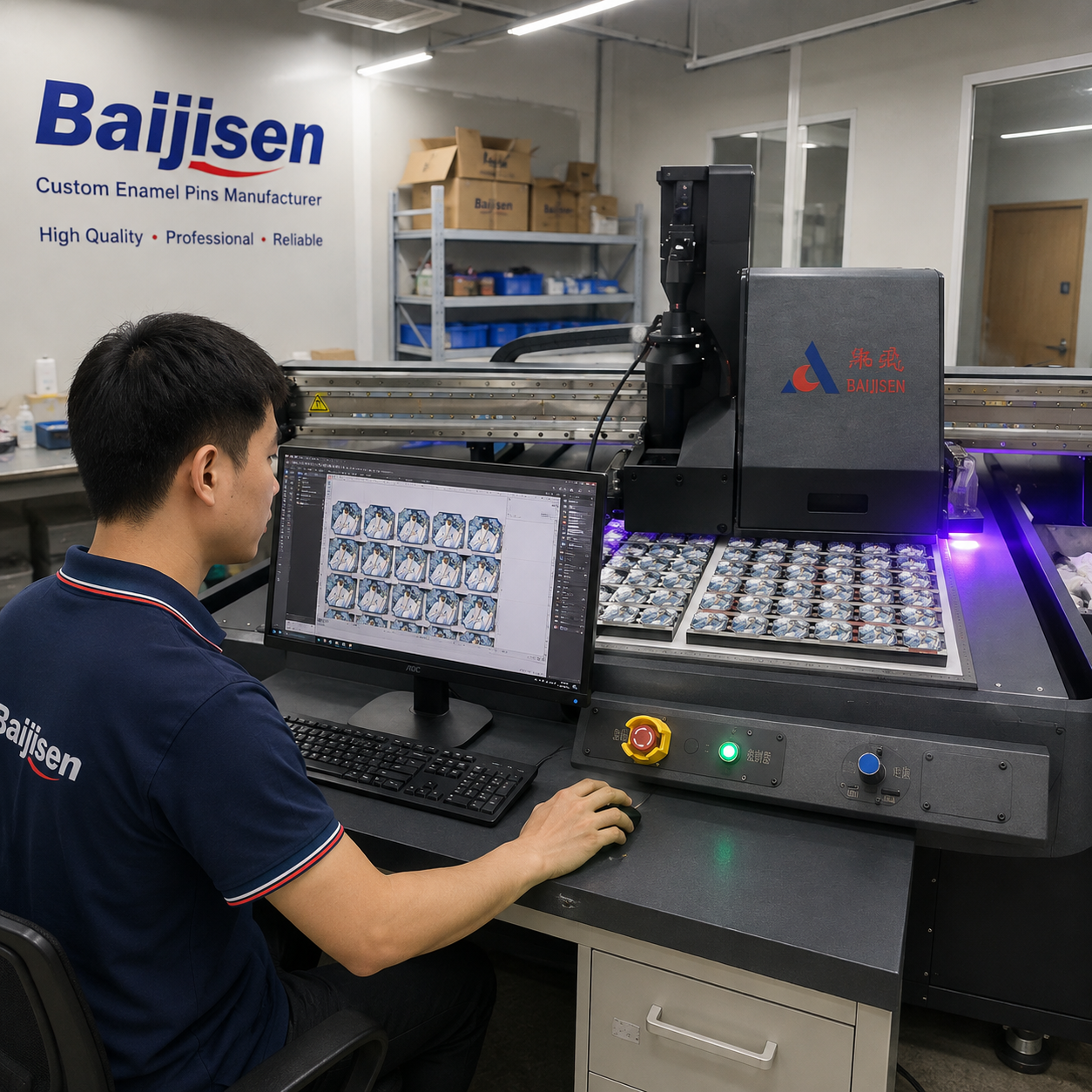
A sculpted design needs decisions about high and low areas, curves and thickness. Review narrow projections, balance and rear attachment space early.
A flat image cannot fully represent physical relief and reflected light. Discuss the appropriate review method for critical dimensional features.
Set the Dimensions, Finish and Attachment
Choose Dimensions Around the Design
| Size | Metric equivalent | Review focus |
|---|---|---|
| 0.75 inch | 19.05 mm | Clarity of a compact symbol |
| 1 inch | 25.40 mm | Artwork and essential wording |
| 1.25 inches | 31.75 mm | Whether more area improves the layout |
| 1.5 inches | 38.10 mm | Visibility, weight and attachment |
These dimensions are examples, not universal recommendations. For irregular shapes, specify maximum width and height. Confirm thickness and how it is measured.
Print the design at the intended scale and verify the print settings. Inspect lettering and the main symbol without enlarging them.
Separate Material from Finish
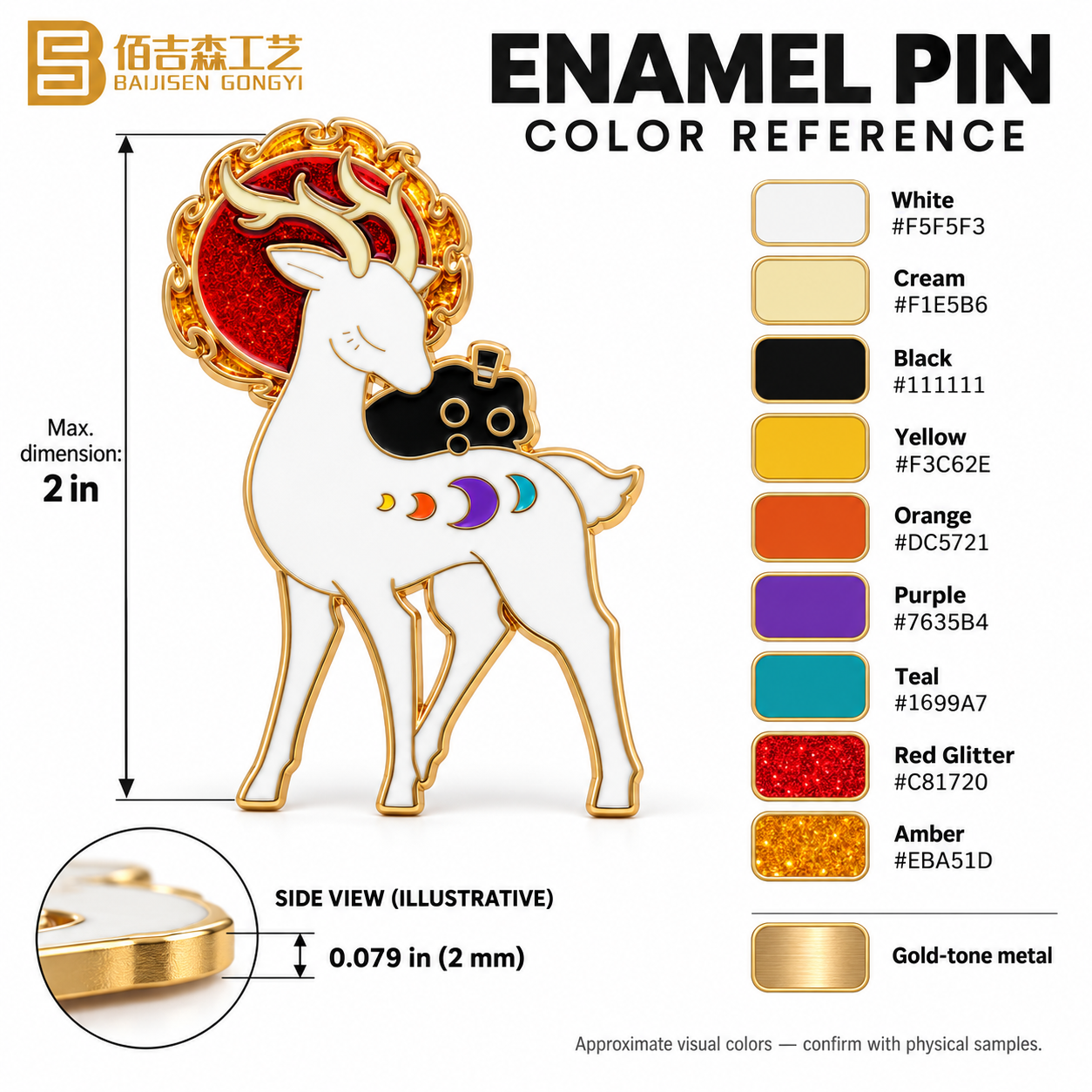
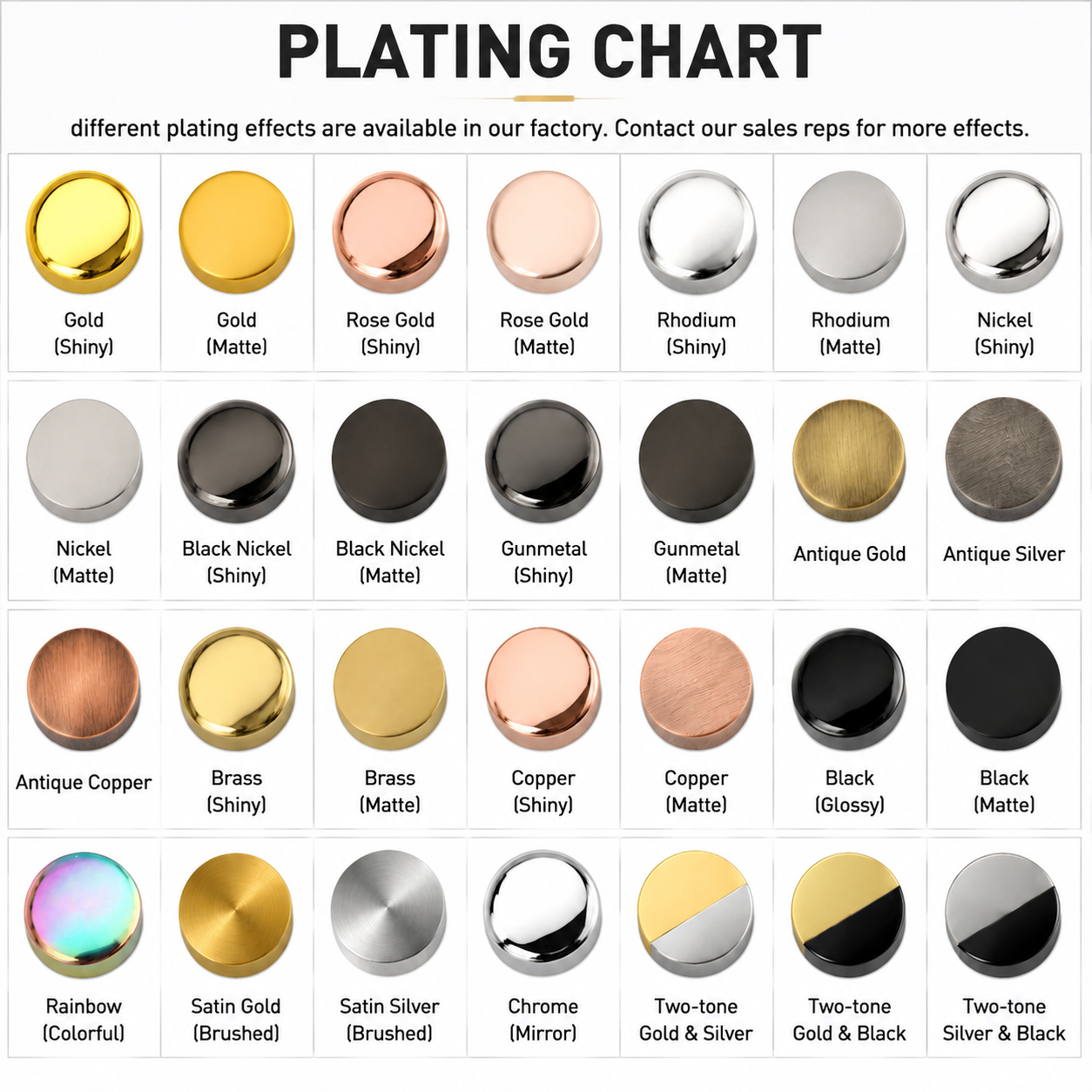
Base material affects forming and structure. Finish affects visible color and reflection. Gold-tone does not mean solid gold, and silver-tone does not establish sterling silver.
State any particular material, plating or verification requirement before the quotation is finalized.
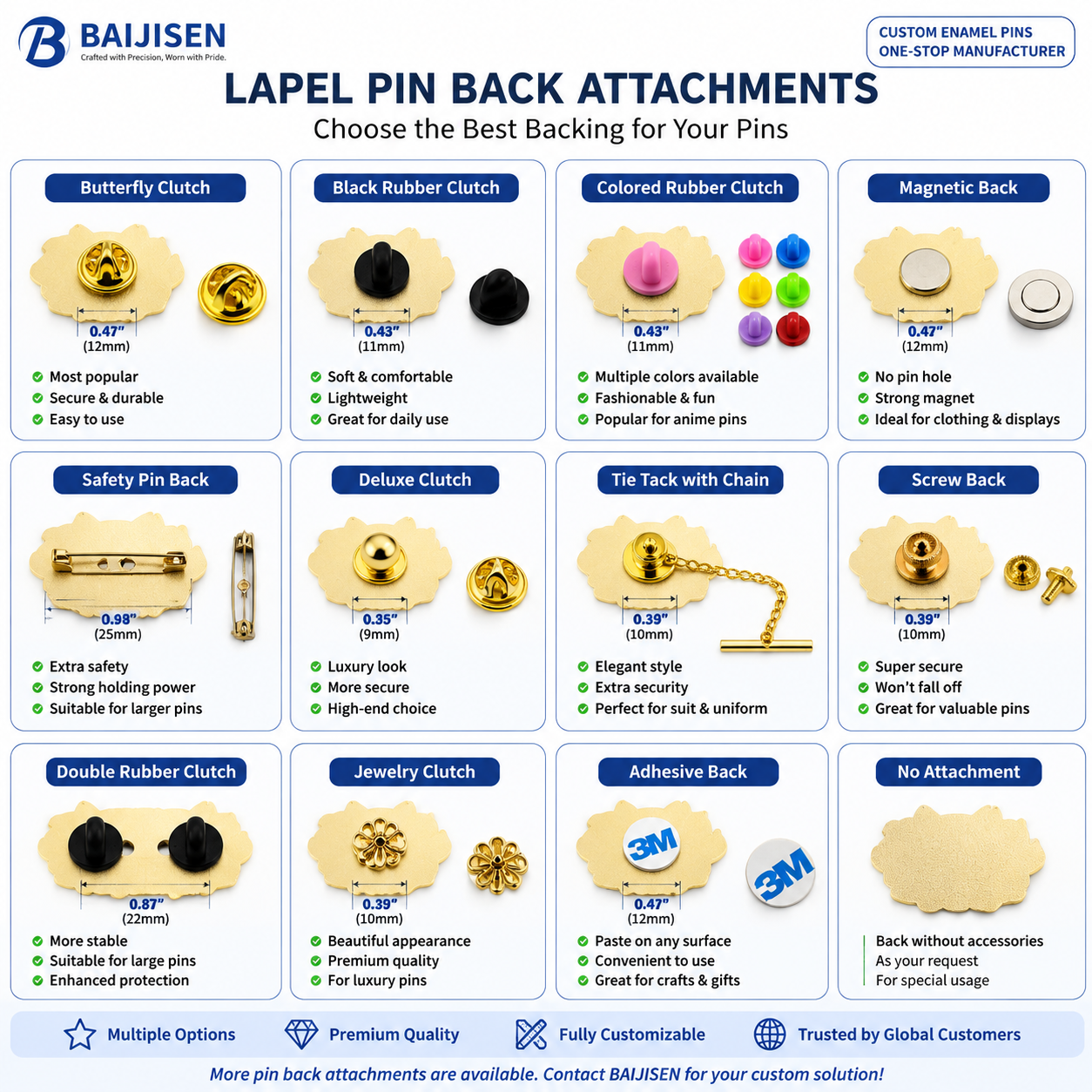
Choose the Backing for the Actual Use
Butterfly, rubber and locking clutches, magnetic constructions and other attachments need evaluation for weight, dimensions, garment and wearer activity.
Discuss two posts when balance or rotation makes additional orientation control useful. Confirm position and spacing on the proof.
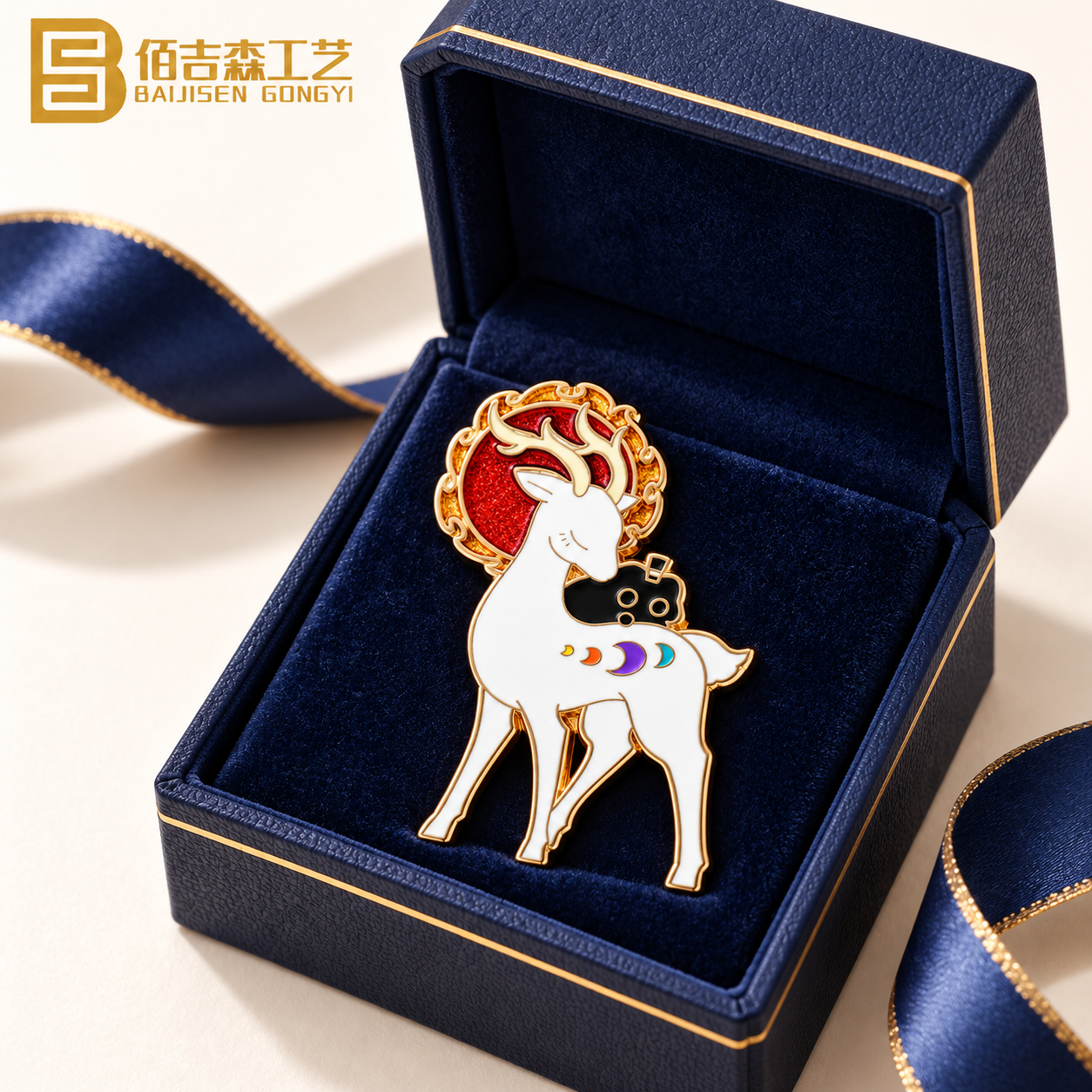
Include Packaging in the Specification
Individual bags, branded cards and gift boxes have different purposes. Identify labels, SKU information, sorting and distribution requirements early.
Match the Order to Its Intended Use
| Application | Priority | Information to supply |
|---|---|---|
| Corporate logos and uniforms | Recognition and wearing proportions | Garment, placement and repeat-use conditions |
| Events and giveaways | Theme clarity and distribution | Quantity, packing and arrival deadline |
| Employee recognition | Accurate years and award levels | Versions and presentation requirements |
| Schools and associations | Identity and intended users | Wording, versions and applicable requirements |
| Artist merchandise and retail | Original artwork and presentation | Cards, labels and replenishment specifications |
| Distributor orders | Clear management of multiple products | Specification list, packing groups and delivery details |
For a logo-focused project, read Custom Pins with Logo . For children's applications, discuss requirements for the target market and actual use.
What Affects the Cost of Custom Made Pins?
A useful price is tied to a specification. Dimensions, construction, quantity, finish, attachments and packaging all contribute to the final quotation.
Separate Setup from Manufacturing
Tooling, artwork preparation and production setup may be itemized or included differently. Ask what applies to the initial order, modifications and repeat orders.
Compare Complete Project Costs
| Category | Confirmation needed |
|---|---|
| Product | Identical design, dimensions, thickness and construction |
| Setup | Applicable tooling and artwork charges |
| Appearance | Colors, finish and additional effects |
| Hardware | Backing, post count and rear markings |
| Packaging | Bags, cards, boxes, labels and sorting |
| Samples | Review method, fees and timing |
| Delivery | Shipping method, destination and included charges |
Cost comparison framework: Product charges + applicable setup + attachments and packaging + optional services + shipping and applicable charges.
Not every category is charged separately on every order. Confirm the quotation's scope.
A lower unit price may describe a different thickness, finish or attachment. Compare the same requirements before deciding which proposal offers suitable value.
Plan Minimum Quantities and Design Versions
Quantity per Design Matters
Five hundred pieces of one design may involve different setup from five designs of one hundred pieces each. List quantities separately and identify changes to wording, color, shape and rear details.
Small Runs and Single Pieces
Minimum quantities depend on the construction and service model. A one-off jewelry piece and a mold-produced metal pin do not necessarily follow the same economics.
State a single-piece or small-run requirement at the start. Confirm feasibility before developing the project further.
Compare Volume Against Actual Demand
Request comparable quotations when choosing between quantities. Consider total spending, expected distribution, storage, design changes and replenishment conditions.
A lower unit price alone is not a reason to order more than the project needs. See Custom Lapel Pins in Bulk for volume planning.
Prepare Artwork That Can Be Reviewed Efficiently
Send the Clearest Reference Available
Editable vector artwork helps with dimensions, paths and lettering. AI, EPS, SVG and vector PDF are useful starting formats, subject to the accepted workflow.
Clear images, sketches and written concepts can also begin the discussion. A file extension alone does not establish quality or editability.
Identify Essential Elements
- The final logo or illustration.
- Exact wording, names and dates.
- Required color references.
- Details that must remain unchanged.
- Elements that may be simplified.
When supplying a reference product, explain whether it represents the desired size, finish, structure or general style.
Confirm the Artwork Service Scope
Establish whether redrawing or production adaptation is required, what revisions are included and what charges apply. Obtain permission before using third-party logos or artwork.
Review Color Physically When Needed
Screens, paper, enamel and metal present color differently. Provide defined references and agree an appropriate confirmation method for critical requirements.
For detailed design preparation, read Create Your Own Lapel Pin .
Illustrative Review: Preparing an Event Pin
The following hypothetical exercise demonstrates a decision process. It is not a customer case study, quotation or record of a completed Baijisen order.
| Initial requirement | Question to resolve | Possible direction |
|---|---|---|
| Logo, event name, slogan and date | Will all wording remain readable? | Prioritize the logo and event details; move supporting text to the card |
| Gradient behind the logo | Must the continuous color transition remain? | Compare printing with an approved solid-color adaptation |
| Several tiny color areas | Can they be produced reliably at the proposed size? | Review and simplify the areas where necessary |
| An elongated outline | Will the pin rotate during wear? | Assess post count and placement |
| Different dates for several events | How many versions require setup? | List each version and quantity before quotation |
This approach preserves the important message while making the artwork, structure and order scope clear. Exact production limits need project-specific confirmation.
Understand Proofs, Samples and Production Approval
| Review option | What it helps confirm | What it does not establish by itself |
|---|---|---|
| Digital production proof | Artwork, wording, dimensions and specifications | Complete physical texture, weight and reflections |
| Design rendering | Visual direction | An existing finished product |
| Process reference sample | A construction, finish or attachment | Your project's exact appearance |
| Project-specific physical sample | The agreed design in physical form | Requirements outside the defined acceptance scope |
Before You Approve
- Check logo, spelling, dates and revisions.
- Confirm dimensions, thickness and outline.
- Review colors, finish and relief.
- Confirm backing, post position and rear details.
- Check quantities by design and version.
- Approve packaging and labels.
- Agree sample and acceptance requirements.
- Confirm delivery arrangements.
Approve a clearly identified version. If anything changes, align the proof, quotation and production records before proceeding.
Plan from the Required Arrival Date
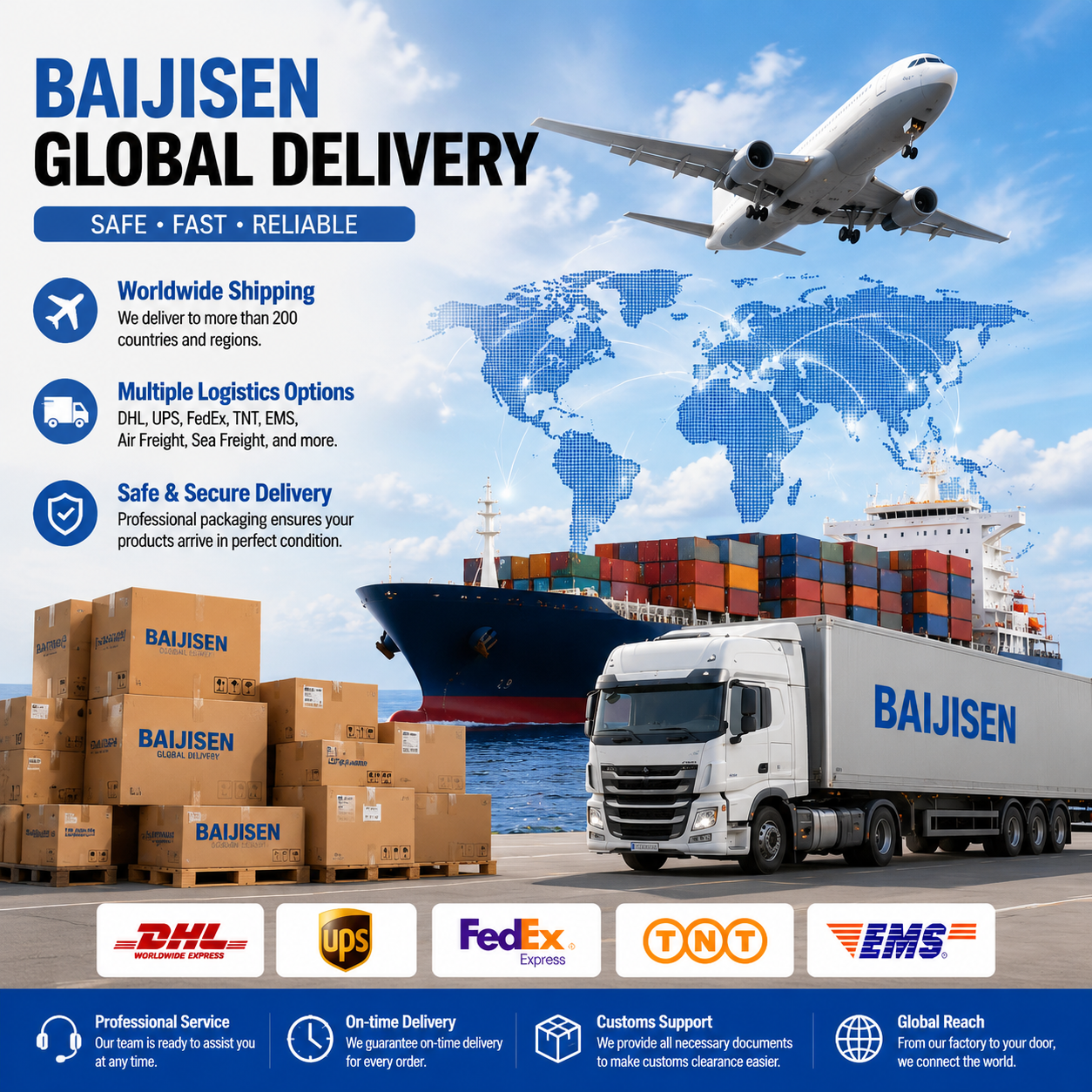
A complete project may involve artwork preparation, revisions, samples, tooling, manufacturing, inspection, packaging, transport and customs clearance.
Production time is not necessarily the same as the time from the first inquiry to receiving the goods.
Confirm the Schedule Boundaries
- When does manufacturing timing begin?
- Are samples and packaging included?
- Is transit additional?
- How do changes or delayed approval affect the plan?
For U.S. deliveries, provide the destination postal code and required arrival date. Mention split shipments, receiving restrictions and special documents early.
Work with Baijisen on Your Custom Pin Project
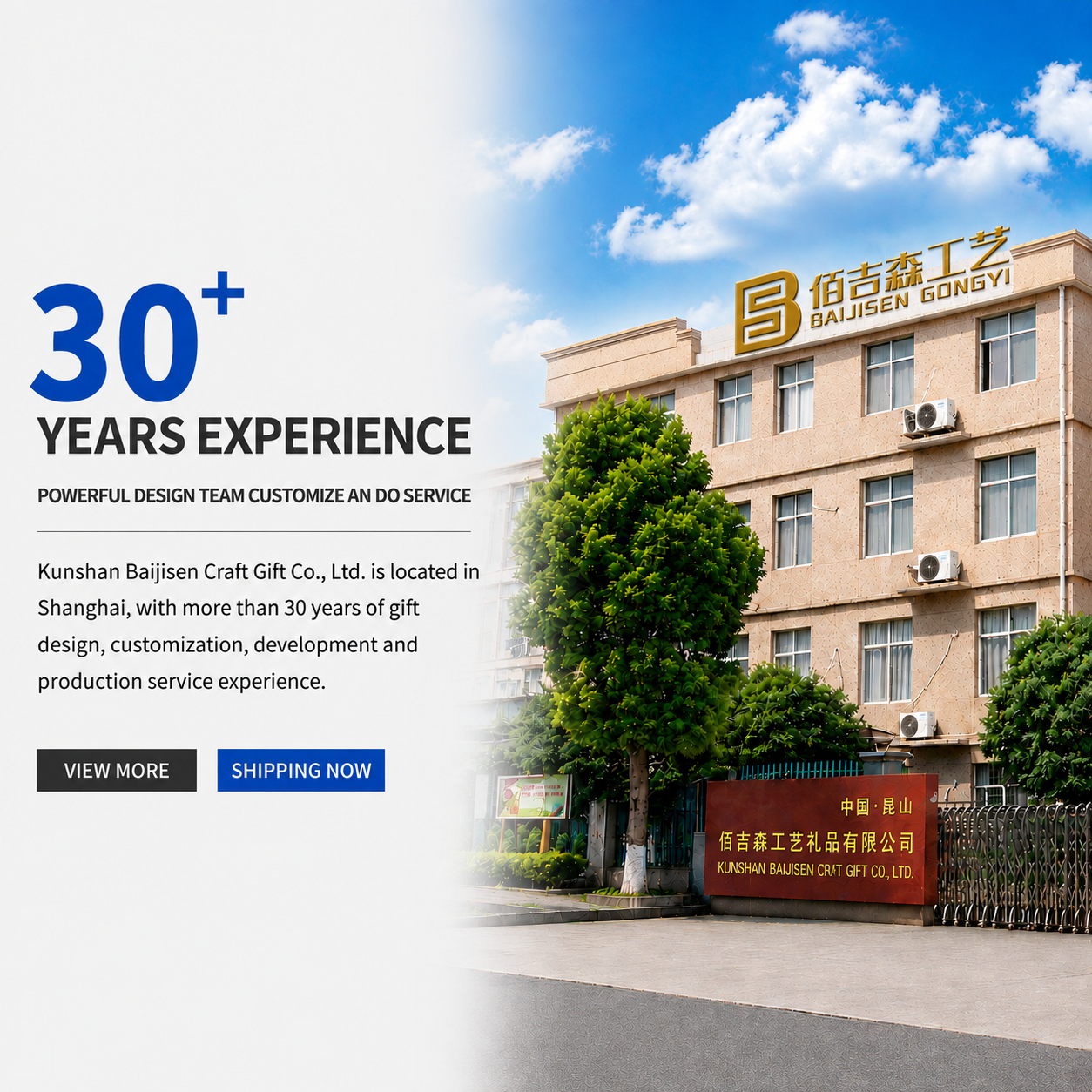
Kunshan Baijisen Craft Gift Co., Ltd. provides custom metal craft and gift manufacturing services. A project can begin with a company mark, original illustration, organization emblem, sketch or reference image.
Discuss the artwork alongside dimensions, finish, attachment, quantity and packaging. If you have not chosen a process, explain the physical result and use requirements.
| Topic | What to confirm |
|---|---|
| Product scope | Suitable construction and feasible customization |
| Artwork | Preparation, adaptation, revisions and fees |
| Quantity | Applicable minimum for each design and version |
| Samples | Available review method and approval conditions |
| Quotation | Included product, services, packaging and delivery scope |
| Quality review | Agreed specifications and acceptance criteria |
| Delivery | Approval dates, destination and arrival requirements |
When evaluating any supplier, review actual product details, clear quotation scope, approval records and issue-resolution arrangements alongside price.
Explore Baijisen lapel pin products, review personalized pin options or read about the company.
Frequently Asked Questions About Custom Made Pins
Can I start without a finished design?
Yes. A clear sketch, logo, reference or written concept can begin the discussion. Confirm the artwork-support scope and applicable charges.
Which pin construction should I choose?
Compare the colors, surface profile and dimensional requirements. Review the actual artwork before final selection.
How much will my custom pins cost?
Pricing depends on specifications, quantity, versions, hardware, packaging and delivery. Request a complete quotation.
Can I order one pin or a small run?
It depends on the product and service model. State the quantity early and confirm feasibility and minimum requirements.
Does each design need a separate minimum?
Different designs or structures may have separate setup and quantity conditions. List each version for review.
Can photographs and gradients be reproduced?
A printed or combined construction may be suitable. Traditional enamel generally uses separated color areas.
Are tooling and shipping included?
Do not assume so. Check the quotation's inclusions and any additional applicable charges.
Do I need a physical sample?
Consider critical appearance and acceptance requirements. Agree what each review method needs to confirm.
Can I request branded cards or gift boxes?
Include packaging requirements with the artwork and quantity. Confirm suitable options, cost and timing.
How long does an order take?
Request a project-specific plan covering approval, samples where applicable, production and transport.
How should repeat orders be managed?
Use retained approved artwork, specifications and applicable samples. Reconfirm the requirements instead of relying only on an old photograph or product name.
Prepare Your Custom Pin Quotation Brief
Start with your artwork, use and quantity. Add the details you know and identify where recommendations are needed.
Project name:
Artwork, sketch or reference:
Intended use:
Essential logo, wording and dates:
Quantity for each design or version:
Preferred width and height:
Thickness requirement, if any:
Preferred construction, or recommendation needed:
Color references:
Metal finish:
Backing and rear details:
Packaging and labels:
Delivery country and postal code:
Required arrival date:
Budget guidance, if available:
Questions requiring advice:
Request a Custom Pin Manufacturing Quote
Send your artwork and project requirements to Baijisen to discuss a suitable construction and custom proposal.
Email Your Project Requirements Visit the Product Page for Contact OptionsEmail: postmaster@baijisen.com
Website: www.baijisen.com
Final specifications, service scope, minimum quantity, pricing, samples and delivery arrangements are confirmed for the individual project.