中文
Classic Lapel Pins
Classic lapel pins can represent a company, identify an association member, recognize service or commemorate an event. Their appearance depends on the relationship between the symbol, lettering, metal, color and proportions.
What are classic lapel pins? The term describes a traditional, restrained or formal design direction rather than a single manufacturing process. A classic pin may use metal relief, enamel or another suitable construction. Start with the message and intended use, then choose the appearance and specifications.
This guide focuses on custom projects for businesses, associations and commemorative programs. Compare the style directions below, then share your logo and requirements with Baijisen.
Prepare Your Custom Pin Brief Explore Baijisen Lapel Pins
Three Classic Design Directions to Compare
Use these directions to describe the result you want. They are planning categories, not stock product listings.
All-Metal Emblem Pins
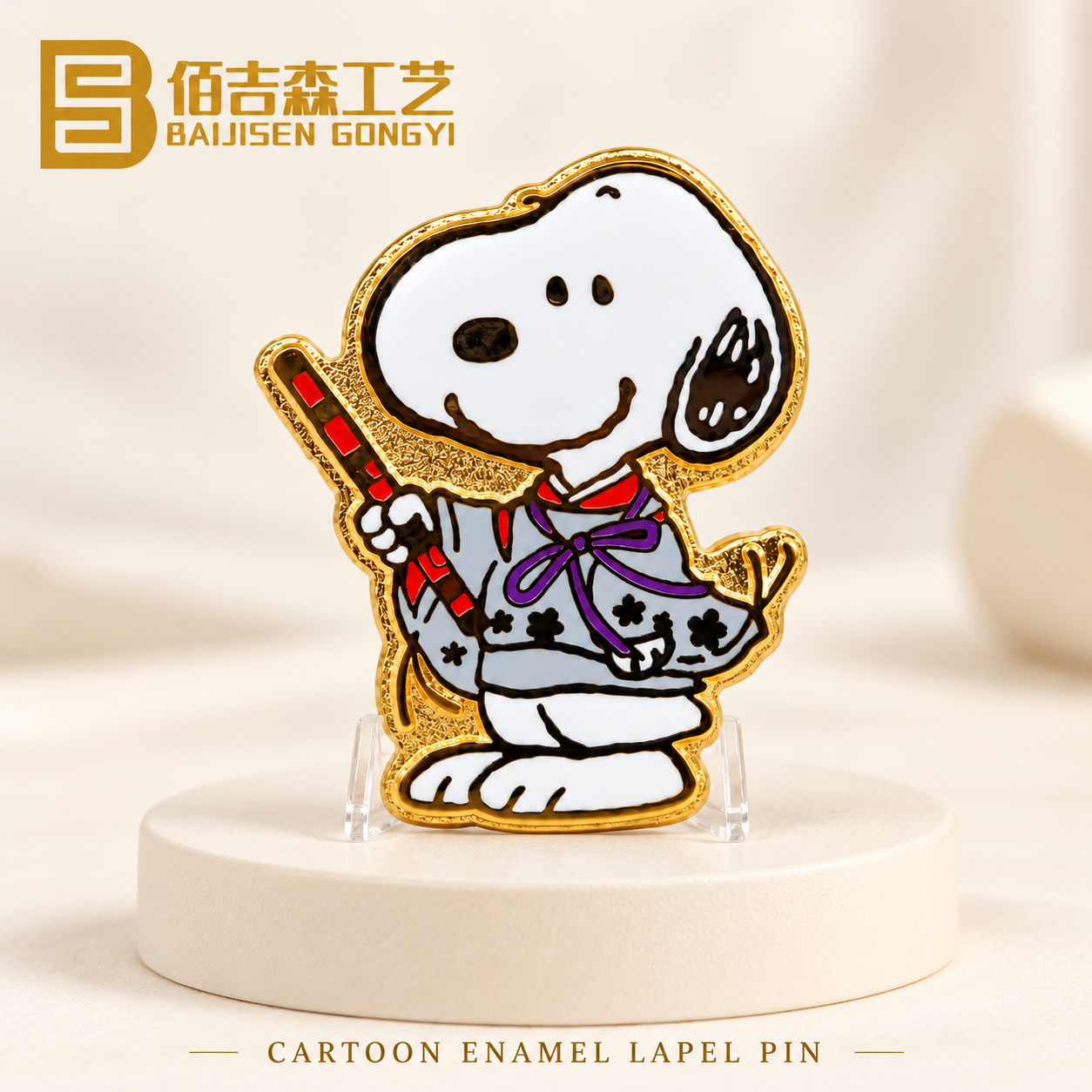
Let raised details, recesses and texture carry the design. Compare this direction for organization emblems, monograms and metal-focused recognition products.
Review: Relief, lettering contrast and surface treatment.
Compare Construction OptionsEnamel Logo Pins
Retain essential brand colors within a clear layout. Compare soft and hard enamel according to the surface profile you want.
Review: Metal boundaries, fill areas and finishing compatibility.
Compare Enamel OptionsAntique-Style Commemorative Pins
Use an aged-looking finish to support a traditional emblem or commemorative theme, where suitable.
Review: Tone, relief contrast and reference samples.
Compare Surface FinishesIf you are unsure which direction suits your logo, send the artwork, intended use and quantity. These provide a starting point for a project-specific recommendation.
Classic Does Not Mean Vintage or Antique
“Classic” describes a style and does not establish when an item was made. “Vintage” may refer to age or period styling, depending on the context. An antique-style finish describes an appearance, not provenance.
A newly manufactured pin can have a traditional design or aged-looking finish. That does not make it an antique or establish collectible value.
Separate Style from Process
| Term category | Examples | What it describes |
|---|---|---|
| Style | Classic, formal, traditional | The visual direction |
| Forming | Die striking, casting | How the body is formed |
| Artwork presentation | Enamel, printing, metal relief | How the image and colors appear |
| Surface finish | Polished, textured, antique-style | Surface color and character |
These can be combined. A die-struck base may receive enamel fill, so specify an uncolored metal appearance when that is the intended result.
What Makes a Lapel Pin Look Classic?
Keep One Recognizable Visual Priority
Identify the symbol that matters most: a logo, emblem, monogram or anniversary mark. Arrange secondary information around it rather than giving every element equal emphasis.
Balance Lettering, Borders and Artwork
A border can frame the design, but it also uses space. Check that it supports the main symbol and leaves enough area for readable wording.
Circles and shields are useful layout options, but a custom outline can also work. Select the shape according to the identity and physical structure.
Use Color for a Clear Purpose
An all-metal design, one accent color or a set of brand colors can each support a classic appearance. Preserve colors essential to recognizing the logo.
Fewer colors are not automatically better. The objective is a coordinated design that remains clear at its actual size.
Compare Metal, Enamel and Other Constructions
| Option | Appearance | What to check |
|---|---|---|
| Uncolored metal | Relief, texture and exposed metal | Raised and recessed areas; lettering contrast |
| Soft enamel | Color below raised metal borders | Small fill areas; linework; optional coating |
| Hard enamel | A comparatively smooth, level surface | Details and finish compatibility |
| 3D metal | Sculpted relief and curved surfaces | Modeling, thickness, weight and structure |
| Printed or combined | Printed detail or continuous color changes | Source image, printing method and protection |
Metal Relief
Without enamel colors, contrast comes from structure, texture and finish. Specify which elements are raised, recessed or polished. Small lettering still needs review.
Soft and Hard Enamel
Compare soft enamel when visible borders and recessed color are part of the brief. Compare hard enamel when a comparatively level surface is important.
Neither is universally better. Evaluate the actual design, including any coating or additional printed detail.
Dimensional and Printed Details
Consider dimensional metal when the subject needs volume. Consider printing when photographs or continuous gradients must be retained. Confirm the specific method rather than assuming all options reproduce details in the same way.
Choose a Metal Finish That Supports the Design
Polished Finishes
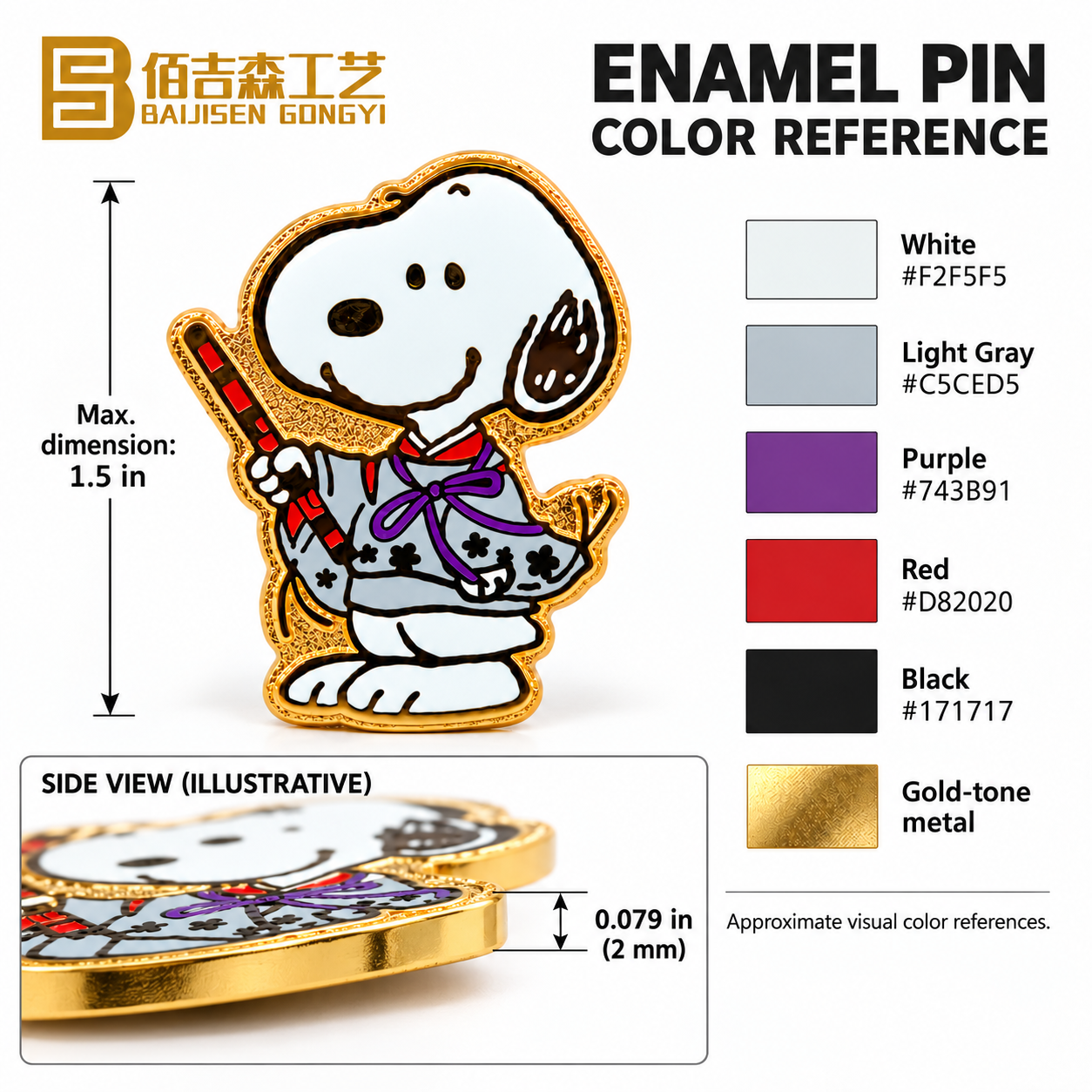
Bright gold-tone or silver-tone surfaces can create strong reflections. Evaluate the logo, lettering and broad metal areas under the intended viewing conditions.
Matte and Textured Finishes
A textured background can help distinguish elements from polished relief. The effect depends on the pattern and dimensions, so assess the combination as a whole.
Antique-Style Finishes
Tonal variation may emphasize relief and suit a commemorative theme. Agree the color and expected light-dark contrast using clear references or samples.
Material matters: Gold-tone does not mean solid gold, and silver-tone does not establish sterling silver content. Base material and finish are separate specifications.
If a project requires a particular material, plating or verification document, discuss it before ordering.
Choose the Design for Its Intended Use
| Application | Design priority | Order details |
|---|---|---|
| Corporate logos and uniforms | Recognizable branding and suitable proportions | Garment, attachment and repeat-order specifications |
| Service recognition | Clear year or award level | Quantity by version and presentation packaging |
| Associations and clubs | Emblem and membership information | Role variations and wording |
| Anniversaries and commemorations | Accurate dates and memorable symbolism | Arrival deadline and distribution method |
| Business gifts | Recipient-appropriate design | Packaging and wearing experience |
Long names and supporting explanations can move to a presentation card. If multiple levels must be distinguished, make the differences readable rather than relying on subtle variations alone.
For school or children's applications, discuss applicable target-market requirements and the actual use.

Review Dimensions and Backings Together
Choose Size Around the Artwork
| Size | Metric equivalent | Review question |
|---|---|---|
| 0.75 inch | 19.05 mm | Is the primary symbol clear? |
| 1 inch | 25.40 mm | Are essential lettering and artwork balanced? |
| 1.25 inches | 31.75 mm | Does the extra space improve readability? |
Specify maximum width and height for custom outlines. Discuss thickness separately. Larger dimensions may provide more space but can affect weight and wearing proportions.
Make an Actual-Size Check
- Print the design at the proposed dimensions.
- Verify that printing has not changed the scale.
- Inspect the logo and important wording.
- Place a paper cutout on the intended garment.
- Compare simplifying the layout with enlarging it.
Paper shows proportions, but cannot reproduce the metal product's weight or stiffness.
Select an Appropriate Attachment
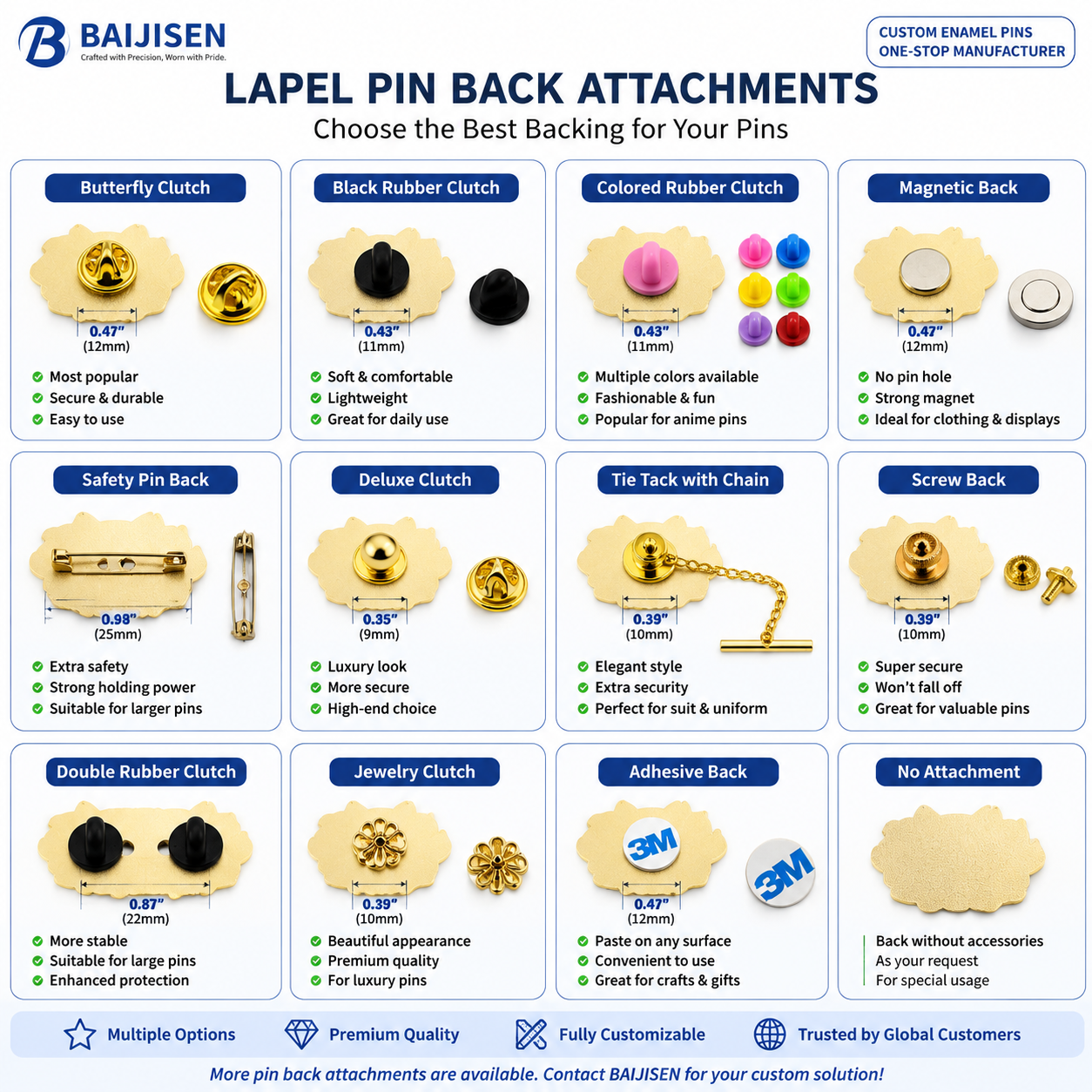
Butterfly, rubber and locking clutches have different handling and retention characteristics. Magnetic constructions also need review for fabric thickness and product weight.
Discuss two posts when balance or rotation makes additional orientation control useful. Confirm the position and spacing on the proof.
For wearing guidance, see How to Wear a Lapel Pin .
Prepare Your Logo for a Classic Pin Design
Separate Essential and Adjustable Elements
Identify the logo or symbol that must remain, followed by important wording and dates. Background decoration and secondary text can then be evaluated for simplification.
Obtain approval for changes affecting brand identity. Do not adapt a protected mark without authorization.
Illustrative Revision: An Anniversary Emblem

This hypothetical example explains a review approach. It is not a completed order or customer case study.
| Initial idea | Potential problem | Revision to evaluate |
|---|---|---|
| Logo, full name, slogan and anniversary | Crowded layout | Keep the logo and anniversary; move the slogan to a card |
| Fine background decoration | Competition with the central symbol | Reduce decoration or change the background treatment |
| Very small color areas | Limited space for separation and filling | Simplify after process review |
| Long outline with one post | Possible rotation | Review attachment count and placement |
Files and Color References
Editable vector artwork can help with paths, lettering and dimensions. AI, EPS, SVG and vector PDF are useful starting formats, subject to the accepted workflow.
Clear images, sketches and written descriptions can also start the discussion. Confirm whether redrawing is needed. A file extension alone does not establish quality or editability.
Provide defined color references where available. Screens and physical materials present colors differently, so discuss an appropriate confirmation method for critical colors.
Read Create Your Own Lapel Pin for detailed preparation and manufacturing guidance.
Do You Need a Stock Pin or a Custom Project?
A stock product uses an existing design and available configuration. A custom project develops the product around your artwork and agreed specifications.
Custom manufacturing is worth discussing when you need an organization emblem, anniversary wording, specific finish or dedicated packaging. Timing includes approval and production.
If you want an existing personal accessory, check the seller's actual inventory and purchase conditions. A manufacturing service should not be assumed to have retail stock.
Compare Quotations Using the Same Specifications
Cost depends on dimensions, quantity, design versions, construction, finish, attachments, packaging and delivery. List quantities separately for each version.
One design with 500 pieces can involve different setup from five designs with 100 pieces each. Changes to text, shape or rear markings may also affect the quotation.
| Item | Confirmation |
|---|---|
| Product | Width, height, thickness and construction |
| Appearance | Colors, finish and additional effects |
| Setup | Tooling and artwork charges, where applicable |
| Hardware | Backing, posts and rear markings |
| Packaging | Cards, bags, boxes, labels and sorting |
| Samples | Review arrangements, costs and timing |
| Shipping | Destination, service and included charges |
Compare the complete project cost. If you are deciding between quantities, request comparable quotations and consider expected demand and replenishment needs.
For volume planning, see Custom Lapel Pins in Bulk .
Approval and Delivery Planning
Confirm the Final Version
- Logo, spelling, dates and authorized revisions.
- Dimensions, thickness, outline and relief.
- Color references, metal finish and coating.
- Backing, post placement and rear wording.
- Quantity for each design or version.
- Packaging, labels and sorting.
- Sample arrangements and acceptance criteria.
- Destination, shipping method and arrival requirement.
A digital proof documents artwork and specifications, but cannot fully simulate texture, weight or reflected light. Discuss physical samples when those characteristics are critical.
Work Back from the Required Arrival Date
Allow for artwork preparation, revisions, samples where applicable, production, inspection, packing and transport. Customs clearance may also affect arrival.
Confirm when production timing begins and how changes or delayed approval affect the schedule.

Discuss Your Classic Pin Project with Baijisen

Kunshan Baijisen Craft Gift Co., Ltd. provides custom metal craft and gift manufacturing services. Your project can begin with a logo, emblem, sketch or commemorative idea.
Explain the intended use and desired appearance. Baijisen can discuss the project around artwork, dimensions, finish, attachment, packaging and quantity. Confirm the service scope and order conditions before proceeding.
| Topic | What to establish |
|---|---|
| Artwork support | Required drawing or adaptation and any applicable fees |
| Minimum quantity | The minimum for each design and construction |
| Samples | Available review method and approval conditions |
| Packaging | Suitable options for presentation or distribution |
| International delivery | Destination, postal code and required arrival date |
Explore Baijisen lapel pin products, review personalized pin options or read about the company.
Frequently Asked Questions
Are classic lapel pins always die struck?
No. Classic describes a style. The forming and decoration methods depend on the artwork and desired appearance.
Can a classic pin include enamel colors?
Yes. Enamel can preserve brand colors within a traditional or restrained layout.
Which finish is best for a classic emblem?
Compare the relief, lettering and intended appearance. Polished, textured and antique-style finishes can produce different results. Review references for the specific design.
Is an antique-style pin an antique?
No. An aged-looking finish does not establish age, provenance or collectible value.
Does gold-tone mean solid gold?
No. Confirm base material and plating separately.
What size should a corporate pin be?
Check the logo and lettering at actual size, then assess garment proportions, weight and attachment.
Can I start with a sketch?
A clear sketch or reference can begin the discussion. Confirm the artwork-preparation scope and charges.
What affects minimum quantity and delivery time?
Construction, design versions and order requirements affect the applicable conditions. Request a project-specific quotation and schedule.
Can I request presentation packaging?
Include card, bag, box and label requirements in your inquiry. Confirm suitability, cost and timing for the order.
Prepare Your Custom Classic Lapel Pin Brief
Start with your artwork or description, quantity and use. Add preferences where available. If you need advice, describe the result you want.
Project name:
Logo, sketch or reference:
Intended use:
Essential wording and dates:
Quantity for each design or version:
Preferred width and height:
Thickness requirement, if any:
All-metal or enamel preference:
Metal finish:
Backing or wearing requirements:
Packaging and labels:
Delivery country and postal code:
Required arrival date:
Budget guidance, if available:
Recommendations needed:
Request a Custom Classic Lapel Pin Quotation
Share your logo, references and requirements with Baijisen to discuss a suitable design and manufacturing proposal.
Email Your Project RequirementsEmail: postmaster@baijisen.com
Website: www.baijisen.com
Final specifications, service scope, minimum quantity, pricing, sample arrangements and delivery schedule are confirmed for the individual project.